
Navigating Rivalries: Lessons from Thawing U.S.-China Relations
How Diplomatic Persistence Stabilized Tensions Between Two Global Superpowers

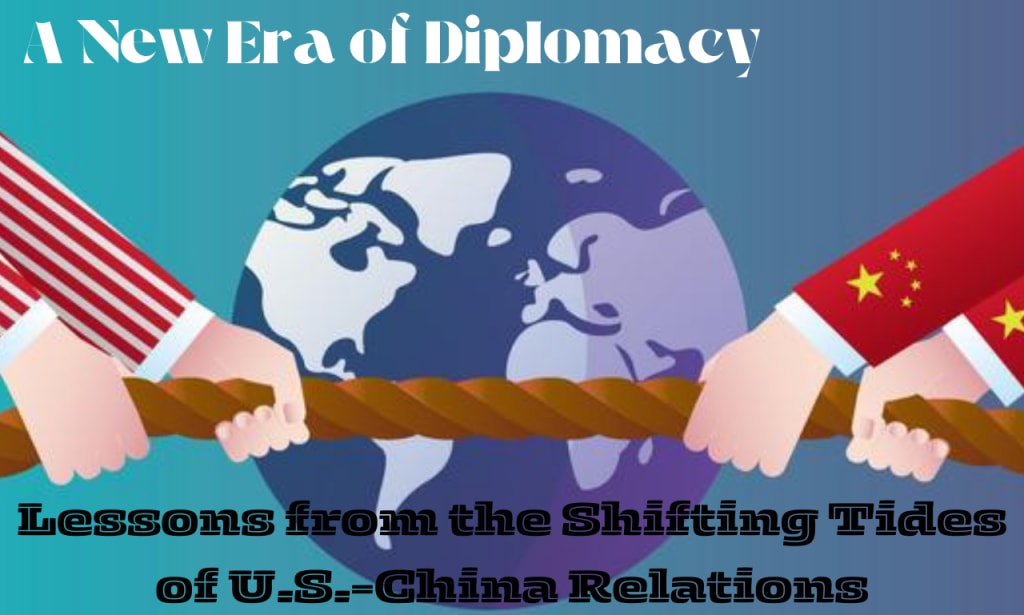
When U.S. Ambassador Nicholas Burns arrived in Beijing in March 2022, he entered a diplomatic minefield. Relations between the U.S. and China, the world's two largest economies, were at their lowest in decades, marked by mutual distrust and fierce competition for global influence. Yet, as Burns prepares to leave his post nearly three years later, he reflects on hard-won progress in stabilizing this critical yet contentious relationship.
Burns describes U.S.-China relations as a "deeply competitive and often contentious rivalry for global power." Despite the challenges, he believes the two nations have reached a period of relative stability—a testament to the necessity of dialogue in navigating international rivalries.
A Rocky Road to Diplomacy
The past few years have seen numerous flashpoints in U.S.-China relations. From trade wars and accusations of cyberattacks to disputes over Taiwan and human rights, the list of contentious issues is long. The COVID-19 pandemic exacerbated tensions, with the U.S. criticizing China’s handling of the outbreak. Relations hit rock bottom when House Speaker Nancy Pelosi visited Taiwan in 2022, prompting a furious response from Beijing. Matters worsened in early 2023 when the U.S. shot down a suspected Chinese spy balloon.
"It took us a while to dig out of that," Burns recalls.
The diplomatic freeze was compounded by a surge in Chinese nationalism and anti-Western sentiment. During this period, Burns had to navigate an environment where Chinese officials and citizens alike were increasingly reluctant to engage with foreigners.
Building Bridges in a Shifting Landscape
Despite these obstacles, the Biden administration pursued a strategy of engagement and alliance-building. Burns emphasizes the importance of working closely with regional allies such as South Korea, Japan, and Australia to counterbalance China's influence. “Working with allies multiplies American power and helps deter pernicious actions by China, Russia, and others,” he explains.
Dialogue remained a cornerstone of this strategy. While acknowledging China’s provocations in the Taiwan Strait and its ties with Russia, Burns stresses the necessity of communication. "We’ve got to talk to each other," he says, underscoring the shared responsibility of both nations in preventing misunderstandings that could escalate into conflict.
One area of successful cooperation has been addressing the U.S. fentanyl crisis. Many precursor chemicals used to produce the deadly opioid originate in China. Following a summit between President Biden and Chinese President Xi Jinping in 2023, Beijing began cracking down on illicit chemical exports, resulting in arrests, shutdowns of online sales, and restrictions on synthetic opioids.
Humanitarian Wins and Persistent Challenges
Burns also highlights the release of four Americans detained in China as a significant achievement. Meeting them at the airport and witnessing their newfound freedom was a powerful moment for him. However, he acknowledges that many Americans remain imprisoned in China, with the State Department continuing efforts to secure their release.
Despite progress, Burns remains candid about the ongoing challenges. He criticizes Beijing for aiding Russia in its war against Ukraine and warns of the unprecedented scale of Chinese cyberattacks on the U.S. Additionally, he calls on Congress to engage more directly with China, emphasizing the importance of understanding the adversary firsthand.

Lessons Learned
Burns' tenure underscores the complexity of U.S.-China relations. Stabilizing this volatile relationship required not only addressing immediate crises but also laying the groundwork for long-term cooperation in areas of mutual interest.
“We are rivals, but we must also find ways to work together when it serves our national interest,” Burns says. This delicate balance is the essence of modern diplomacy, especially between two powers with such profound differences.
A Future Fraught with Uncertainty
As Burns departs Beijing, the future of U.S.-China relations remains uncertain. The rivalry between the two nations is deeply entrenched, fueled by competition over trade, technology, and global influence. Yet, Burns believes that sustained dialogue and strong alliances are the keys to managing this rivalry responsibly.
In his parting advice, he emphasizes the importance of consistent engagement: “To compete effectively and keep the peace, we must talk to China and understand the reality on the ground.”
About the Creator
mureed hussain
Hi, I’m a creative writer passionate about health & wellness, love, longevity, aging, and pet care. With extensive Quora experience, I craft engaging posts, thoughtful questions, and insightful answers.
Find me at>>[email protected]
Keep reading
More stories from mureed hussain and writers in Journal and other communities.
Mastering the Art of Quora: Craft Unique Question Templates to Skyrocket Your Profile
Quora isn’t just a Q&A platform—it’s a gateway to establishing authority, building meaningful connections, and expanding your digital footprint. One of the fastest ways to grow your profile is by crafting unique, engaging question templates that attract attention, spark discussions, and invite insightful answers. But how do you create questions that stand out in a sea of content? Let’s dive into the art and science of question crafting and explore how you can tailor templates for any topic (except sex) to accelerate your Quora growth.
By mureed hussainabout a year ago in Journal
The goals I did not achieve
Every writing goal I made for the year is a wash. It has been this way for a while, but I think it's important to be open about my failures and the reality of how life can get in the way. This is especially true considering the several times I have posted on Vocal about my writing goals, how I was changing my approach, and where I was hoping to be for the upcoming year. I will probably do that again in a couple months, but for now, it is time to acknowledge where I am today.
By Kay Husnick19 days ago in Journal
The Early Church Fathers and Why Their Writings Matter Today
The Early Church Fathers are some of the most important figures in the history of Christianity. Their writings, letters, sermons, and theological reflections helped define the beliefs, practices, and structure of the Church in the centuries following Christ. Understanding who the Church Fathers were and why their works matter today is essential for anyone seeking to understand Catholic teaching, tradition, and the roots of Christian faith.
By Sound and Spirita day ago in Journal




Comments
There are no comments for this story
Be the first to respond and start the conversation.