
Nature’s Sweetest Partnership
The Human Connection to Honey
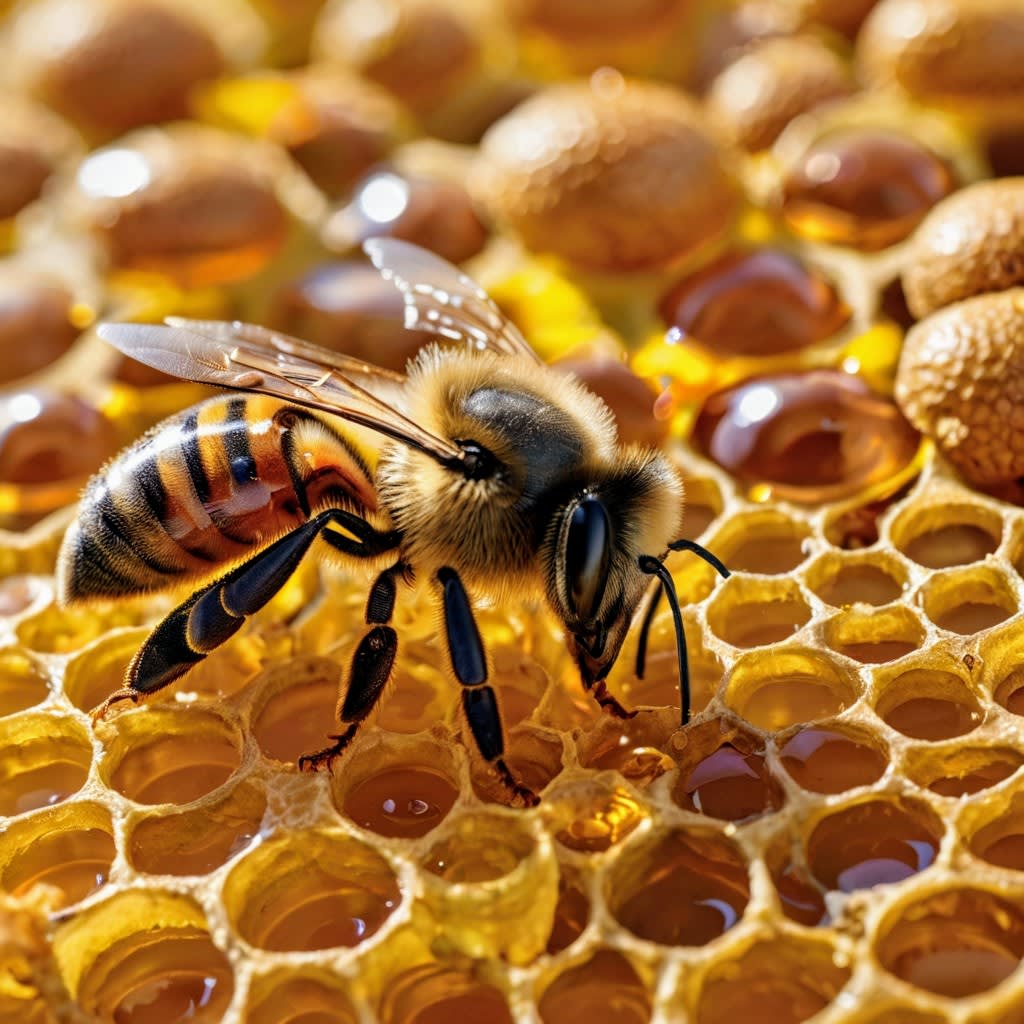
Perhaps one of the most fascinating and incredible relationships in nature exists between the bee and honey. A small, tirelessly buzzing creature, traveling from flower to flower, makes one of the world's most precious products: honey. The story behind how bees make honey, their role in ecosystems, and the value of honey through human history is as sweet as the product itself.
The Honeybee Journey
Only with *Apoidea*, bees are such marvelous creatures. Of the nearly 20,000 species of bees, one is most famous because it produces honey-the honeybee, *Apis mellifera*. A bee's life is a concert of activities, all managed so well. Every search for honey begins with how a bee seeks nectar, the sugary liquid secreted by flowers.
Visiting flowers is no easy chore. A honeybee makes at least 5,000 flower visits in one day. Using its special proboscis to extract nectar, which she then stores in her other stomach, called a honey stomach, the bee just flies off to the hive full of nectar. Only there does the real work occur.
The nectar that is taken inside the hive is transferred to other bees which chews on it and break it with enzymes. In this instance, complex sugars are reduced to simpler sugars thus less prone to spoilage. They then inject the partially digested nectar into the honeycomb in the wax cells.
But honey is yet a long way from readiness. Nectar still contains far too much moisture and it cannot be safely stored for an extended period in this liquid form. This moisture needs to be dissipated, and so the bees employ the warmth generated from fanning it with their wings in association with this action and yields airflow to help facilitate this evaporation process. And over the months, it finally thickens like honey. Honey basically is a natural preservative.
Finally, the bees cap the cells full of honey with wax caps so that they can preserve them for later. The stored honey is their food and especially during winter when flowers cannot be found.
Beyond its sweetness, the story of bees and honey goes much deeper. The bees are very essential for pollination and play a role in ecosystems and agriculture. Whenever they collect nectar from flowers, they transfer pollen from one flower to another in a process that makes it possible for most fruits, vegetables, and nuts to develop.
Bees pollinate 70 of the world's top 100 crop species, which produce 90% of all food worldwide. Without bees, our plates would look significantly emptier and biodiversity would suffer greatly.
The Human Connection to Honey
Man has always been attracted by honey. Archaeological history indicates that man has been gathering honey for more than 8,000 years. Mural paintings inside caves in Valencia, Spain, show the way man would climb a cliff to retrieve honey from natural beehives.
Honey was more than food; it was medicine and preservative and a hallmark of prosperity to ancient cultures. Ancient Egyptians dangled honey before gods in embalming rituals; honey was regarded as nectar, or ambrosia, for Greeks. For thousands of years, honey has been regarded by Ayurveda and Chinese traditional medicine for curing wounds, soothing the throat, and balancing various parts of the body.
The Wonders of Honey What is special about honey? Honey is chemically different. It consists of natural sugars, enzymes, amino acids, vitamins, and minerals. Honey is hygroscopic in nature-that is, it absorbs moisture from its environment. This serves as helpful healing for a wound, maintaining moist tissues and keeping it free of bacteria.
This extract has been proven to have an enzyme, which has been referred to as glucose oxidase, to which the bee adds so that this extract has acquired antibacterial properties. Its trace components include hydrogen peroxide that is a natural antiseptic.
Neither of which spoil. Archaeologists have found vases of honey in ancient Egyptian tombs that are still edible today, thousands of years later. This is because honey is relatively dry and acidic, conditions which most bacteria and other microorganisms cannot tolerate.
The Risks Facing Bees
Currently, bees are threatened in many aspects. Habitat loss, pesticide use, climate change, and diseases are the reasons for declining populations across the world. The phenomenon that alarmed people regarding the fate of pollinators was Colony Collapse Disorder, where worker bees abandoned their colonies.
Saving bees is about saving whole ecosystems and securing food for the future, rather than saving a species. Ways of encouraging this include planting flowers friendly to bees, use less pesticide, or even encouraging sustainable farming practices, among others.
The Sweet Legacy of Honey
Honey is still a staple in kitchens and medicine cabinets around the world. From sweetening teas to glazing roasts, its versatility is unmatched. Beyond its culinary uses, honey is celebrated in skincare and wellness products for its moisturizing and healing properties.
Honey is also an epitome of the well-designed ecosystem. Each drop is the product of a thousand hours of toil exerted by these thousands of bees that have functioned in unison. It's a mighty endorsement of teamwork and sheer glory of nature.
This is nature's best-ever collaboration: that of the bee and honey, which epitomizes what perseverance and precision mean. For all these small dimensions of bees, playing such an extremely enormous part in maintaining the continuity of life on earth, to honey itself: it continues on enriching people's lives in innumerable forms.
Let's appreciate bees, at least for a moment, while we enjoy the sweetness of honey. We are not only ensuring that honey continues to exist but also that we are preserving a very fine thread of life by protecting these marvelous pollinators....
About the Creator
Keep reading
More stories from J Pavan Kumar and writers in Journal and other communities.
Tom and Jerry: A Timeless Tale of Rivalry and Laughter
Tom and Jerry began their series in the year 1940 and now remains among the top and most long-running animated shows to be on television. Composed of such creators as William Hanna and Joseph Barbera, this show draws before the eyes of the viewers the escapades of a very crafty cat called Tom and of a quite ingenious mouse named Jerry within his very unlikable machinations. The idea is straightforward: Tom, the domesticated cat, has spent his entire life attempting to capture Jerry, the clever mouse, who consistently outsmarts him. The significance of the character interaction, however, has elevated Tom and Jerry into more than a simple comedy show. They have become cultural icons, crossing over multiple generations, and sparking an array of adaptations, movies, and spin-offs. This article discusses how Tom and Jerry began, evolved, and became a part of today, discussing why it is still such a big deal in the world of pop culture.
By J Pavan Kumarabout a year ago in Journal
The goals I did not achieve
Every writing goal I made for the year is a wash. It has been this way for a while, but I think it's important to be open about my failures and the reality of how life can get in the way. This is especially true considering the several times I have posted on Vocal about my writing goals, how I was changing my approach, and where I was hoping to be for the upcoming year. I will probably do that again in a couple months, but for now, it is time to acknowledge where I am today.
By Kay Husnick21 days ago in Journal
Why Kindred Spirit Connections Feel Calm Instead of Intense.
Kindred spirit connections are unique soul-level relationships marked by resonance, understanding, and emotional ease. Unlike romanticized or karmic connections, which often involve drama, high intensity, and emotional turbulence, kindred spirit relationships feel calm, peaceful, and aligned. Understanding why these connections create serenity rather than intensity can help you recognize, nurture, and maintain relationships that truly support your growth and well-being.
By Wilson Igbasi4 days ago in Journal


Comments