

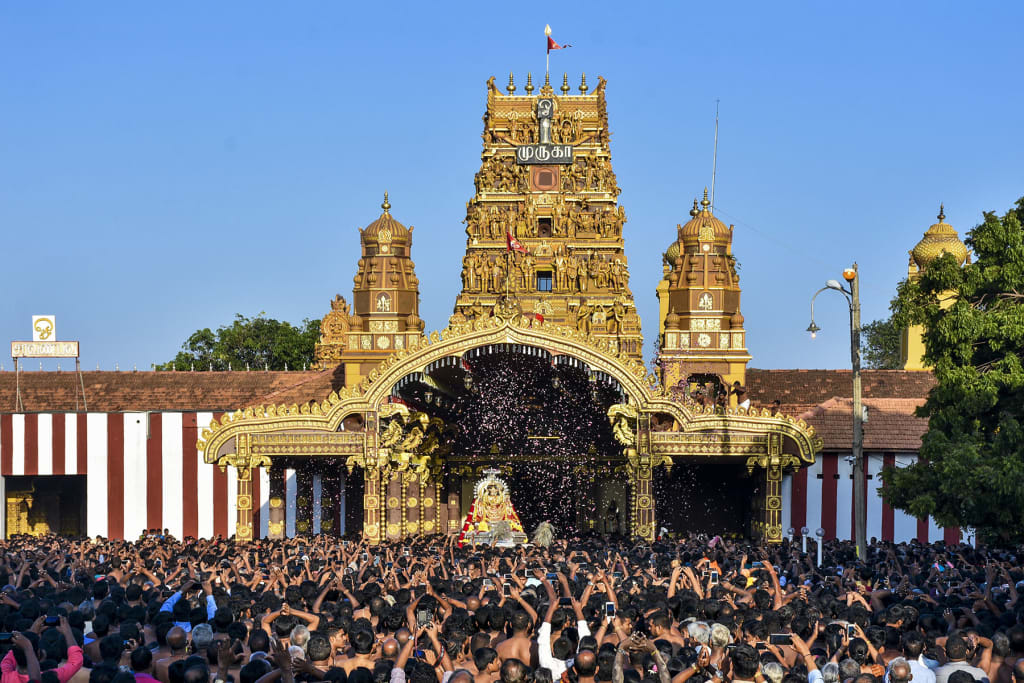
The biggest Hindu temple in Sri Lanka's Northern Province is called Nallur Kandaswamy Kovil. Lord Murugan, who is represented by the holy "Vel" in the Sanctum, the main shrine, and by Shanmugar, Muthukumaraswami, Valli Kaanthar with consorts Valli and Deivayanai, and Thandayuthapani, without consorts, in minor shrines, is the presiding deity in the temple. It is appropriate to refer to it as the Hindu spiritual hub of Jaffna. 2.5 kilometers (km) northeast of Jaffna's city center is Nallur. The 'Jaffna Kingdom,' a late medieval and early modern Tamil principality, had its capital at what is now Nallur.
The Tamil terms "Nallathu" and "Ur," which mean "excellent" and "location" or "town," respectively, are the source of the modern name "Nallur." The name of the capital at the site of Nallur was original "Singhai Nagar," which is also spelled "Cinkainakar" in Tamil. Interestingly, this refers to "Lion City." The lion (singha), a representation typically associated with the Singhalese, was really the name of the Tamil royal city. Up until the Portuguese took control of Jaffna, every monarch of the Arychakravarti dynasty went by the name "Cinkai". Ukkira Singhan, the Jaffna Kingdom's founder, was also known by this name. In a sense, the term "Aryasingham," which means "noble lions," may be used to refer to the Jaffna Kings dynasty, also known as the Aryachakravarty.
The most well-liked deity among Tamils is Lord Murugan, who was once a shepherd and warrior god in Tamil Nadu's (southeastern India) hill area. More than violence, beauty defines his character. This Tamil deity was revered in South India before Brahmanic Hinduism. The Brahmins, however, understood Murugan to be the regional Tamil version of the pan-Indian warrior god Skanda, Lord Shiva's son, during a protracted peaceful period of adaptation of Brahmanic elements of northern Indian origin beginning in the early centuries A.D. This process is sometimes referred to as Sanskritization. He is also known as Subrahmaniya and Kartikkeya in India, among other titles.
In Sri Lanka, Kataragama is the most popular name, and several Muslims, as well as Buddhists and Wedda tribe members, worship him (as Alexander the Great, whose Arab name is Iskanda, is identified with Skanda in Kataragama; a companion of Alexander is believed to have been a local prophet of Allah). Swamy is an honorific title, whereas "Kanda" is an acronym for "Skanda." In Sri Lanka's Tamil regions, "Kandaswamy" is the most typical name for Murugan temples. There are several temples with this name both in India and elsewhere. Shaivites, who revere Shiva (instead of Vishnu) as the ultimate god of the universe, make up the majority of Tamil people. However, there are more Tamil temples devoted to Lord Shiva's sons, Murugan and Pilllaiyar (also known as Ganesha with an elephant head in Tamil), than to the latter. From Nallur in the north to Kataragama holy city in the south of the island, along the eastern coastline, there are several Kandaswamy temples in Sri Lanka. They delineate the path of the Sri Lankan Pada Yatra, the most well-known yearly long-distance pilgrimage on the island.
The Nallur Kandaswamy temple has six pujas each day. Large numbers of devotees are particularly noticeable on Tuesdays and Fridays. It's polite to bring flowers or fruit, but it's much more polite to wash the presents outside before presenting them. The late afternoon is the best time to attend in order to enjoy the rituals. In the temple, photography is not permitted. As well, as turn off your mobile devices. When entering the temple grounds (Medhi), visitors are asked to remove their shoes, and devotees traditionally wash their feet before participating in festivities. The prayer hall (Mandapa) is accessible to foreigners as well, however men must enter bare-chested. In July or August, Nallur Kandaswamy Kovil celebrates its festival weekend.

Landscape
For the Hindu identity of the Sri Lankan Tamils in north Sri Lanka, the temple is a socially significant institution. As a cultural memorial, other temples bearing the same name have been erected across Europe and North America by the Sri Lankan Tamil diaspora. Nallur Kovil is the pinnacle of timeliness, order, and neatness because of its administration and stringent discipline, which are respected and adored by the devotees, and serves as a model for all Saiva temples. The main reason why religious rites are so well-liked by believers is the way that they are carried out with such exact timing and stringent discipline.
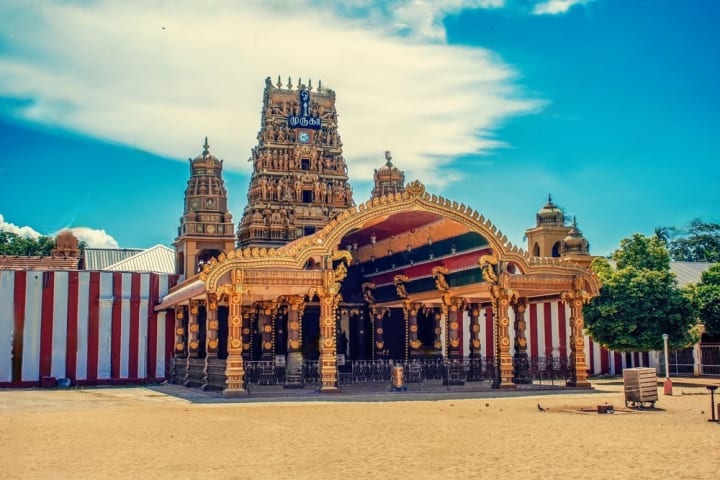
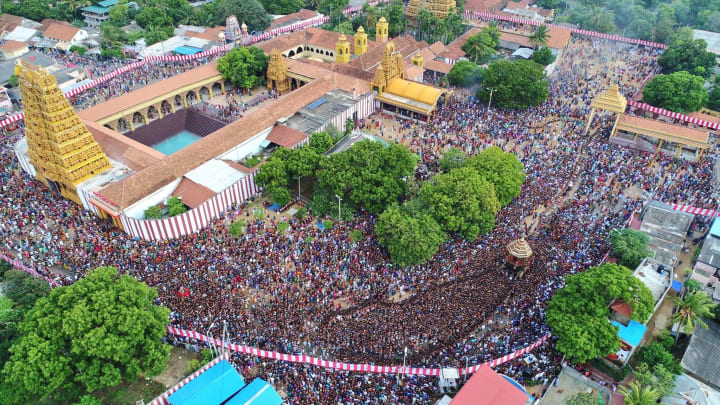
There is a tower (Shikaram) in the middle of the temple complex, directly above the sanctum sanctorum (Garbagriha). As is customary in Indian sacral construction, it is located to the west of a ceremonial hall (Mandapa). Now, as is customary for Tamil temple walls, red and white stripes may be seen along the enclosure wall. The early 20th century saw the addition of outer walls. To the north and south of them, two imposing Gopurams that are typical of Dravidian temples across South India now loom above them. Just a few years ago, or more specifically, a few years after the conclusion of the civil war were both majestic Gopurams built to the temple walls.
The main entrance of the temple is on the east side. At the main entrance, it contains a gopuram, a five-story tower with intricate carvings typical of Dravidian architecture. There are shrines for Lords Ganesh, Palliyarai, Sandana Gopalar, Goddess Gajavalli Mahavalli, Vairavar and Sooriyan with Consorts, and Vairavar on the area's inner circumambulatory walk. The sacred pond and Thandayudhapaani shrine may be observed in the southern section of this temple. The sacred garden, known as "Poonthottam," is located on the northern side.
The temple debuted its new "Shanmuha Raja Gopuram," a nine-story structure that stands 30 meters tall and has an entrance known as "Swarna Vaasal," in 2011. (The Golden Entrance). In order to provide a new Northern entrance to the temple complex, another New Raja Gopuram was presented in 2015. The entryway is called "Kubera Vaasal," while the structure is referred to as "Gubera Raja Gopuram." This tower, which currently holds the title of being the largest gopuram on the island, slightly outweighs the Southern tower. The wealth-related god "Guberan" guards the direction to the north. The locals think that this Gopuram will bring greater money to the Jaffna peninsula's residents.

History
In 948 AD, the first Kandaswamy Temple was built. The Yalpana Vaipava Malai claims that Buwanika Bahu, a minister to the King of Kotte, built the temple there in the 13th century. The third Nallur Kandaswamy temple is assigned to Sapumal Kumaraya (also known as Chempaha Perumal in Tamil), who administered the Jaffna kingdom on behalf of the Kotte kingdom. The royal residence was near to the temple at Nallur, the seat of government for the Jaffna monarchs. Four entrances with gates were erected into Nallur. At each of the four doorways, there were four temples and two major thoroughfares.
The current reconstructed temple does not correspond to its original positions, which are now occupied by Portuguese-built churches. A square fortress around the Muthirai Santhai (marketplace), which served as the city's focal point. For the monarchs, Brahmin priests, warriors, and other service providers, there were courtly structures. The historic Kandaswamy temple served as a fortification with thick walls for defense. Generally speaking, the city was constructed in the style of a typical Hindu temple town. King Cankili II's palace facade, known as Cankilian Thoppu, is still standing in Nallur. Filipe de Oliveira, a Portuguese Catholic colonial, demolished the third temple in 1624. Where St. James' Church, Nallur now stands was the original kovil. Up until 1995, when Sri Lankan forces recaptured Jaffna, a portion of the original Shivalingam of the Nallur Kandaswamy Temple was housed in the Vicarage. The platform upon which the Shivalingam was placed may still be seen in the vicarage's corridor.

The fourth temple, the current one, was built in 1734 AD by 'Don Juan' Ragunatha Maapaana Mudaliyar, a Shroff in the Dutch Katchery, at a location known at the time as the 'Kurukkal Valavu. Brahmin Krishnaiyar was the first priest of the temple. The temple was once constructed out of bricks and stones with a cadjan ceiling that included a "Vel" in the center. There were only two little halls in the ancient temple. Over the ages, Ragunatha Maapaana Mudaliyar's ancestors continued to oversee the temple as its custodians, and to this day, several improvements have been done to bring the temple to its current glory.
The 'Golden Period' in the history of Nallur Temple began about 1890, not long after the 7th Custodian, Arumuga Maapaana Mudaliyar, assumed control of the temple's management. He built the temple's first bell tower in 1899 and renovated the main Sanctum in 1902, paving the Sanctum's floor with granite. He also made numerous other renovations to the shrine. He built the first enclosure wall in 1909. Likewise, till now, their descendants have periodically rebuilt the temple over time. The complex has undergone significant renovations since 1964, when the current custodian, Kumaradas Maapaana Mudaliyar, assumed leadership. As a result, it is now physically the largest Hindu temple complex in the nation. He established the yearly "Thiruppani" custom, which has helped the temple develop into its current magnificence. The temple now resembles a castle in Nallur because of its four Gopurams, six Bell Towers, and fortified walls.

Festival
The temple has the yearly Kodiyetram festival, which starts with the hoisting of the holy flag. A family from the Sengunthar Kaikola Mudaliyar dynasty has been ceremonially transporting the hoisting fabric to the temple on a miniature chariot for decades.
The celebration lasts for 25 days, during which time different Ygams Abishekams and unique poojas are performed. The Manjam, Thirukkarthikai, Kailasavahanam, Velvimanam, Thandayuthepani it's a being, Sapparam, Ther festival procession, Theertham - the water cutting festival, and Thirukalyanam - The holy wedding are the main religious festivals that attract large crowds of people The most well-known event is Ther Thiruvila (chariot festival), which starts at 6.15 am and is quite colorful. Arumuga Maapaana Mudaliyar, the 7th Custodian, produced the meticulously carved masterpiece known as "Simmasanam" in the year 1900. It is used to carry the lavishly attired Lord Shanmuhar and his consorts. It is carried by hundreds of devotees, and the Simmasanam, which floats on the heads of tens of thousands of devotees while they cry "Aro haraam," is a spectacle not to be missed.
The streets of the Temple are lined by the enormous and cumbersome chariot pulling the figure of God Shanmuhar and his consorts. God Murugan has the chance to see the sincerity and purity of the devotees as they draw a chariot pulled by a rope by thousands of people, whether rich and poor, elderly and young.
Places Near
- Delft Island
Delft, the most distant of Sri Lanka's inhabited islands, is found in the Gulf of Mannar, south-southwest of the Jaffna peninsula, and north-northwest of the country's main island. Jaffna District's Delft Island Divisional Secretariat is located in Sri Lanka's Northern Province.
Few tourist attractions exist in Sri Lanka, aside from the natural beauty of the sparsely populated island and some fortress ruins. The most notable of these are Sri Lanka's only herds of feral horses, which are decedents of Arabian stallions once bred here for horse trade with India, as well as an impressive specimen of a Baobab tree, a typical species of sub-Saharan Africa that is uncommon to see in Sri Lanka. Delft Island's features, including the trees, animals, and buildings, are all products of the European colonial past.
Read : https://zeloan.blogspot.com/2022/09/blog-post.html

- Jaffna fort
Long the city's gatehouse, the enormous Jaffna fort, which looks out over the Jaffna lagoon, has been the subject of centuries of conflict. Today, you may explore the city's ramparts, gates, and moats as well as the barracks that once held tens of thousands of soldiers and residents.
Portuguese colonialists initially constructed a fort here in 1619 during their conquest of the Jaffna Kingdom, and it was kept there for about 40 years during which time it put down three Sri Lankan uprisings. It was taken by the Dutch in 1658 when they briefly allied with the Sinhalese and used it as a base to establish their own dominance.

- Kachchatheevu Island
Within Sri Lankan territorial seas, Kachchativu or Kachchatheevu is an island that is situated around 14 miles southwest of the Delft Islands and 15 miles northeast of Rameshwaran. The only permanent building and resident on the island is a Roman Catholic Church, which is now under the control of the bishop of Jaffna. Kachchativu Island has been governed by Sri Lanka since the days of the Portuguese, Dutch, and subsequently British rulers of Sri Lanka, according to historical sources.

- Kayts Island
In the past, Kayts, also known as Urathota (Uruthota), were a significant harbor in Sri Lanka. According to the Nagadeepa Tamil inscription, Urathota was a particular harbor for Indian trade ships during the time of Monarch Parakramabahu I (1153-1186), and the king gave special attention to ships transporting horses and elephants at this port. The Portuguese gave Urathota the name Kayts. Its name is a contraction of "Caes dos Elefantes." Its meaning is "elephant's mouth." Due to the fact that elephants from Sri Lanka were shipped via this port to India, the Portuguese began to refer to it as "Caes dos Elefantes." "Cais" was used to abbreviate the name "Caes dos Elefantes". The name changed further to "Kays" and then "Kayts" after the Portuguese were driven out and the Dutch arrived in Jaffna.

- Nagadeepa Island
One of the islands in a group of islands off the Jaffna peninsula is Nagadeepa Island or Nainathivu. The island is a roughly 10-kilometer-long area. The Nagadeepa Temple, revered by Buddhists as one of the locations where the Buddha is thought to have stepped foot, and the Sri Nagapooshani Amman Temple, dedicated to goddess Nagapoosani Amman, an incarnation of goddess Durga, are the two primary centers of devotion on this territory. Hindus hold that the Nagas initially established and dedicated this temple to the worship of the serpent god known as "Nayinar."
- Point Pedro
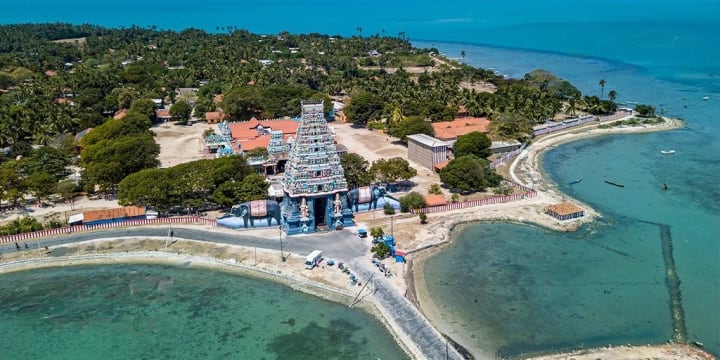
Point Pedro, sometimes referred to as Sakkotm Cape, is Sn Lanka's most northern point. It was a trading post throughout pre-colonial and colonial times. Although unassuming, the location is loaded with historical value and is well worth a visit for anyone with an interest in the past. On a clear day, you might even be able to see the Indian coastline, which is kilometers distant.

- Sangiliyan equestrian statue
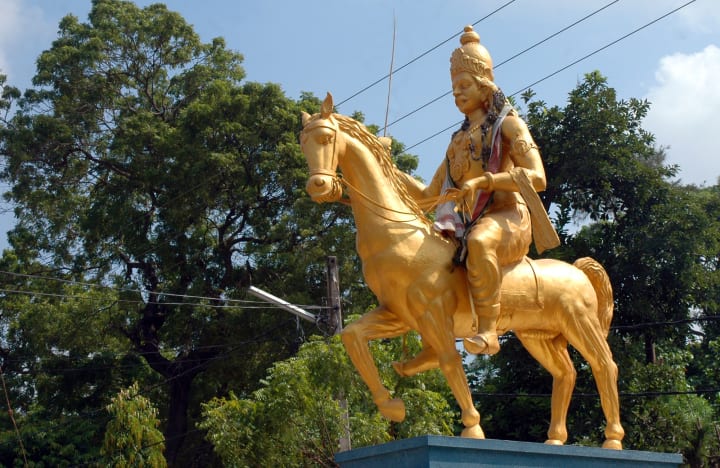
Segarasasekaran VIII (1617–1619), also known as Cankili II, was the final ruler of the Jaffna Kingdom and is commemorated by the Sangiliyan equestrian statue, which was built in 1974. (Sangili II). As a usurper who murdered his Tamil rivals, he is a controversial figure in Sri Lanka. The Portuguese rejected his rule. Sangili II had obtained backing from Tamil warriors from southern India, but he was ultimately routed, exiled to Goa, and killed. Senerat II of Kandy had also backed Sangili II since the Portuguese invaders had a common adversary with the realms of the Tamil and Sinhalese. However, Sinhalese nationalists do not highly regard Tamil liberation warrior Sangili II. The monument is a political problem because of this. One group of critics claims that the previous statue was overly heroic, while another group claims that the new statue is not nearly as heroic. Unhappy that country, says Bertolt Brecht, "needs heroes."
Google Map :
About the Creator
Zeloan
I'm a Traveller, Blogger, and Content Creator. Visit Sri Lanka, and you can see the most beautiful places in the world and the remarkable hospitality here
Guard Your Battery
Why are some people so attractive just by standing there? It’s not because they are "likable," but because they don’t need everyone to like them. I realized later that truly charismatic people allow themselves to be criticized, but they never criticize themselves. They never try to please the world; instead, the world stops to watch them.
By Emily Chan - Life and love sharinga day ago in Poets




Comments
There are no comments for this story
Be the first to respond and start the conversation.