
My Biggest Regret and How I’m Making It Right
The Weight of Words Unsaid

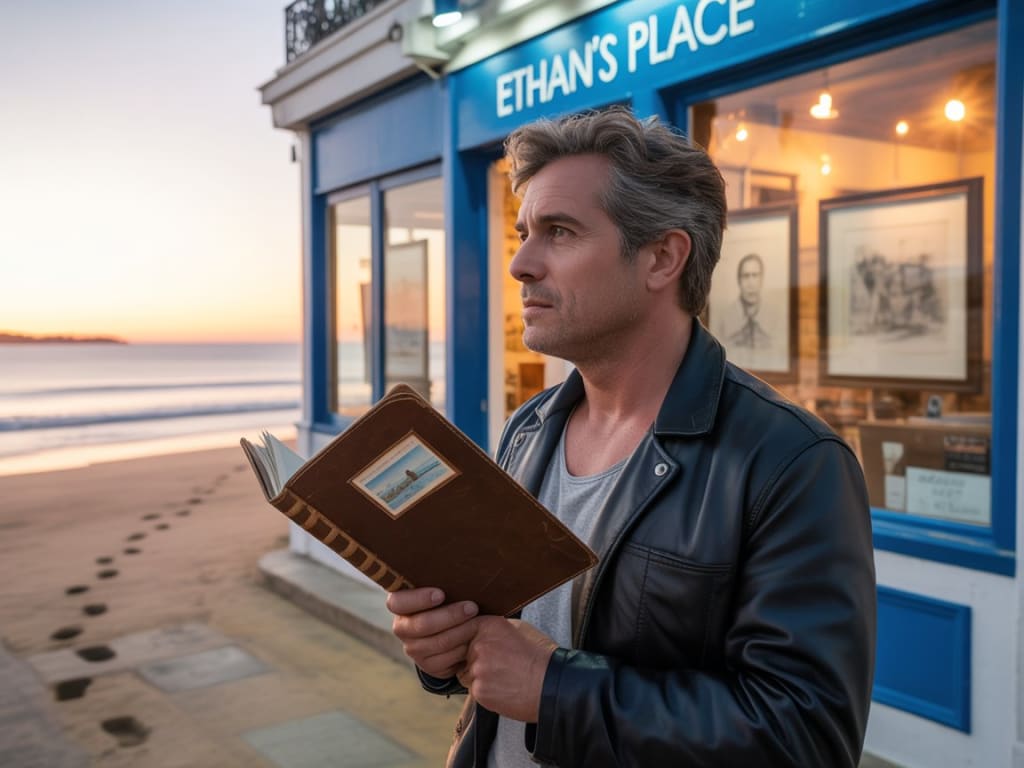
The air was thick with the scent of pine and damp earth as I stood at the edge of the old hiking trail, the one that wound through the hills behind our childhood home. It was a crisp autumn afternoon, the kind where the leaves crunched underfoot and the sky was a sharp, endless blue. I hadn’t been back here in years—not since I was seventeen, not since the day I made the choice that would haunt me for over a decade. My biggest regret wasn’t something I did, but something I didn’t do. I never told my brother, Ethan, how much he meant to me before he left, and that silence has been a splinter in my heart ever since.
Ethan was two years older, the kind of person who could light up a room with a grin and a quick joke. He was my hero, my rival, my best friend. We grew up in a small town, the kind where everyone knew your business, and we spent our summers racing through these woods, building forts, and dreaming of lives bigger than the one we had. But as we got older, Ethan’s dreams grew sharper, more urgent. He wanted to see the world, to chase adventures that our little town couldn’t hold. I was quieter, content to stay, to build a life close to home. That difference drove a wedge between us, subtle at first, but undeniable by the time we were teenagers.
The summer before he left for college, Ethan got a scholarship to study abroad in New Zealand. It was a big deal—our family didn’t have much, and this was his ticket out. I was proud, but I was also jealous, and that jealousy festered into resentment. I didn’t understand why he was so eager to leave, why he couldn’t just stay and be happy with what we had. The night before he flew out, we fought. It was ugly—shouting, accusations, words we didn’t mean but couldn’t take back. I told him he was selfish for abandoning us. He called me small-minded, said I’d never understand what it meant to want more. When he left the next morning, I didn’t say goodbye. I didn’t hug him, didn’t wish him luck. I just let him walk out the door, and that was the last time I saw him.
For years, I told myself it didn’t matter. Ethan was living his life—first in New Zealand, then traveling, working odd jobs in places I’d only seen on maps. He’d send postcards sometimes, brief notes about mountains he’d climbed or cities he’d wandered. I’d read them, feel a pang, and shove them in a drawer. I didn’t write back. I didn’t call. I was too stubborn, too proud, too afraid to admit I’d been wrong. Then, three years ago, the postcards stopped. I didn’t think much of it at first—Ethan was always moving, always chasing the next horizon. But then I got the call from Mom. Ethan was gone. A climbing accident in the Alps. They found his body at the base of a cliff, his gear scattered like confetti. He was thirty-two.
The funeral was a blur. I stood by the casket, staring at his face, still tan and weathered from years of sun and wind, and I couldn’t shake the weight of what I hadn’t said. I hadn’t told him I loved him, that I was proud of him, that I was sorry. I hadn’t told him he was right—that there was a world out there worth seeing, and I’d been too scared to follow. That regret grew heavier with time, a shadow that followed me through my routines—work, home, the quiet life I’d chosen. I’d built a small accounting firm, married a kind woman named Sarah, had a daughter, Lily. But Ethan’s absence was a hole I couldn’t fill.
Last year, I found his old journal in a box Mom sent over. It was worn, the pages yellowed, filled with his messy scrawl. He wrote about the places he’d been—fjords in Norway, markets in Marrakech, a sunrise over the Andes. But he also wrote about me. “Wish I could get through to Sam,” one entry read. “He thinks I’m running away, but I just want him to see what’s out there. I miss him.” I read that page until my eyes burned, until the words blurred into a confession I’d never answered. I’d let him think I didn’t care. That was my regret, sharp and unrelenting.
I decided to make it right, or as right as I could. Ethan’s journal mentioned a dream he’d never chased—a small café in a coastal town in Portugal, where he’d spent a summer surfing and sketching. He’d written about the light there, how it danced on the water, how he’d felt at peace. I took a leave from work, kissed Sarah and Lily goodbye, and booked a ticket to Lisbon. I rented a car and drove to that town, Ericeira, a place of cobbled streets and whitewashed walls. The ocean was as blue as he’d described, the air salty and warm. I found a small shop for sale, its windows facing the sea, and I bought it with savings I’d set aside for a rainy day. It felt right, like I was picking up a thread he’d left behind.
The café opened this spring. I called it “Ethan’s Place,” a simple name for a simple dream. It’s small—wooden tables, mismatched chairs, a chalkboard menu with coffee and pastries. I hung his sketches on the walls, framed pages from his journal, little pieces of him for strangers to see. The locals come in, curious about the American who showed up out of nowhere, and I tell them about my brother, about his laugh, his restless spirit. I’m learning Portuguese, stumbling through phrases, but they’re patient, and the regulars have started calling me “Irmão”—brother.
I’m not him. I’m not the adventurer, the one who’d climb a mountain just to see the view. But I’m here, living a piece of his dream, saying his name every day, keeping his story alive. I talk to him sometimes, late at night when the café is quiet, and I tell him what I should’ve said back then: I love you. I’m proud of you. I’m sorry. I don’t know if he hears me, but I feel lighter, like the splinter in my heart is finally working its way out.
Yesterday, a kid came in, maybe twenty, with a backpack and a sunburned nose. He asked about the sketches, and I told him about Ethan, about the Alps, about the life he lived. The kid listened, then said he was heading to Spain to hike the Camino de Santiago. I gave him a coffee on the house and told him to write to his family when he got there. He nodded, like he understood. Maybe he did. Maybe he’ll avoid the regret I carry. That’s enough for now.
About the Creator
Hewad Mohammadi
Writing about everything that fascinates me — from life lessons to random thoughts that make you stop and think.
Keep reading
More stories from Hewad Mohammadi and writers in Journal and other communities.
Three Generations of Ukrainian Women on Soviet Memory, War, Faith, and Independence
By Scott Douglas Jacobsen and Anastasia Bura (Translator, English-Ukrainian) Liubov Polischuk is a Ukrainian interview participant whose recollections focus on Soviet and post-Soviet life. In the conversation, she discusses scarcity, propaganda, military surroundings, restricted travel, prayer, and Ukrainian independence. Her comments emphasize lived experience across political change, including daily survival, faith, memory, and wartime moral perspective over several decades. Tetiana Shuliaka is a Ukrainian interview participant describing civilian life during Russia’s war against Ukraine. In the conversation, she recounts nightly drone threats, prayer, fear of missile strikes, and the pressures of self-defence. Her remarks connect contemporary danger to longer Soviet patterns of military industry and constrained freedom for civilians. Anastasia Bura is the youngest participant in this group discussion and is the translator (English-Ukrainian) in this interview.
By Scott Douglas Jacobsenabout 21 hours ago in Journal




Comments
There are no comments for this story
Be the first to respond and start the conversation.