
Mohit Bansal: Designing the Future of Urban Spaces from Chandigarh
A quiet leader behind Mohali’s real estate transformation through sustainable and strategic development

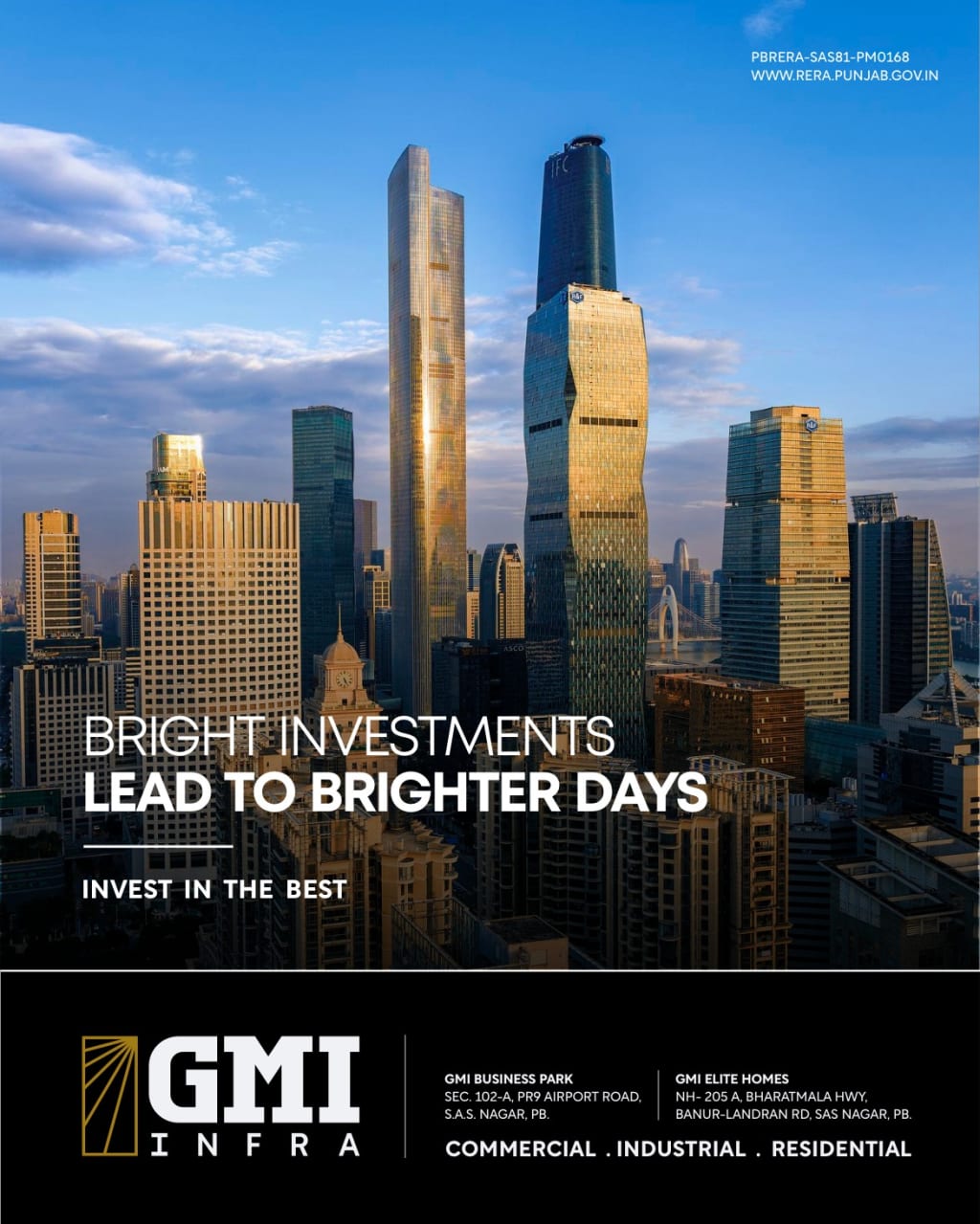
As India’s urban landscape rapidly evolves, a new generation of developers is emerging — those who prioritize smart planning, sustainability, and community-oriented design over short-term returns. Among these is Mohit Bansal, a Chandigarh-based real estate developer and the CEO of Grey Marble Infra Pvt. Ltd. (GMI Infra). With a background in Computer Science and Applied Mathematics from the State University of New York, Bansal brings a unique perspective to city-building — one that combines global knowledge with regional commitment.
Though not often in the spotlight, his influence is increasingly visible in Mohali’s urban transformation, where he is playing a significant role in shaping infrastructure that meets both present-day demands and future expectations.
The Growing Importance of Tier-2 Cities
India’s largest metro cities — Delhi, Mumbai, Bengaluru — are increasingly burdened with congestion, rising costs, and space constraints. As a result, Tier-2 cities like Mohali are becoming more attractive for industries, startups, and educational institutions seeking room to grow. The availability of land, better air quality, and improving infrastructure are accelerating this shift.
This context sets the stage for developers like Mohit Bansal to redefine what urban growth looks like in emerging regions. His company, GMI Infra, is part of a broader movement that is not just expanding cities, but rethinking how they function.
Beyond Construction: Ecosystem Thinking
What sets Mohit Bansal apart is his approach to real estate. Rather than simply constructing buildings, he and his team focus on creating ecosystems — integrated environments where people can live, work, learn, and thrive. His projects often blend residential, commercial, and industrial elements, ensuring that infrastructure supports not just economic activity but also community well-being.
This kind of planning is particularly visible in projects like:
GMI Business Park – a 90-acre mixed-use space that includes industrial plots, commercial zones, and high-rise residences
GMI IT Tower – a smart office building in the heart of Mohali’s IT City, surrounded by leading tech companies and universities
GMI Elite Homes – low-rise residential flats that emphasize green space, safety, and connectivity
Each of these developments reflects a careful consideration of location, functionality, and livability — often missing in rapid urban expansion.
Sustainability and Smart Design
A strong advocate for sustainability, Mohit Bansal integrates energy-efficient materials, landscaped green zones, and resource-saving systems in GMI Infra’s buildings. This not only reduces environmental impact but creates healthier living and working environments.
He’s also embraced technology in construction and design, using smart systems for fire safety, security, and building management. These steps, while not always visible from the outside, signal a shift toward long-term resilience — something increasingly necessary as climate and population pressures mount.
Navigating Challenges with Strategic Vision
Urban development in India doesn’t come without obstacles — from changing regulations to logistical delays and infrastructure limitations. Yet Bansal’s ability to plan strategically and build incrementally has allowed GMI Infra to grow responsibly while contributing to the regional economy.
His educational background plays a key role here. With a foundation in mathematics and systems thinking, he’s able to approach development from a problem-solving perspective — analyzing patterns, forecasting risks, and scaling operations carefully.
A Local Perspective with Global Thinking
Although Mohit Bansal operates primarily from Chandigarh and Mohali, his vision reflects a global understanding of urbanism. He recognizes that modern cities must serve multiple roles — as economic centers, cultural spaces, and ecological systems. His projects attempt to balance these needs, delivering value not just to buyers or tenants, but to the broader urban fabric.
Importantly, Mohit Bansal remains rooted in the local community, working with local institutions, architects, and engineers. This balance of global insight and local engagement gives his work both relevance and impact.
Conclusion: Building More Than Real Estate
As Indian cities continue to expand, the question remains: will growth be chaotic or coherent? Mohit Bansal’s work in the Chandigarh-Mohali region suggests that thoughtful, tech-aware, and people-focused development is not only possible but already underway.
By prioritizing long-term sustainability, regional planning, and modern design, he is helping to shape a version of urban India that is both functional and forward-looking.
In an industry often defined by fast turnover and short-term goals, Mohit Bansal stands out as a developer committed to intentional growth — the kind that builds not just cities, but futures.
About the Creator
Mohit Bansal Chandigarh
Mohit Bansal, the CEO of Grey Marble Infra Private Limited (GMI Infra), is a distinguished leader with over a decade of experience in the real estate industry.
Keep reading
More stories from Mohit Bansal Chandigarh and writers in Journal and other communities.
Mohit Bansal Chandigarh: Reimagining Urban Development in North India
When people think of real estate developers, they often picture traditional businessmen focused on land, construction, and sales. But Mohit Bansal, based in Chandigarh and the CEO of GMI Infra (Grey Marble Infra Pvt. Ltd.), breaks that stereotype. With a dual academic background in Computer Science and Applied Mathematics from the State University of New York, Mohit Bansal approaches real estate not just as a business—but as a system that must function efficiently for communities, cities, and the future.
By Mohit Bansal Chandigarh9 months ago in Journal
Top 10 Tips to Remove Bin Smells and Keep Your Bins Fresh
Bin odours are one of the most common yet overlooked household problems. Whether it is a kitchen bin, outdoor wheelie bin, commercial waste container, or apartment garbage chute, unpleasant smells can quickly spread and linger. These odours are not just uncomfortable; they often indicate bacterial growth, trapped organic waste, and moisture buildup. Over time, ignoring bin smells can attract pests, compromise hygiene, and affect the overall cleanliness of your space.
By Anshul Vijayabout 23 hours ago in Journal


Comments
There are no comments for this story
Be the first to respond and start the conversation.