
Marketing Trends for 2026: What’s Changing and How to Prepare
Marketing in 2026: Strategic Shifts Brands Can’t Ignore

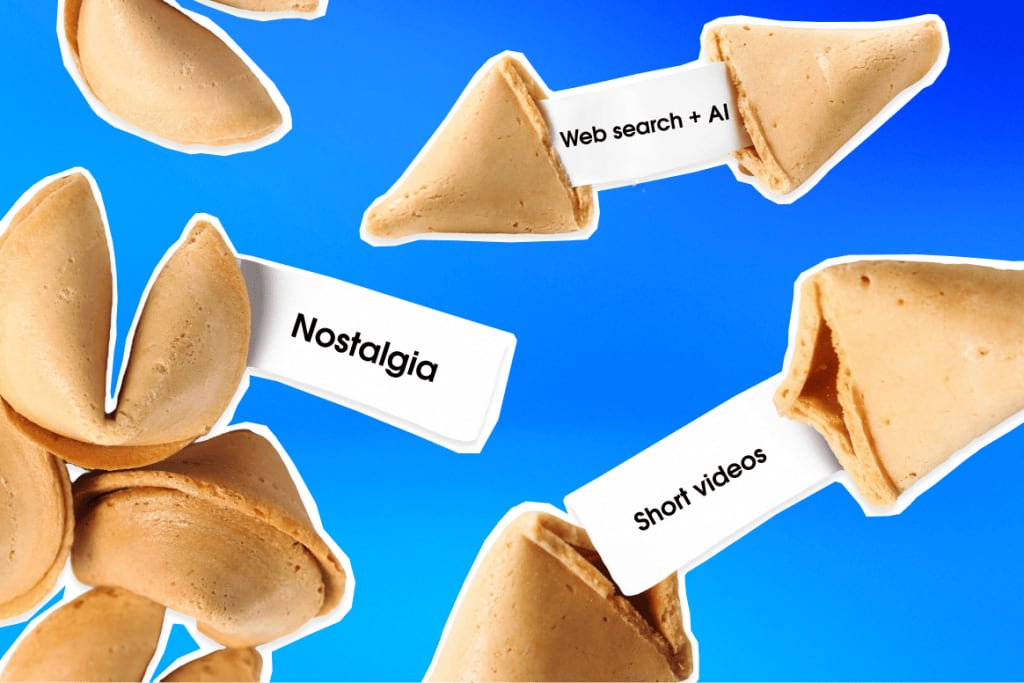
In this article, we’ll break down what changes to expect in marketing next year—and how to prepare for them.
The Role of AI Keeps Growing
In marketing, AI has become one of the core tools. Since 2025, its use has been expanding for hyper-personalization, content creation, and predictive analytics.
Search Powered by AI
One of the most noticeable trends is the growth of AI-driven search experiences. According to an Ipsos study, 83% of users worldwide use Google every day, so the company is actively moving toward deeper AI integration. More and more often, the first thing people see in search results is an AI-generated answer.
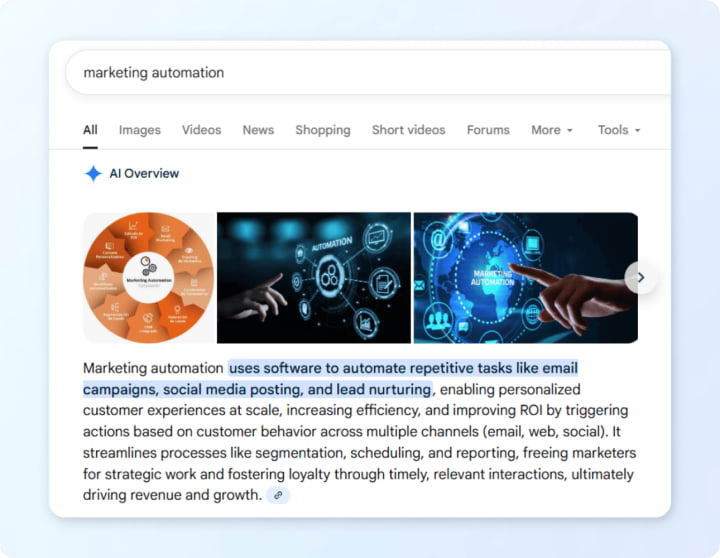
This means SEO isn’t going away—but it is changing. A new direction is emerging: AIO, or optimization for AI-generated answers. The goal of content is shifting: it’s no longer just about ranking at the top of search results, but about structuring your material so AI systems choose it as a source to quote.

What to do so AI systems quote your site:
- Give clear, specific answers to common questions.
- Structure your content—use subheadings, lists, and easy-to-scan sections.
- Add schema markup.
- Write the way people actually phrase their searches.
- Expand content with FAQs, how-to guides, and tables.
- Keep your site technically sound and pages loading fast.
- Refresh content regularly to keep it current.
- Cite research and credible sources.
- Mix in video, visuals, and infographics.
We go deeper into AI optimization here.
Chatbots for user support
Chatbots have been used in marketing for a long time, but by 2026 AI assistants will become noticeably more human in the way they communicate. This will reduce response times and make it easier to handle common user requests.
At the same time, it’s not a good idea to hand over all key marketing communication to AI. Assistants are better suited for standard questions and simple scenarios.
How to use chatbots:
- Keep a clear option to quickly switch to a human specialist when a question is complex.
- Regularly update chatbot flows and check responses against real user queries.
- Place chatbots in the channels your audience uses most often—your website, messaging apps, or social media.
- Be transparent and clearly state that the conversation is with a bot.
Voice and Visual Search
Marketing strategies increasingly reflect the fact that people don’t search only through a traditional search bar—they also use voice and images. In 2025, 20.5% of users relied on voice search. Globally, there are around 8.4 billion voice assistants in use, which already exceeds the world’s population. Visual search is growing as well. According to industry data, 36% of users start product discovery on Pinterest, and image-based search is becoming more common across marketplaces. When planning for 2026, it’s worth adapting your content for both formats: voice search and visual search.
How to adapt content for voice and visual search:
— Write answers the way people ask questions out loud. Instead of “buy pizza New York,” they’re more likely to say “where can I get pizza nearby tonight.” Voice assistants rely on natural language and direct answers.
— Add sections with short, straightforward answers to common questions.
— Include up-to-date local details: address, business hours, and services.
— Use structured data so search engines can better understand your content.
— Optimize images with clear file names and descriptive alt text.
Authenticity in Content
With the flood of AI-generated content and overly polished visuals, audiences are starting to feel fatigued. People increasingly value honesty and a sense of real life, which makes authentic content especially important right now. Photos and videos don’t need to look perfect—what matters more are the emotions and meaning behind them.

That doesn’t mean you should completely abandon AI. A thoughtful balance and mix of formats works best. For example, you can use an AI character but have it voiced by a real employee.
What to use:
- Storytelling and behind-the-scenes content that shows how the company actually works—real people, real processes.
- UGC, or user-generated content. This isn’t glossy influencer advertising, but personal experiences and real stories. This format feels more like a recommendation from another person, which makes it more trustworthy. Read more here.
Marketing Management in a Single Platform
Most users — 73% as of 2025 — interact with a brand across multiple channels before making a purchase, which is why companies are increasingly building omnichannel journeys. As a result, the volume of data and the number of tools involved in customer communication keep growing. On top of that, stricter Google data policies are pushing businesses to rely more on first-party data — information collected directly from users.
In this environment, a unified marketing management system becomes critical. It keeps data from getting lost between channels, cuts spending on inefficient tools, and speeds up decision-making. The result is faster team workflows and a higher return on marketing investment.
Which platform to use for marketing management:
Altcraft Platform backs up the value of unified marketing management with real results. After implementing a CDP, revenue from CRM marketing can grow by an average of up to 98% within a year, while online sales increase by around 30%. This impact comes from working with data in a single interface: all customer information is collected into one unified profile, campaigns across multiple channels are launched from the same place, and personalization is set up there as well.
Sign up for a free platform walkthrough here—we’ll show and explain how Altcraft can work for your business.
Seamless Purchasing
By 2026, the line between online and in-store shopping is becoming increasingly blurred. A purchase is no longer just “see it, buy it,” but an interactive customer experience. Examples include trying on clothes in a virtual fitting room or placing furniture from a store into your home through a smartphone screen. Interactive storefronts fall into this category as well. This approach is often called phygital—a blend of physical and digital.
The next step is deeper automation at the point of sale. After self-checkout kiosks, AI assistants are starting to take on part of the sales associate’s role—suggesting sizes, checking in-store availability, and handling payments.
Another fast-growing format is shoppable video: video content where purchasing is built directly into the viewing experience, with “Buy” buttons, product cards, links, embedded catalogs, and a frictionless path to checkout.

Very Short Videos
Vertical short-form video has been one of the most popular formats for several years. By 2026, however, the biggest growth will come from ultra-short stories. Because of information overload and the habit of younger audiences to scroll quickly, viewers are increasingly unwilling to spend time on longer narratives.
Videos in the 6–10 second range are becoming the norm, with the first 1–1.5 seconds being critical. In that moment, a user either stops or scrolls past. That means the opening has to grab attention instantly, and the story itself needs to deliver the idea as clearly and concisely as possible.
Nostalgia
When there’s a lot of uncertainty around, people tend to gravitate toward what feels familiar and safe. The past offers a sense of stability and evokes warm emotions—which makes nostalgia a strong marketing tool. Research shows that nostalgia-driven campaigns can significantly increase brand affinity, sometimes by as much as 20%.
That said, nostalgia isn’t about copying the past. What works better are references reimagined for today’s context. This can include recognizable cultural cues—movies, TV shows, music, books, objects, or visual styles from a specific era. It can also draw on the brand’s own history: remaking an old ad, bringing back an iconic design, or re-releasing a product that was once a hit.
Summary
In 2026, marketing will be changing in several directions at once. AI is becoming deeply embedded in search, content, and analytics, which means older approaches to SEO and text optimization no longer deliver the same results. People increasingly get ready-made AI answers instead of a list of links. They also search by voice and by image. Content that communicates the point quickly and is easy to consume has a clear advantage.
At the same time, audiences are tired of identical visuals and templated messaging. Real stories, customer experiences, and honest content build more trust than polished advertising. Businesses are forced to bring order to their data and channels—otherwise the customer journey falls apart. The buying process is changing too, becoming faster and simpler through interactive formats, shoppable video, and ultra-short clips.
The article was originally published here.
About the Creator
Altcraft
Interesting and useful articles about marketing, our product and online communications
3 Misconception I Made before I Understood Online Entrepreneurship
For a long time, I believed that making money by set up my online business simply wasn’t meant for me. I watched people who seemed to figure things out faster. They built audiences, found direction, and slowly turned their work into something sustainable. I followed them closely, studied their paths, and tried to replicate their actions.
By Lady Alkaid4 days ago in Journal
Affection and Healing for Yourself
During the night of the last quarter moon, I gathered my ritual supplies. I carefully handled the chunk of black tourmaline that would protect me from your overall negative and narcissistic energy. I carefully walked the house with my stick of selenite in hand, asking the universe to cleanse our working space.
By Alisha Wilkins ✒️🦋🖋️7 days ago in Fiction




Comments
There are no comments for this story
Be the first to respond and start the conversation.