
Gold Outlook: Dead Cat Bounce Risk Builds Near Record Highs
Technical Warning Signs Emerge as Macro Uncertainty and Rate Expectations Shape Bullion’s Next Move
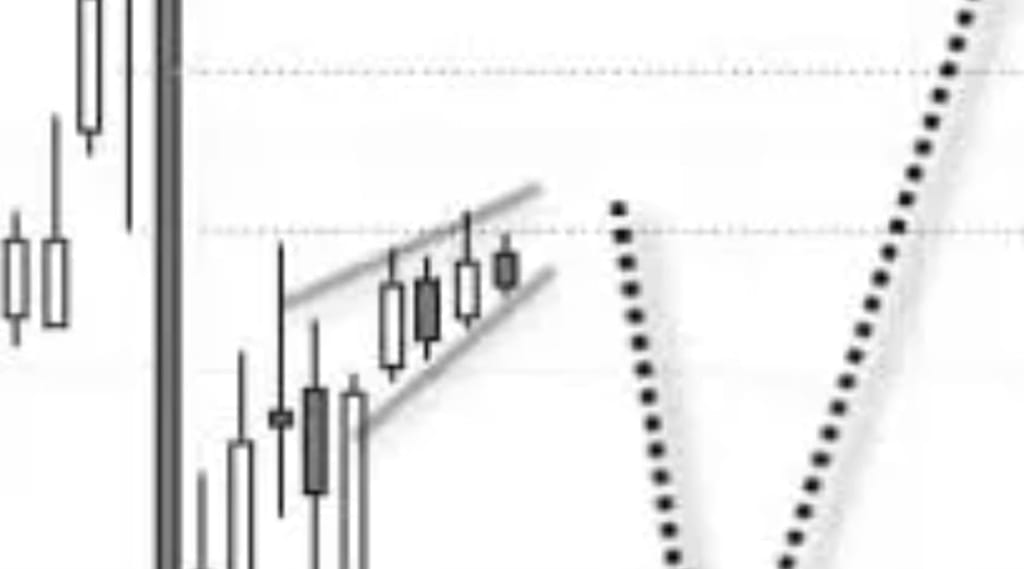
Gold prices are hovering near historic highs, but market analysts are increasingly warning of a potential “dead cat bounce” scenario — a temporary recovery before a broader pullback. While bullish sentiment remains supported by geopolitical tensions, central bank buying, and lingering inflation concerns, technical indicators suggest that upside momentum may be losing steam.
A dead cat bounce typically occurs when an asset experiences a short-lived rally during a broader downtrend, luring in buyers before resuming its decline. In the case of gold, traders are closely monitoring resistance levels, macroeconomic signals, and monetary policy expectations to determine whether the current strength represents a sustainable breakout or a vulnerable peak.
Technical Structure Signals Caution
From a chart perspective, gold’s recent surge has pushed prices toward overbought territory on several momentum indicators, including the Relative Strength Index (RSI). Historically, when gold trades at extreme RSI levels near resistance zones, the probability of consolidation or correction increases.
Volume patterns also indicate that recent gains may not be backed by strong institutional participation. A healthy bullish breakout typically requires expanding volume and follow-through buying. Instead, some sessions have shown narrowing participation — a classic sign of weakening momentum.
Additionally, gold has repeatedly tested upper resistance bands without delivering a decisive weekly close above them. Failure to sustain gains above these levels could encourage short-term traders to lock in profits, potentially triggering a wave of selling pressure.
The Role of the U.S. Dollar and Yields
Gold’s trajectory remains closely tied to movements in the U.S. dollar and Treasury yields. A stronger dollar often weighs on gold because it makes the metal more expensive for foreign buyers. Recent fluctuations in the US Dollar Index have added volatility to bullion markets.
At the same time, rising bond yields increase the opportunity cost of holding non-yielding assets like gold. Investors are closely watching signals from the Federal Reserve regarding interest rate policy. If policymakers maintain a hawkish stance or delay expected rate cuts, real yields could move higher — a development that typically pressures gold prices.
Conversely, any dovish pivot, economic slowdown, or renewed financial stress could quickly reignite safe-haven demand.
Macro Drivers: Inflation and Safe-Haven Demand
Gold has historically served as a hedge against inflation and currency debasement. Although inflation rates have moderated from their recent peaks, uncertainty surrounding global growth and fiscal sustainability continues to support underlying demand.
Geopolitical tensions, trade disputes, and election-related uncertainty in major economies are also contributing to defensive positioning. Central banks, particularly in emerging markets, have maintained steady gold purchases to diversify reserves. According to data trends highlighted by the World Gold Council, official sector buying has remained robust over the past several quarters.
However, while structural demand appears supportive, short-term price action can diverge significantly from long-term fundamentals.
Futures Market Positioning
Speculative positioning in gold futures markets has increased in recent weeks. Data from the COMEX shows a build-up in net long contracts among hedge funds and managed money accounts.
Elevated speculative positioning can amplify both gains and losses. If sentiment shifts abruptly — for example, due to stronger-than-expected economic data or a surprise policy announcement — leveraged traders may rush to unwind positions. Such liquidation events often accelerate short-term declines.
In a dead cat bounce scenario, the presence of crowded long trades can intensify downward pressure once key support levels break.
Key Levels to Watch
From a technical standpoint, several price zones are crucial:
Immediate Resistance: The recent high, where sellers have repeatedly emerged.
Psychological Round Numbers: These often act as magnets for price action but can also trigger sharp reversals.
Major Support: The breakout zone from the previous rally. A sustained move below this area could confirm a corrective phase.
A decisive weekly close above resistance with strong volume would invalidate the dead cat bounce thesis and signal continuation. On the other hand, a breakdown below short-term support could open the door for a retracement toward longer-term moving averages.
Sentiment Versus Structure
Market psychology plays a pivotal role near record highs. Retail participation often increases during strong rallies, driven by fear of missing out (FOMO). While this inflow can temporarily extend gains, it may also signal late-stage momentum.
Institutional investors, by contrast, tend to reduce exposure into strength if valuations appear stretched relative to macro conditions. If risk appetite improves across equity markets and capital flows back into growth assets, gold may struggle to maintain its premium.
A divergence between bullish headlines and weakening technical structure is often the hallmark of a potential dead cat bounce.
Broader Commodity Context
Gold’s performance cannot be viewed in isolation. Commodity markets more broadly are reacting to shifts in global demand expectations. Industrial metals and energy prices provide insight into growth momentum. If economic data softens, gold could benefit as a defensive asset. However, if growth surprises to the upside, investors may favor risk-sensitive commodities over defensive holdings.
Correlation dynamics with silver and platinum are also worth monitoring. A healthy precious metals bull trend usually sees confirmation from silver outperformance. Lack of confirmation can indicate fragility in the rally.
Risk Management Considerations
For investors, the current environment underscores the importance of disciplined risk management. Chasing breakouts without confirmation can be costly if the move proves temporary.
Traders may consider:
Waiting for confirmation above resistance before adding exposure.
Using trailing stop-loss orders to protect profits.
Diversifying across asset classes to reduce concentration risk.
Long-term investors focused on portfolio hedging may view pullbacks as opportunities to accumulate gradually rather than attempting to time short-term swings.
Outlook: Breakout or Bull Trap?
The gold market stands at a crossroads. Structural drivers — including central bank demand, geopolitical uncertainty, and fiscal concerns — remain supportive over the long term. Yet near-term price behavior shows signs of exhaustion.
Whether the current rally evolves into a sustained breakout or devolves into a dead cat bounce will depend largely on monetary policy expectations, real yield movements, and the dollar’s direction.
If economic data reinforces the case for prolonged higher rates, gold could face a corrective phase. However, any renewed volatility in financial markets or policy easing signals could quickly re-energize bullish momentum.
For now, caution appears warranted. The metal’s position near record highs presents both opportunity and risk — a classic environment where disciplined strategy matters more than emotion.
About the Creator
Keep reading
More stories from Ayesha Lashari and writers in Journal and other communities.
Tesco Plans to Give Under-18s Clubcard Access This Year
In a significant shift in retail strategy, Tesco has announced plans to allow under-18s to access its popular Clubcard loyalty scheme later this year. The decision marks a major change for the supermarket giant, which has traditionally limited membership to adults. By opening the program to younger shoppers, Tesco is positioning itself to build brand loyalty earlier and adapt to the evolving shopping habits of the next generation.
By Ayesha Lasharia day ago in Journal
Why Prince William’s Saudi Arabia Visit Is a Diplomatic Maze
Prince William’s visit to Saudi Arabia has drawn significant international attention, not simply because of his status as the British heir to the throne, but because the Kingdom itself represents one of the most complex diplomatic landscapes in the world today. Every handshake, meeting, and public statement during such a visit carries layered political meaning. For Britain, Saudi Arabia is simultaneously a vital strategic partner and a source of persistent controversy, making any high-profile engagement a careful diplomatic balancing act.
By Sadaqat Ali6 days ago in Journal




Comments
There are no comments for this story
Be the first to respond and start the conversation.