
Lifecycle Management of Amusement Projects: Sustaining Value Through Strategic Evolution
Maximizing Operational Longevity and Sustainable Profitability in the Modern Entertainment Industry
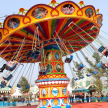

The lifecycle management of amusement projects extends far beyond the initial design or grand opening of a facility. It encompasses every stage—from conceptualization and construction to operation, renewal, and eventual transformation. Each phase demands a structured approach to preserve the project’s relevance, ensure financial continuity, and maintain public safety. Effective lifecycle management is the foundation of sustainable growth within the modern entertainment industry.
Understanding the Lifecycle Framework
An amusement project, whether a large outdoor theme park or an indoor entertainment center, progresses through a series of definable stages. These include planning, development, operation, optimization, and renewal. Each stage presents its own technical, financial, and managerial challenges. A successful project not only thrives during its initial years but continuously adapts to changing market expectations and technological advancements.
From the earliest design stages, lifecycle thinking ensures that resources are utilized efficiently. Materials, mechanical systems, and layouts are chosen not only for their immediate visual appeal but also for durability, ease of maintenance, and upgrade potential. For example, indoor amusement park equipment designed with modularity in mind can be reconfigured to support new attractions, extending its functional lifespan without full replacement.

Lifecycle management, therefore, is not a linear process—it is cyclical. Continuous assessment, adjustment, and reinvestment allow the project to evolve in alignment with market trends, safety regulations, and consumer preferences.
Phase One: Concept and Design
The foundation of any successful amusement project begins in its conceptual stage. This phase defines the thematic identity, spatial layout, and target demographic. Engineers and designers collaborate to ensure that attractions align with both creative goals and operational feasibility.
During this stage, planners must anticipate maintenance cycles, load distribution, and integration with future expansions. For example, allocating sufficient mechanical and structural capacity enables the future installation of more complex systems like motion simulators or dynamic rides such as a self-control plane.

The design process should also incorporate predictive modeling for visitor flow, energy consumption, and equipment wear rates. By integrating lifecycle considerations early, the project avoids reactive maintenance and unplanned downtime later.
Phase Two: Construction and Installation
Construction transforms conceptual blueprints into tangible experiences. Quality assurance at this stage dictates the operational reliability of the facility. Manufacturers and contractors must coordinate on timelines, safety standards, and testing procedures. For indoor facilities, the choice of indoor amusement park equipment is especially critical.
These installations demand specific attention to spatial optimization, ventilation, and accessibility. Compact yet robust equipment allows operators to maximize entertainment density without compromising comfort or safety. Meanwhile, engineers ensure that the supporting infrastructure—power supply, load-bearing structures, and control systems—is built with long-term serviceability in mind.
A disciplined documentation process during installation creates a maintenance baseline. Detailed as-built records, equipment specifications, and safety certifications become essential references for ongoing lifecycle management.
Phase Three: Operation and Performance Monitoring
Once the park opens, the operational phase begins—the period where design intentions meet real-world conditions. Continuous monitoring of visitor behavior, mechanical performance, and maintenance intervals forms the backbone of lifecycle control.
Operational efficiency is achieved through routine inspections, preventive maintenance, and data analytics. Real-time monitoring systems help identify potential faults before they escalate into critical failures. For attractions like a self-control plane, which relies on complex mechanical and control mechanisms, predictive maintenance can prevent unexpected downtime and ensure consistent visitor satisfaction.
At the same time, operators collect performance metrics such as throughput, energy consumption, and customer feedback. This data informs strategic decisions about ride scheduling, layout adjustments, and refurbishment planning. The goal is to maintain operational excellence while optimizing costs across the equipment’s lifespan.
Phase Four: Enhancement and Renewal
No amusement attraction remains indefinitely captivating. Visitor expectations evolve, technologies advance, and thematic trends shift. The enhancement phase revitalizes existing assets through upgrades, redesigns, or thematic overlays.
Renewal strategies vary based on the type and scale of the facility. For indoor venues, modular systems enable flexible updates—an indoor amusement park equipment setup can be transformed seasonally with new interactive elements or augmented reality experiences. Outdoor rides may undergo repainting, mechanical upgrades, or safety system modernization.
Lifecycle enhancement also includes operational innovation. Digital ticketing, smart queuing systems, and immersive lighting effects breathe new life into established facilities without major structural overhaul. Through planned rejuvenation, developers extend asset lifespan while maintaining the freshness essential for continuous visitor engagement.
Phase Five: Decommissioning and Transformation
Eventually, every amusement asset reaches the end of its economic or functional life. Decommissioning does not necessarily imply destruction—it often signals transformation. Components may be repurposed, recycled, or integrated into new projects.
For instance, an older attraction may be dismantled, while its mechanical systems—such as those used in a self-control plane ride—are refurbished and redeployed in another location. In this way, materials and technologies are conserved, minimizing waste and reducing capital expenditure.
Strategic decommissioning also creates opportunities for redevelopment. The vacated area can accommodate new attractions, restaurants, or themed retail, ensuring that the site remains commercially productive. When managed responsibly, the end of one lifecycle naturally gives rise to the next.
The Role of Technology in Lifecycle Optimization
Modern lifecycle management relies heavily on digitalization. Advanced software platforms enable integrated asset tracking, maintenance scheduling, and performance forecasting. Sensors embedded in amusement rides continuously transmit operational data to centralized systems, allowing maintenance teams to act proactively rather than reactively.
For indoor operations, IoT-enabled indoor amusement park equipment can provide real-time insights into usage rates, wear patterns, and visitor interaction levels. Artificial intelligence further enhances efficiency by predicting failure probabilities and optimizing maintenance intervals. These tools not only improve safety but also reduce operational costs through precise resource allocation.
Additionally, digital twin technology allows operators to simulate lifecycle scenarios before implementing changes. This predictive modeling helps evaluate how modifications will affect performance, energy consumption, and visitor satisfaction—empowering decision-makers to plan with confidence.
Financial and Strategic Implications
Lifecycle management is not merely a technical concern; it is a financial discipline. The capital investment required for construction represents only a fraction of total lifecycle cost. Maintenance, operation, and periodic upgrades account for the majority of long-term expenditure.
Developers who adopt lifecycle-based budgeting can anticipate and distribute costs more evenly, avoiding financial strain from unplanned repairs or premature replacements. Moreover, consistent maintenance extends asset longevity, maximizing return on investment.
From a strategic perspective, lifecycle planning enhances competitive positioning. Parks that maintain high operational reliability and continuously refresh their offerings cultivate stronger brand loyalty and market resilience. In contrast, facilities that neglect lifecycle oversight often experience accelerated decline in visitor numbers and profitability.
Sustainability as a Core Principle
Modern entertainment enterprises face increasing pressure to integrate sustainability into every aspect of operation. Lifecycle management aligns naturally with environmental responsibility. Through material optimization, energy-efficient systems, and modular design, amusement projects can minimize waste and reduce carbon footprint across their operational lifespan.
For example, upgrading outdated mechanical systems in attractions like a self-control plane with energy-efficient motors or regenerative braking not only improves performance but also reduces power consumption. Similarly, indoor facilities can utilize LED illumination, smart climate control, and eco-friendly materials to achieve sustainability goals while maintaining visitor comfort.
Conclusion
Lifecycle management of amusement projects represents the convergence of engineering precision, financial foresight, and creative adaptability. By viewing each attraction as a living system—one that evolves, ages, and renews—developers ensure that entertainment spaces remain viable, safe, and captivating over time.
Whether managing an advanced self-control plane attraction or upgrading large-scale indoor amusement park equipment, the guiding principle remains constant: sustained value through deliberate evolution. Only by mastering the full lifecycle—from conception to transformation—can entertainment operators secure both enduring profitability and cultural relevance in an ever-changing leisure landscape.
About the Creator
amusementparksolution
Beston Rides - Focus on providing high-quality, customizable amusement rides and offering one-stop amusement park construction services.
Website: https://bestonamusementrides.com/
Keep reading
More stories from amusementparksolution and writers in Journal and other communities.
Building a Comprehensive Emergency Response System for Modern Amusement Parks
Safety in an amusement park is not defined solely by equipment quality or operational excellence. It is fundamentally determined by the robustness of its emergency response system. As visitor expectations rise and regulatory scrutiny intensifies, constructing a comprehensive emergency framework has become an indispensable component of park management. This system integrates prevention, preparedness, real-time coordination, and post-incident recovery into a unified structure capable of addressing diverse risk scenarios.
By amusementparksolution4 months ago in Journal


Comments
There are no comments for this story
Be the first to respond and start the conversation.