
Kris Gopalakrishnan’s Talent Engine: A Playbook for CHROs to Scale People at Industrial Strength
Modernizing the Infosys Graduate Training & Mentorship Legacy for CHROs in 2025

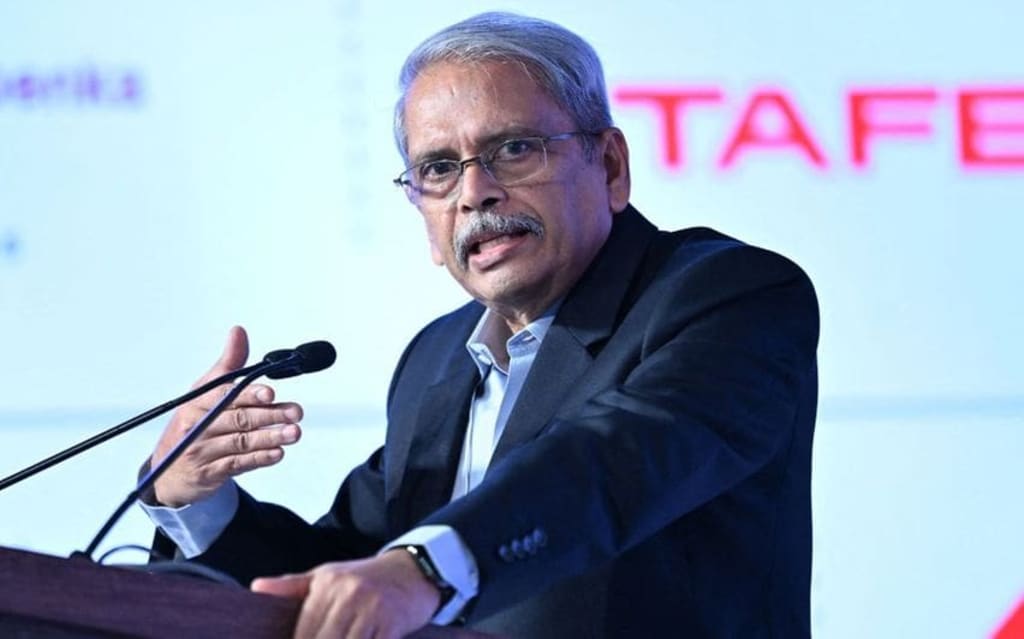
As CHROs face the dual challenge of talent strategy at scale and modern leadership demands, Kris Gopalakrishnan’s legacy at Infosys particularly the famed graduate training and mentorship machinery offers a compelling playbook. In this article, you’ll discover how to build a talent engine modeled on Infosys’s trusted residential training and leader-as-mentor culture. We’ll modernize the concept for 2025 by exploring the economics of structured hiring, mentorship OKRs, leadership rotations, and L&D tied to business outcomes helping CHROs scale people at industrial strength.
You’ll learn clear CHRO leadership lessons, workforce planning strategies, and how people analytics for CHROs can optimize such systems all while aligning talent with business strategy.
1. The Infosys Graduate Training Legacy: Foundations of a Talent Engine
1.1 Infosys’s Global Education Centre: Scale & Infrastructure
Infosys’s Global Education Centre in Mysore stands as the world’s largest corporate university, spanning 337 acres with more than 200 classrooms and the capacity to train up to 14,000 employees simultaneously. Since 2002, it's trained roughly 125,000 engineering graduates by mid-2015. Its Leadership Institute (ILI) further develops around 4,000 future senior leaders annually.
1.2 Hiring Potential vs. Bidding for Senior Talent
This model reflects an economic decision: hiring fresh graduates at scale and investing in structured training is often more cost-effective and scalable than bidding top dollar for senior hires. CHROs can replicate this playbook: build internal academies, deploy structured onboarding, and thus reduce dependency on the external talent market while retaining control over cultural norms and capabilities.
1.3 Internships, Campus Connect, and Early Brand Building
Infosys’s InStep global internship initiative and Campus Connect collaboration with universities help fill the talent pipeline early and at scale. InStep brings interns to Bangalore for immersive projects and mentorship, while Campus Connect aligns academic output with real industry needs. This exemplifies talent acquisition at scale through brand building, pre-onboarding, and relationship building key facets of a talent operating model.
2. Modernizing the Graduate-Training Talent Engine for 2025 CHROs
2.1 Economics: Potential Over Experience
CHROs should model hiring budgets and hiring channels to prioritize potential, not just credentials. Structured training allows building internal bench strength at lower CTC, while also ensuring culture fit and long-term retention. In 2025, digital learning platforms (like Infosys’s Wingspan and immersive tech) reduce marginal cost per learner and increase scalability.
2.2 Residential & Blended Training + L&D Tied to Business Outcomes
Tie training programs directly to business metrics. For instance, structure a 6-month residential or hybrid onboarding that finishes with participants delivering a business outcome like demonstrating efficiency improvements, pilot success, or peer review scores. Benchmark this against Infosys’s Mysore model but add the twist of L&D outcomes aligned to P&L or productivity metrics.
2.3 Mentorship OKRs and Leadership Rotations
Introduce mentorship OKRs: mentors earn recognition when mentees meet growth targets certifications, productivity, soft-skills milestones. This institutionalizes accountability in mentoring. Add leadership rotations: promising performers rotate through cross-functional roles (e.g. product, ops, innovation), building bench strength and leadership development at scale.
2.4 People Analytics for Objective Workforce Planning
Deploy analytics to track time-to-productivity, retention, skill-gap closure, mentorship effectiveness, and rotation outcomes. Dashboards help CHROs forecast talent needs, identify gaps, and continually refine programs this is the core of people analytics for CHROs and HR process industrialization.
2.5 Reskilling, Upskilling, and a Continuous Learning Culture
Embed a culture of continuous learning offer programs like Infosys’s Springboard (reskilling for returning women professionals). In semiconductor sectors or other specialized domains, Infosys uses 3D, AR/VR, simulations, and upskilling mapping to career pathways. CHROs should mirror this: personalized L&D journeys tied to career mobility and organizational capability building.
3. Structured Program Blueprint: Building the 2025 “Talent Engine” for CHROs
Phase 1. Intake & Selection
Component: Campus, internships, early brand
Key Actions: Tie into academic partners, InStep-like programs, referral incentives, and assessments.
Phase 2. Onboarding & Training (6 mo)
Component: Residential/hybrid training
Key Actions: Blend immersive technical, business, soft-skills training; include project deliverables.
Phase 3. Mentorship
Component: Mentor assignment + OKRs
Key Actions: Define mentee KPIs; track progress; mentor recognition tied to outcomes.
Phase 4. Leadership Rotation
Component: Cross-functional exposure
Key Actions: Rotate high potentials into ops, product, innovation, client-facing.
Phase 5. L&D & Reskilling
Component: Digital upskilling
Key Actions: Use simulations, digital platforms, AI-enabled recommendations.
Phase 6. Analytics & Workforce Planning
Component: Metrics tracking
Key Actions: Monitor productivity, retention, performance, training ROI; feed into workforce forecasts.
Phase 7. Continuous Learning Culture
Component: Ongoing development
Key Actions: Encourage internal talent marketplace, career ladders, reward continuous learning.
4. Realities from the Field: What Works, What to Avoid
4.1 The Risks of Hard Cut-offs
Infosys’s training is rigorous. As shared on Reddit, trainees can be terminated after failing repeated assessments even after 2.5 years of internship-to-training journey. CHROs must balance standards with empathy: offer support, remediation, and feedback not just elimination. This preserves brand trust and candidate goodwill.
4.2 Trainee Experience Matters
Some insiders report 6-month training programs (not 3 months), full pay during training (at least in global centers). CHROs should ensure transparent communication: duration, compensation, training outcomes clearly defined.
FAQs
Q1: How is this different from traditional campus hiring?
Traditional hiring sidelines structured training; this playbook invests in capability building before deployment, aligning talent gaps and business needs.
Q2: Aren’t senior hires faster?
Yes, but at higher cost, cultural mismatch risk, and limited talent pool. The talent engine builds scalable, brand-aligned capability over time.
Q3: What tech is needed for people analytics?
HRIS integrated with L&D platforms, dashboards for mentoring, rotations, productivity, using tools such as LMS, BI, and data pipelines.
Q4: How to measure ROI of such a program?
Track metrics such as time-to-productivity, retention, promotion velocity, business impact projects completed, training cost per hire vs. market hire price.
Q5: How to ensure diversity/inclusion?
Use outreach (Campus Connect analogues) to underrepresented groups, offer reskilling programs like Infosys Springboard, and monitor representation through analytics.
Conclusion
Kris Gopalakrishnan’s vision embodied in Infosys’s monumental training and mentorship ecosystem provides a timeless template for CHROs aiming to scale people at industrial strength. By prioritizing potential over speed-hiring, embedding mentorship OKRs, leadership rotations, people analytics for CHROs, and leveraging immersive reskilling programs, organizations can build a resilient talent engine fit for 2025 and beyond.
About the Creator
Chinmaya Singh
Chinmaya Singh is a professional blogger with 6+ years of experience, writing on entrepreneurship, business, and industry, helping readers gain insights into success and growth strategies.
Keep reading
More stories from Chinmaya Singh and writers in Journal and other communities.
रिन्यूएबल एनर्जी में भारत की ग्लोबल लीडरशिप के पीछे Ratul Puri का प्लान – क्यों है ये पूरी दुनिया के लिए प्रेरणा
India is no longer just a participant in the renewable energy revolution; it is becoming a global leader. At the center of this transformation stands Ratul Puri, Chairman of Hindustan Power, whose bold vision and strategic planning are driving the country toward energy independence and sustainability. This article explores Puri's master plan, its impact on India’s renewable energy sector, and why it is capturing global attention.
By Chinmaya Singh5 months ago in Journal
Essential Aircraft Parts You Need for Seamless Aviation Operations
In the world of aviation, every aircraft is made up of a complex array of parts, each with a unique purpose. These components work together to ensure that the aircraft operates safely, efficiently, and reliably, whether it's during routine flights or unexpected emergency situations. In this blog, we'll take a deeper look at the essential aircraft parts that are critical to the seamless operation of aviation.
By Beckett Dowhan8 days ago in Journal
Wild Card Weekend Recap: What Happens Now?
I think I figured out why I love Wild Card Weekend so much. It's because it's the first playoff anything of the calendar year. The NFL season starts in the fall, and once upon a time, the champion was crowned either on or slightly before New Year's. The evolution of the NFL schedule has resulted in the playoffs starting just into the New Year, and currently, the final week of the season falls on the first weekend of the New Year, with Wild Card Weekend coming a week after that. So yes, chronologically, the NFL's Wild Card Weekend serves as the first playoff anything of the calendar year.
By Clyde E. Dawkins6 days ago in Unbalanced



Comments
There are no comments for this story
Be the first to respond and start the conversation.