
Key Challenges and Advantages of Implementing ERP System For Small Businesses
Implementing ERP System

Are you facing trouble in keeping up with your business order volume and customer satisfaction?
Or, maybe your financial management becomes time-consuming and complex along with a poor inventory system?
Well, every business is featured with its bizarre processes, services, and products that address them to stand out from the competition. But as a business grows, the administrative workload also increases, and it further becomes difficult for personnel to manage transactions and information once at a time. As a result, a business can suffer and becomes a victim of its own success.
So, how could you get rid of such challenges?
ERP (Enterprise Management Systems)! Yes, you heard me right!
Nowadays, most companies are investing in ERP systems to automate the business processes whether it is about financial management, inventory control, sales management, marketing, personnel management, or production planning. By using these systems, an administrator can manage other areas of operations like sales and customer services.
Installing an ERP financial system in your organization can effectively collect, store, and manage information for doing business activities. Through a common dashboard and filtering data, ERP systems provide an integrated view of business processes by the database management system.
The filtered analytical data offered by the ERP system can help in making faster decisions for enhancing the customer experience. Furthermore, the system has the capability of connecting the multiple departments of the entire organization onto a single platform. ERP (Enterprise Management Systems)! Yes, you heard me right!
From home fitness to grocery shopping to automate travel, ERP systems are changing as organizations shift from on-premises to cloud computing. Thus, the use of ERP systems significantly improves the quality of organization management. Besides, it can manage core business processes for small and medium-sized businesses (SMBs), increasing cash flow and transparency and reducing inventory holding costs.
A report remarked that the global ERP software market grew by 9%, resulting in a worldwide value of approximately $39 billion in total software revenue in 2019.
However, implementing an ERP system demands careful planning to accomplish the target benefits and lessen the risk of project failure. Therefore, it is worth evaluating the pros and cons of ERP.
In this guide, we will elaborate in detail about the advantages and challenges your face when implementing ERP systems. So, let’s get started.
Introduction to ERP Software
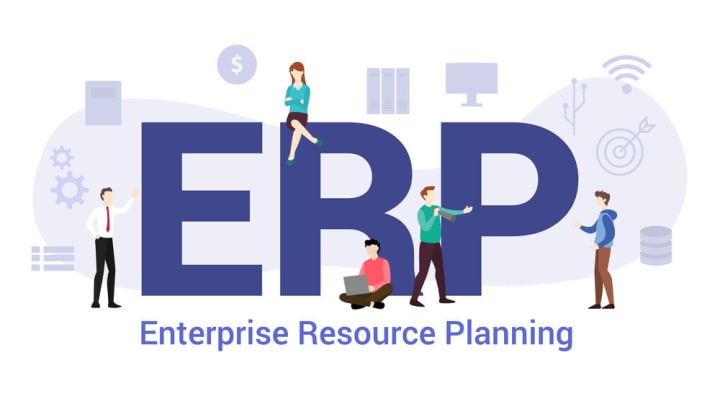
In the most basic sense, ERP software helps manage every aspect of the business, from accounting and CRM to supply chain and procurement management. By automating routine tasks, simplifying business processes, and centralizing a company’s database, the software can save employees’ time so they can focus on other instinctual tasks.
Well, the overall aim of ERP software companies in singapore to implement such software is to enhance revenue margins of your business by bringing everything into a single platform.
Advantages of ERP Systems
In addition to the above, the use of a full-fledged ERP system gives the organization the following advantages.
In addition to the above, the use of a full-fledged ERP system gives the organization the following advantages.
1. Offer a Single and Unified Report System
Installing an ERP system provides better insights along with a single and unified reporting system. It unifies all types of reports and analytics data required for management. These reports can be generated for all processes, departments or functions in real-time. By providing standard financial reports like income and cash flow statements, personnel can get rid of the hassle of multiple spreadsheets and emails.
2. Improve Efficiency
ERP can reduce both time and effort necessary for managing other daily activities. Implementation of ERP allows the businesses to eliminate repetitive manual processes and free-up employees for focusing on other revenue-affecting activities. For this, the advanced functionalities of ERP like artificial intelligence, machine learning, robotic process automation (RPA) and others support the automation and intelligent suggestion capabilities can improve the business efficiency by managing purchase orders, shipping, manufacturing, tracking products, etc.
3. Excellent Customer Service
An ERP system featured with data centralization and unification of information systems allows the sales team to focus on building and maintaining customer relationships instead of creating spreadsheets. This way, the business will be more likely concerned about customer acquisition and retention. At the end of the day, you are more successful in providing better and qualitative customer services.
4. Data Security and Quality
What would be more advantageous than data security?
Due to widespread data access, anyone can control, see, and edit the information. But, ERP solutions have central controls on data and can secure it. With the availability of high levels of data security, ERP systems help in improving the accuracy, consistency, and security of your company's data. Having a cloud-based ERP system can provide an extra layer of security.
5. Standardized Business Processes
All processes of the organization can be organized in the form of a sequential and interconnected workflow, transferred between different departments. Through the use of an ERP system, workflows can be synchronized. This ensures the efficient execution of processes that are closed to individual departments. In addition, it also allows a business to standardize its processes and systems to enhance productivity and efficiency.
6. Improve Collaboration and Workflow
Because The ERP system is being implemented in all divisions of the organization, then there is no need to maintain separate information management systems. ERP systems provide "transparency" of the results of the work of each of the departments. This makes it possible to establish horizontal links between departments and improve their interaction. Furthermore, an ERP platform streamlines the process for collaborating the employees. This also provides better communication across the whole company, which further helps the employees to make proactive decisions.
7. Enhance Inventory System
Many modern ERP systems allow suppliers to perform part of the organization's functions (order formation and tracking, inventory control and replenishment, etc.). Due to the presence of various modules, ERP systems facilitate the tracking of orders, stocks, revenue, sales and all related activities.
Challenges Small Businesses face While Implementing ERP Systems
Like any other management system, the ERP system has its limitations and disadvantages. These shortcomings can be associated with both the functionality of the system and the terms of its purchase, implementation, use and support.
1. Higher Cost
A complete ERP system is quite costly for any organization. The cost of an ERP system includes many components. The main ones are the cost of software and hardware, the cost of planning, implementation, configuration and testing, the cost of service.
2. Complexity
Systems with a small amount of customization will not correspond to real business processes. For systems with many settings, there is a problem of modernization when changing processes. Typically, ERP systems have complex user interfaces. For the successful implementation and operation of an ERP system, long-term user training is required.
3. Data Loss and Downtime Risk
Indeed, ERP systems come with security and accessibility benefits, there is a downside. If someone hacks your system, you may lose all your confidential data. Besides, if something fails in the system, a business may experience downtime that leaves both workers and customers in a hectic situation. You could even lose key information if backups are not there.
So, Invest in ERP or Not?
While deciding on choosing the right platform for your business, it is worth considering the pros and cons of ERP software. But, you should not get scared of potential limitations as these systems also have the capability to take your business to new heights. In the above-mentioned guide, you see that the advantages of the ERP system surpass the disadvantages. So, choose a reliable sage 300 erp consultant for purchasing a robust software for saving both time and efforts.
Hope you receive valuable information!
Thanks for your time!
About the Creator
Jian Wen
Jian Wen is an operational manager at Acsolv Consult, an ERP
financial management software company in Singapore. She handles all the activities that are related to ERP software. With deep interest and passion for writing about ERP.
Keep reading
More stories from writers in Journal and other communities.
The goals I did not achieve
Every writing goal I made for the year is a wash. It has been this way for a while, but I think it's important to be open about my failures and the reality of how life can get in the way. This is especially true considering the several times I have posted on Vocal about my writing goals, how I was changing my approach, and where I was hoping to be for the upcoming year. I will probably do that again in a couple months, but for now, it is time to acknowledge where I am today.
By Kay Husnick21 days ago in Journal
What the Catholic Church Means by “Sacrament” and Why They Matter
The Catholic Church teaches that God is not distant or invisible in our daily lives but comes to us in real, tangible ways. One of the primary ways He does this is through the sacraments. While some people may think of sacraments as symbolic rituals or merely traditional ceremonies, the Catholic understanding goes much deeper. Sacraments are outward signs instituted by Christ that confer grace, and they are central to Catholic faith, worship, and spiritual life.
By Sound and Spirit3 days ago in Journal


Comments
There are no comments for this story
Be the first to respond and start the conversation.