
Kenya Demands Safety for Its Citizens After Tanzania’s Post-Poll Crackdown
Tensions rise across East Africa as Kenya calls on Tanzania to ensure the safety of Kenyan nationals amid a violent post-election crisis.

---
A Growing Regional Concern
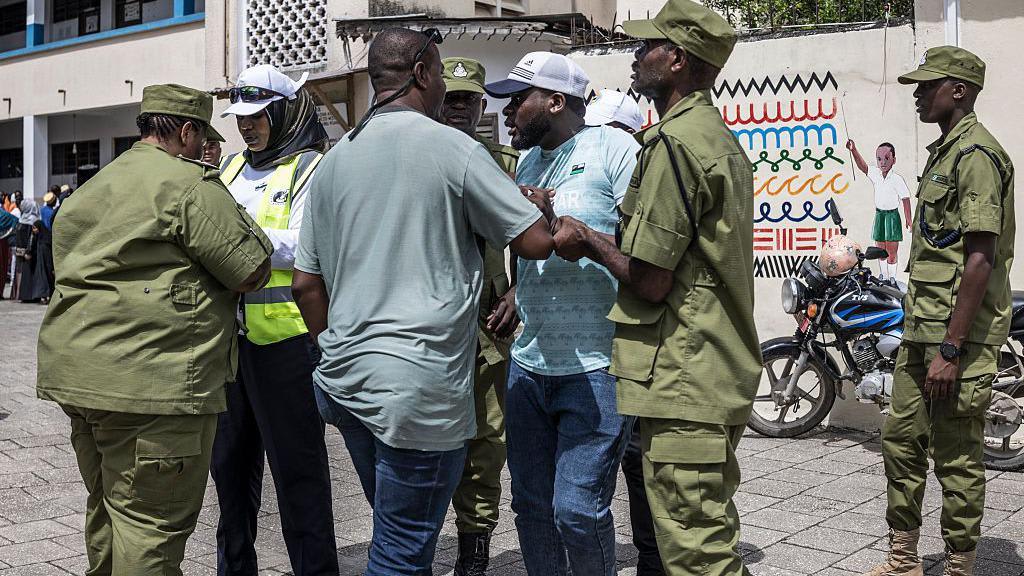
In a development that has rattled East Africa, Kenya has formally demanded assurances of safety for its citizens living and working in Tanzania following a wave of violence that erupted after Tanzania’s recent national elections. The Kenyan government expressed “deep concern” over reports of mass arrests, beatings, and intimidation in several Tanzanian towns as security forces moved to suppress post-election protests.
Tanzania’s election, which saw President Samia Suluhu Hassan claim victory amid accusations of irregularities and opposition crackdowns, has sparked regional unease. For Kenya, which shares deep economic and cultural ties with its southern neighbor, the unrest has raised immediate fears for the safety of thousands of its citizens who live, study, or do business there.
---
Kenya’s Diplomatic Appeal
In a strongly worded statement released by the Ministry of Foreign Affairs, Nairobi urged Tanzanian authorities to uphold human rights and ensure that no Kenyan citizens are caught up in the turmoil.
> “Kenya stands by the principles of regional unity, democracy, and peace. We urge the government of Tanzania to guarantee the safety of all foreign nationals, including Kenyans, during this period of tension,” the statement read.
The announcement came after reports surfaced that several Kenyans had been detained during police sweeps targeting alleged protesters in the coastal city of Dar es Salaam and the border region near Namanga. Families of some detainees have pleaded with the Kenyan government to intervene.
One businesswoman from Nairobi, whose brother was reportedly taken into custody in Arusha, said:
> “He has been living there for five years, running a small transport business. Now we can’t reach him. We just want him to be safe.”
Kenya’s High Commission in Dar es Salaam has since confirmed that it is seeking access to several detained individuals and is working closely with Tanzanian authorities to secure their release.
---
The Crackdown in Tanzania
The unrest in Tanzania follows a disputed election that has drawn criticism from opposition parties, international observers, and human rights organizations. Protesters allege that the vote counting process lacked transparency, while the opposition accuses the government of using force to silence dissent.
Eyewitnesses in cities such as Mwanza, Dodoma, and Zanzibar described heavy police presence, the use of tear gas, and mass arrests following post-election demonstrations. Several opposition leaders have reportedly gone into hiding or been placed under house arrest.
Human Rights Watch and Amnesty International have both condemned the violence, calling for independent investigations into the use of excessive force and arbitrary detentions.
“The right to peaceful assembly and expression must be protected,” said a statement from Amnesty International’s East Africa office. “Cracking down on citizens demanding accountability only deepens mistrust in the democratic process.”
---
Regional Implications
Tanzania and Kenya have long been viewed as anchors of stability in the East African Community (EAC), a regional bloc that includes Uganda, Rwanda, Burundi, South Sudan, and the Democratic Republic of Congo. But as Tanzania grapples with internal tensions, neighboring countries are watching closely.
Kenya’s response reflects both genuine concern for its citizens and a broader worry about regional instability. Cross-border trade, tourism, and transport are critical to both economies. Any prolonged unrest in Tanzania could have ripple effects across East Africa—especially in shared trade corridors like the Mombasa–Dar es Salaam route.
Political analysts note that Kenya’s government has been walking a diplomatic tightrope. While it wants to protect its nationals, it also seeks to avoid open confrontation with Tanzania, a key partner in the EAC.
“Kenya’s statement is firm but measured,” said political analyst Dr. Lydia Njoroge of the University of Nairobi. “It shows concern without escalating the situation. But it also signals to Tanzanian authorities that Nairobi will not stay silent if its people are harmed.”
---
Voices From the Ground
On the ground, Kenyans living in Tanzania describe a climate of fear and confusion. Some say they have been avoiding crowded areas, while others have temporarily closed their businesses.
“I came to Tanzania because it’s peaceful and full of opportunity,” said one Kenyan trader in Arusha. “Now, even going to the market feels risky. We just hope things calm down soon.”
Local Tanzanian citizens, too, are feeling the strain. Many express frustration that post-election unrest is harming the country’s image and economy. “We need peace,” said a resident of Mwanza. “Ordinary people are suffering while politicians argue.”
---
Calls for Calm and Dialogue
Regional bodies, including the African Union (AU) and the East African Community (EAC), have urged Tanzania to engage in dialogue with opposition leaders to restore calm. Kenya has echoed these calls, emphasizing that peaceful political resolution is the only path forward.
President William Ruto’s administration has also offered to support any mediation efforts to defuse tensions, stressing that “a stable Tanzania means a stable East Africa.”
Observers say Kenya’s diplomatic engagement could play a crucial role in preventing the crisis from spreading. As one regional diplomat noted, “Kenya has influence, credibility, and experience in peace mediation. This is the time to use it.”
---
The Road Ahead
As of now, Tanzania’s government insists that the situation is under control, dismissing claims of widespread abuses. However, international pressure is mounting for transparency and restraint.
For Kenyans with loved ones across the border, the wait for safety assurances continues. Each passing day without communication deepens anxiety and highlights how fragile peace remains in parts of East Africa.
If Kenya’s appeal succeeds, it could mark a small but significant victory for diplomacy—and a reminder that protecting citizens abroad is not only a government duty but also a moral responsibility in times of crisis.
---
Conclusion
Kenya’s demand for safety assurances following Tanzania’s post-poll crackdown is more than a bilateral issue—it’s a test of regional solidarity and the strength of East African democracy. As both nations navigate this tense period, the hope is that calm, dialogue, and respect for human rights will prevail over fear and division.
For now, the people of both Kenya and Tanzania watch closely, praying that the next headlines will bring news of peace, not more pain.
About the Creator
Fiaz Ahmed
I am Fiaz Ahmed. I am a passionate writer. I love covering trending topics and breaking news. With a sharp eye for what’s happening around the world, and crafts timely and engaging stories that keep readers informed and updated.
Keep reading
More stories from Fiaz Ahmed and writers in Journal and other communities.
Sudan Capital Hit by Drone Attacks a Day After RSF Agrees to Truce – Reports
The conflict in Sudan has taken another tragic turn. Just one day after the Rapid Support Forces (RSF) agreed to a tentative ceasefire, reports emerged that the capital city, Khartoum, was hit by a series of drone attacks, reigniting fears that peace remains far from reach. The incident highlights how fragile Sudan’s current situation is, as both sides continue to exchange blame and civilians bear the brunt of the violence.
By Fiaz Ahmed 4 months ago in Journal
Author’s Advice
If you would’ve asked me 20 years ago did I know I’d become a writer and an author, I would’ve said “nope, ain’t happening”. As fate would have it I did become an author and I can honestly say I’m loving it so far. It really does feel good to be a writer. I’ve learned a lot on this journey and I feel like with even me being as new to this world as I am, there’s some wisdom I need to share with every other aspiring author.
By Joe Patterson5 days ago in Journal
A Transparent Look at Vocal Challenges and Top Stories
Almost three years ago, we shared a resource article that served as a place for people to suggest new challenge prompts. We thought it would be a good idea to refresh that thread, and take the opportunity to answer a few common questions about top stories, how challenges are judged and how submissions are reviewed.
By Vocal Curation Team4 days ago in Resources



Comments
There are no comments for this story
Be the first to respond and start the conversation.