
Sudan Capital Hit by Drone Attacks a Day After RSF Agrees to Truce – Reports
A fragile ceasefire shattered within hours as fresh drone strikes rock Khartoum, leaving residents trapped in fear and uncertainty.

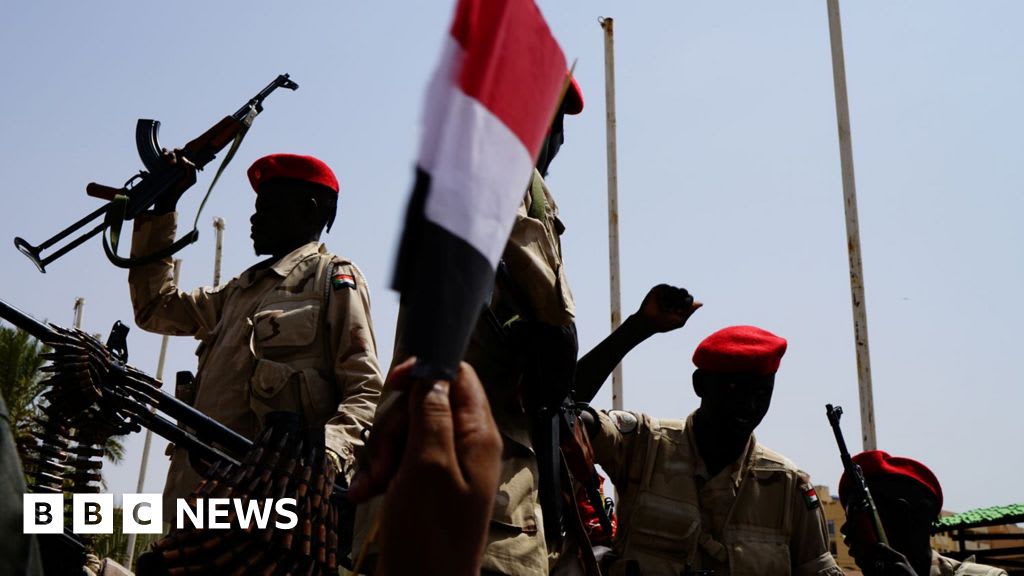
The conflict in Sudan has taken another tragic turn. Just one day after the Rapid Support Forces (RSF) agreed to a tentative ceasefire, reports emerged that the capital city, Khartoum, was hit by a series of drone attacks, reigniting fears that peace remains far from reach. The incident highlights how fragile Sudan’s current situation is, as both sides continue to exchange blame and civilians bear the brunt of the violence.
---
A Ceasefire That Never Held
The latest attacks came barely 24 hours after RSF leaders publicly announced a humanitarian truce aimed at allowing aid to reach trapped civilians and the wounded. For many, this announcement brought a rare flicker of hope following months of fighting between the RSF and Sudan’s national army.
But by the next morning, that hope was crushed. Explosions rocked Khartoum’s skyline, with drones reportedly targeting areas near key military installations and residential neighborhoods. Witnesses described scenes of panic as plumes of smoke filled the sky and families scrambled to find shelter.
“I thought the truce meant we could finally breathe,” said one Khartoum resident in a phone interview. “Then I heard the first explosion, and everything changed again.”
Local hospitals, already struggling with shortages of medicine and electricity, reported a new influx of patients suffering from shrapnel wounds and burns.
---
Conflicting Accounts
As with many moments in Sudan’s ongoing crisis, the truth about who was responsible remains murky. The Sudanese army accused the RSF of violating the ceasefire with drone strikes, calling it a “betrayal of peace efforts.” RSF officials, on the other hand, denied involvement and accused the army of staging attacks to justify continued fighting.
The back-and-forth accusations have become a tragic pattern since the conflict erupted in April 2023, when tensions between the two groups—once allies—boiled over into open warfare. The Sudanese Armed Forces (SAF), led by General Abdel Fattah al-Burhan, and the RSF, commanded by General Mohamed Hamdan Dagalo (known as Hemeti), have been battling for control of the country ever since.
International mediators, including the African Union and the United Nations, have struggled to keep both sides at the negotiating table. Every attempt at peace so far has collapsed within days, sometimes even hours.
---
Civilians in the Crossfire
For ordinary Sudanese citizens, the political blame game offers little comfort. Khartoum, once a bustling capital filled with commerce and culture, has turned into a battlefield. Families live without steady access to food, water, or power. Schools remain closed, hospitals have been destroyed, and humanitarian agencies warn that millions face famine and displacement.
According to the United Nations Office for the Coordination of Humanitarian Affairs (OCHA), more than 10 million people have been forced to flee their homes since the conflict began, making Sudan one of the world’s worst displacement crises. Aid convoys continue to face obstacles due to ongoing violence, looting, and bureaucratic delays.
“The situation is beyond catastrophic,” said a UN official based in Nairobi. “Every time we think there’s a chance for peace, the bombs start falling again.”
---
International Reactions
World leaders have condemned the renewed violence, urging both sides to honor their commitments to the ceasefire. The United States, European Union, and African Union have all released statements calling for restraint.
U.S. Secretary of State Antony Blinken said the drone strikes were “deeply troubling” and emphasized the need for “unhindered humanitarian access and immediate accountability for those responsible.”
Meanwhile, regional powers like Egypt, Saudi Arabia, and Ethiopia are pushing for renewed dialogue. However, their efforts are complicated by shifting alliances and the sheer difficulty of enforcing peace in a country so fractured by war.
---
The RSF’s Growing Reach
The RSF, once part of Sudan’s national military, evolved from the infamous Janjaweed militias that operated during the Darfur conflict in the early 2000s. Since then, the group has grown into a powerful paramilitary force with access to advanced weapons, including drones allegedly obtained through foreign support.
Military analysts warn that the RSF’s ability to launch air attacks—if confirmed—marks a dangerous escalation. Drone warfare allows combatants to strike from afar, making battles even harder to predict and control.
“The use of drones in Khartoum shows that this conflict is entering a new, more destructive phase,” said one analyst from the International Crisis Group. “It also signals how both sides may be receiving external backing.”
---
A Nation on the Brink
For Sudan, each broken truce pushes peace further away. The conflict has already decimated the nation’s economy and social infrastructure. Banks have shut down, hospitals are barely functioning, and food prices have skyrocketed.
Despite these challenges, many Sudanese citizens continue to show extraordinary resilience. Local volunteer networks known as “resistance committees” organize community aid, distribute food, and help families evacuate dangerous areas. Their courage has become a symbol of hope amid devastation.
Still, hope can only last so long without action. Human rights groups continue to urge the international community to increase diplomatic pressure on both the RSF and the SAF, calling for sanctions, arms embargoes, and expanded humanitarian corridors.
---
Conclusion: Fragile Hopes in a Shattered City
The drone attacks on Khartoum, coming just one day after an agreed truce, underscore the tragic instability gripping Sudan. Each promise of peace seems to crumble under the weight of mistrust and power struggles.
As the dust settles over the capital, ordinary citizens remain trapped between two warring forces, clinging to the hope that one day, the sound of drones will be replaced by silence—and peace will no longer be just another broken promise.
---
About the Creator
Fiaz Ahmed
I am Fiaz Ahmed. I am a passionate writer. I love covering trending topics and breaking news. With a sharp eye for what’s happening around the world, and crafts timely and engaging stories that keep readers informed and updated.
Keep reading
More stories from Fiaz Ahmed and writers in Journal and other communities.
Multiple People Fall Ill After Package Delivered to Air Force One Base
A sudden and alarming incident at a U.S. Air Force base has raised concerns about security, safety, and potential threats to the White House. According to officials, multiple people became ill shortly after receiving and handling a suspicious package delivered to the base that houses Air Force One, the presidential aircraft.
By Fiaz Ahmed 4 months ago in Journal
Author’s Advice
If you would’ve asked me 20 years ago did I know I’d become a writer and an author, I would’ve said “nope, ain’t happening”. As fate would have it I did become an author and I can honestly say I’m loving it so far. It really does feel good to be a writer. I’ve learned a lot on this journey and I feel like with even me being as new to this world as I am, there’s some wisdom I need to share with every other aspiring author.
By Joe Patterson2 days ago in Journal
Thief In The Night
To the thief in the night that took and replicated what once was mine: Honestly, I feel kind of bad for you. It’s funny, because we hardly know each other. I only know of you through the magazines you’ve written and the broadcasts you have televised in the past — as well as through the public mentions of you from your show business connections there.
By Snarky Lisa6 days ago in Humans



Comments
There are no comments for this story
Be the first to respond and start the conversation.