
Japan’s Robot Workforce Expands: The Silent Revolution Reshaping Daily Life
From nursing homes to factories—how Japan’s robots are becoming indispensable partners in society
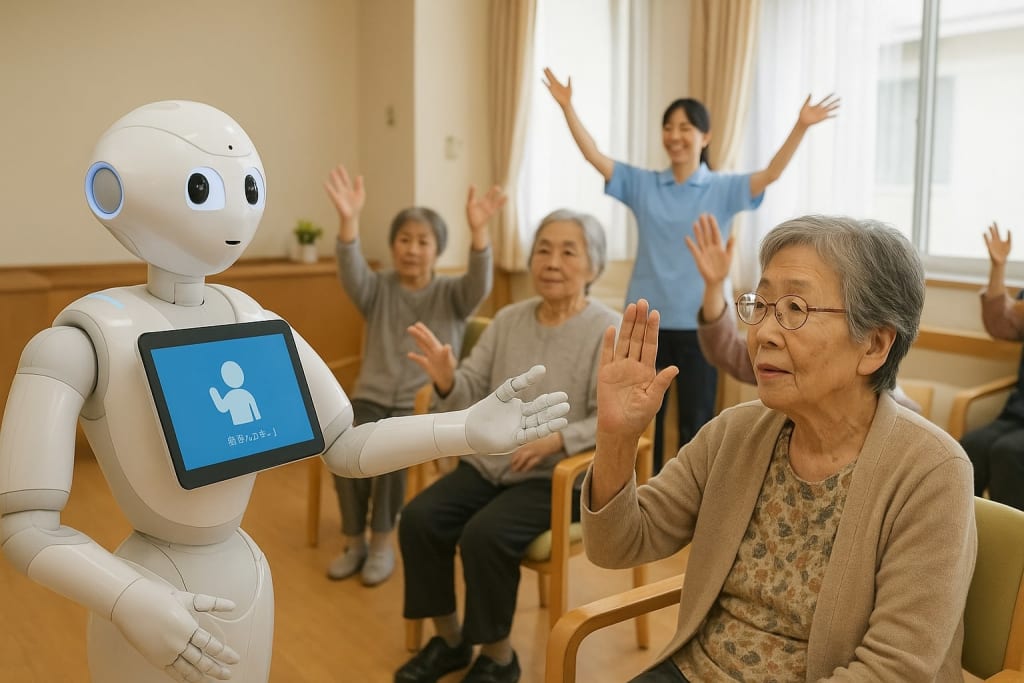
In Japan, robots are now a natural component of life rather than simply objects from the future. Should you visit a nursing home in Tokyo, you would most probably find humanoid robots leading elderly people through chair workouts. Machines in Osaka's factories are diligently putting together items with amazing accuracy and inexhaustible energy next to human laborers. Service robots are increasingly used in hotels and restaurants to check visitors, carry food, and effectively clean floors.
Once thought of as something from a science fiction novel, this delicate shift has grown more quickly in Japan than in many other countries. It's not just about simplifying life; it is essential for survival. Japan is welcoming robots as essential tools to assist keep its society and economy running smoothly since it has an aging population and a shrinking labor force.
The Driving Force Behind Japan’s Robot Revolution
With almost 30% of its residents aged 65 or older, Japan has one of the oldest populations in the world. This is causing a big problem since there are not enough people in industries like delivery and healthcare. Japan, meanwhile, regards robots favorably. Individuals are not concerned that robots would replace human employment. Rather, they hold that robots can assist with challenging jobs and simplify life.
Japan has been at the cutting edge of robot development for many years.Companies like SoftBank Robotics, Panasonic, Fanuc, and Toyota have poured much into developing robots that can collaborate with people. These initiatives already have a big impact in everyday life.
Robots in Nursing Homes: Companions and Caregivers
One prominent example of technology supporting senior care is Japan. Because of its fast growing population, the nation is fighting for a lack of caregivers. Robotic companions, mobility aids, and health trackers are being introduced to solve this problem.
1. One nursing home uses Paro, a robotic seal intended to be soft and soothing. Patients can pet it like an animal, and its natural responses soothe loneliness, offer comfort, and reduce stress levels.
2. RIKEN's friendly-looking Robear is yet another fascinating creation. It can help to lower the physical load on human carers by lifting patients from their beds and onto wheelchairs.
3. Pepper is a robot that communicates with elderly people via its expressive face and capacity to follow voice commands. It keeps the brains of seniors active by encouraging them to join in social events and discussions.
Rather than substitute human caregivers, these robots improve their skills. This lets robots handle routine or taxing jobs while staff members provide more personal care and emotional attention.
Factories: Humans and Robots Working Together
Factories in Japan are employing robots more than they ever have. The emphasis is on cooperating with machines as well as on making objects quicker with them.
1.Collaborative robots, also known as cobots, assist line workers. These robots are intended to be simple to operate, adaptable, and safe. Not behind barriers, they work directly alongside employees. They excel at chores requiring fast action, precise handling, and the capacity to keep going without fatigue.
2.Companies such Fanuc and Yaskawa manufacture robotic arms capable of transitioning between chores including packaging goods and assembling electronics. These robots can perform a range of tasks with very little programming or preparation.
Working jointly, robots and humans enable employees to dedicate fewer hours to hazardous or monotonous jobs.
They could instead concentrate on brainstorming fresh ideas and assessing the quality of the output. This collaboration transforms how people and machines interact, increases workplace safety, and increases the speed of task accomplishment.
Hospitality and Daily Life: Robots at Your Service
Robots are increasingly used in the service sector in Japan. Should you walk into a place called The Strange Hotel, also known as Hennna Hotel, you could encounter a humanoid robot or even one modeled to resemble a dinosaur. Robots serve meals directly to customers at some sushi restaurants, therefore reducing waiting times and errors.
Delivery robots are being trialed in Tokyo's districts as they walk down sidewalks to transport goods and packages straight to consumers' houses. Meanwhile, shopping malls and train stations include silent cleaning robots that keep up while thousands of commuters go about their day.
Though they have useful purposes, these robots also appeal to Japan's love of technology and the modern, blending utility with some humor.
Beyond Efficiency: The Cultural Dimension
The social acceptance of Japan's robotic workforce distinguishes it apart from other countries. The concept of animism, which holds that living creatures and objects both have spirits, is deeply ingrained in Japanese society. This conviction drives individuals to regard robots as friends and assistants rather than cold machines, therefore seeing them in a new light.
This transparent approach has motivated creative designs. Many robots are deliberately designed to appear appealing and kind so they can connect more easily with kids and elderly people. Japanese robots are sometimes given voices, faces, and personalities—that is, they appear more humanlike and relatable—rather than like abrasive, mechanical instruments.
The Challenges Ahead
Japan's robotic workforce runs across several obstacles even with progress:
1. Expense: Hightech robots are pricey, therefore smaller firms attempting to use them face difficulties.
2. Relying on machines: If the technology fails, relying on robots might cause problems.
3. Personal touch: Robots lack the emotional depth, compassion, and volatility present in human interactions even though they can provide company.
The Japanese government and companies are working to develop a society where robots augment human roles instead of substituting them in order to solve these problems.
The Global Impact
Japan's application of robotics is leading the whole globe to follow. Similar problems with their population are being closely watched by nations like South Korea, Germany, and Italy. Should Japan's approach of robot utilization prove effective, it might provide a useful strategy for other industrialized countries confronting aging populations and reduced labor force.
Furthermore, driving the worldwide robotics business is Japan's development.In fields including healthcare and shipping, Japanese businesses are not only producing robots but also spreading their expertise, enabling other nations to implement automation.
A Future Where Robots Are Neighbors, Not Novelties
The progressive growth of Japan's robotic workforce suggests a future where humans and robots might work more harmoniously than ever before. In manufacturing, they work together to create products. They are friends and helpers in nursing facilities. They offer happy help in hotels and restaurants.
Rather than a sensational science fiction scene, this is a sluggish, peoplecentered combination that improves life, increases safety, and, in certain respects, supports more relationships. Japanese robots aspire to help humans enhance their quality of life rather than to steal employment.
Given the major problems presented by aging populations and a lack of personnel, this could be the kind of future we all really need.
About the Creator
Keep reading
More stories from Shahjahan Kabir Khan and writers in Journal and other communities.
The Foldable Laptop Era Begins: Why 2025 Is the Tipping Point for Dual-Screen and Tri-Fold PCs
Imagine opening your laptop only to discover its screen expanding, twisting, or even separating into several monitors—all without adding weight to your bag. Once this seemed like something out of a science fiction film. Foldable laptops have gone beyond testing stages and are now starting to be seen frequently in 2025. Big names like Lenovo, Samsung, Asus, and even whispers of Apple exploring foldable technology suggest we have arrived at a crossroads for two- and trifold laptops.
By Shahjahan Kabir Khan7 months ago in Journal
Author’s Advice
If you would’ve asked me 20 years ago did I know I’d become a writer and an author, I would’ve said “nope, ain’t happening”. As fate would have it I did become an author and I can honestly say I’m loving it so far. It really does feel good to be a writer. I’ve learned a lot on this journey and I feel like with even me being as new to this world as I am, there’s some wisdom I need to share with every other aspiring author.
By Joe Patterson4 days ago in Journal
Venezuela’s Oil Revival: Can a Giant Rise Again?
At dawn in Venezuela’s oil belt, the machines wake before the sun. Steel pumpjacks begin their rhythmic motion, pulling heavy crude from deep beneath the earth—an industry once synonymous with unimaginable wealth, political turbulence, and global energy influence.
By efingutthomas6 days ago in Journal
The First Rainbow Baby
Pitter-patter, pitter-patter. The rain fell in rhythmic splatters, slowly slowing, but still constant. Mira rolled onto her side pulling the blanket tight against her ears, but still she could hear chitter-chatter and scurrying feet of the creatures that refused to sleep in the lower decks.
By A. J. Schoenfeld2 days ago in Fiction




Comments
There are no comments for this story
Be the first to respond and start the conversation.