
The Foldable Laptop Era Begins: Why 2025 Is the Tipping Point for Dual-Screen and Tri-Fold PCs
The future of work, play, and portability is unfolding—literally.
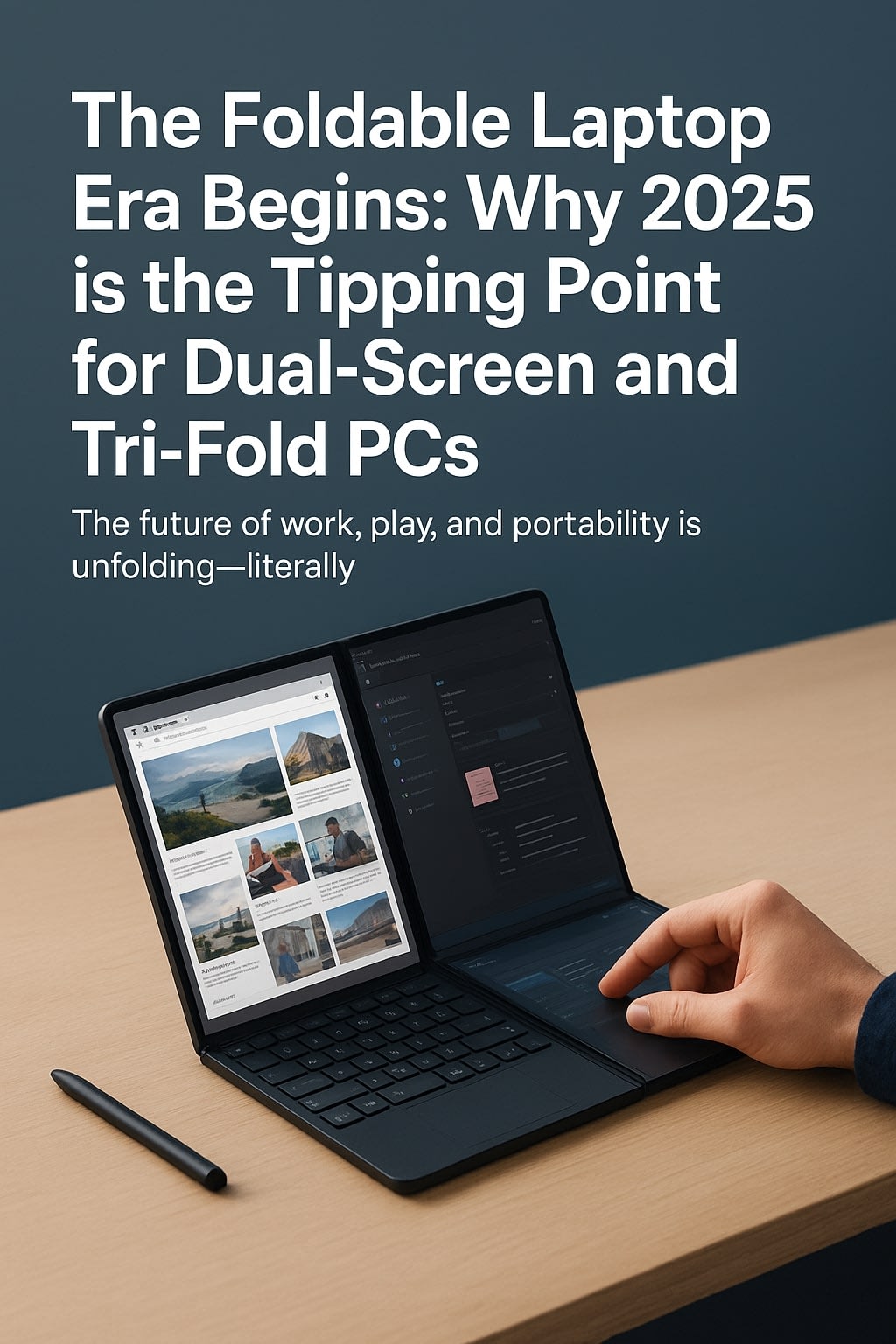
Imagine opening your laptop only to discover its screen expanding, twisting, or even separating into several monitors—all without adding weight to your bag. Once this seemed like something out of a science fiction film. Foldable laptops have gone beyond testing stages and are now starting to be seen frequently in 2025. Big names like Lenovo, Samsung, Asus, and even whispers of Apple exploring foldable technology suggest we have arrived at a crossroads for two- and trifold laptops.
This heralds the start of a new chapter in personal computing, not just another quick technological fad. Let's investigate the factors driving the year 2025 to change our way of working, innovating, and interacting with one another.
From Concept to Reality: A Decade in the Making
With smartphones, foldable gadgets first caught people's attention. Samsung introduced the Galaxy Fold in 2019, therefore opening the door for Huawei, Oppo, and Motorola to investigate folding screens. Laptops, meanwhile, provided a greater difficulty. The idea appeared unrealistic due to problems like bigger displays, durability worries, battery life management, and software optimization.
Lenovo broke new ground in 2020 with the ThinkPad X1 Fold, first foldable laptop ever produced. Though it was a great invention, it was also regarded as experimental—costly, with poor performance, and not really user-friendly. Still, it sparked competition. At CES, Asus, HP, and Dell started introducing thinner and more potent foldable laptops by 2023. With OLED technology, more robust hinges, and AI-enhanced software improving these devices into strong competitors in 2025, advancements in these areas are changing these devices.
Why 2025 Is the Tipping Point
Several factors are coming together to make folding computers both useful and attractive:
1. Flexible OLED screens have become more robust, thinner, and offer greater resolutions free from apparent wrinkling. Manufacturers have perfected the art of bending glass, hence producing screens that are both sturdy and pliable.
2. hinge Advances Designers have created hinges capable of surviving more than 300,000 bends, which is around a decade of daily use and relieves worries regarding early damage.
3. AI Enhancement: Foldable devices can move without effort as AIdriven operating systems start to arise. The operating system correctly reorganizes apps, windows, and jobs as you close or open them.
4. Rise of Hybrid Work A gadget that can change from a tablet to dualscreen arrangement becomes really helpful as more individuals juggle employment in offices and remotely.
5. Reasonably Priced Falling from over $3,000 to $1,500 to $2,000, foldable laptops are becoming more affordable for everyday customers.
The technical is essentially ready, consumers are interested, and the pricing is almost appropriate.
Dual-Screen vs. Tri-Fold: The New Laptop Divide
Not every folding laptop is created alike. Two clear subcategories are developing as the market changes:
1. Folding devices with two displays Though they have a flexible screen folding in the middle, these look much like normal computers. They can either expand into a dualscreen configuration, run as a big tablet, or behave like a laptop with a virtual keyboard. Perfect for professionals, artists, and students looking for flexibility.
2. Three-fold PCs Three linked panels open to produce an almost desktop-sized display using the most recent development known as trifold devices. Imagine carrying a 17-inch folding monitor that can fit in a book. Gamers, designers, and coders see this as a major advance.
Just as tablets and ultrabooks created their particular markets, this differentiation will affect how various people adopt foldable technology.
Work Without Limits
Foldable laptops are great productivity tools in addition to being beautiful. Imagine being able to read your emails and notes on the other side of a huge folding screen while also working on a video. You could also use a stylus to make notes on the bottom screen while attending to a Zoom meeting on the top screen.
For individuals traveling for work, foldable devices do away with the bother of having to carry about additional screens. Small and large workplaces are helpful for business users. In minutes, students could go from their studies to enjoyment.
In conclusion, foldable laptops are created to satisfy the needs of modern lifestyle, where work, school, and leisure often overlap.
Entertainment Reimagined
Foldable laptops are altering the way people enjoy entertainment beyond their job capacities. Without big monitors, gamers can enjoy ultrawide graphics. Movie aficionados can see a cinema-quality display everywhere they travel. Furthermore, these gadgets offer one solution for several hobbies because they can also act as ereaders, notetaking tools, and drawing pads.
The days of having to tote a distinct laptop, tablet, and ereader are over; one foldable device can manage everything.
Challenges Ahead
Every revolution runs against challenges, and foldable laptops are not different. They keep running across numerous difficulties:
1. Cost Problems: Foldable notebooks are regarded as high-end in comparison to typical ultrabooks even if they are less expensive now.
2. Questions regarding long life Early foldable phones had creases, so many users are hesitant.
3. Compatibility of Apps Developers have to change programs for different screen sizes to avoid uncomfortable images.
4. Energy Efficiency The bigger, more brilliant displays need more energy, and developments in battery technology are still under progress.
Though not dealbreakers, these difficulties delay the path toward general adoption.
The Road Ahead: A Decade of Folding
Foldable laptops are expected to make up 15% of global PC sales by 2030, according to industry experts. This points to a major shift in a market with little activity over many years. Ten years ago, ultrabooks changed mobile computing; foldable devices are poised to lead the following revolution.
Looking toward the end of this decade, we may expect:
1. For high-end laptops, foldables are starting to be the norm.
2. Complete software ecosystems built for flexible displays.
3. Detachable keyboards and magnetic pencils created especially for foldable devices are among new accessories.
4. For regular users, there are models that are more affordable, lighter, and thinner.
What appears sophisticated in 2025 might become quite ordinary by 2030.
Final Thoughts: A New Chapter in Computing
Showing off fantastic technology, the foldable laptop allows us a glimpse at future computing. It demonstrates how gadgets can be made to meet human demands and be versatile, simple to use.
We are at a crossroads as we approach 2025.For students, remote employees, gamers, and creatives, this new foldable technology provides something unique: the power of a desktop, the simplicity of a tablet, and the portability of a laptop all in one.
The conventional laptop we have used for years is becoming something quite new.The actual issue is not whether foldable gadgets will affect the next generation of computers, but rather when we will start to embrace and use this fresh way of computing.
About the Creator
Keep reading
More stories from Shahjahan Kabir Khan and writers in Journal and other communities.
🚖 Robotaxis Take Over Shanghai: Self-Driving Cars Are No Longer a Test—They’re a Daily Reality in China’s Megacities
The Dawn of Driverless Streets Not long ago, self-driving cars sounded to belong in a science fiction film. Many imagined sleek vehicles silently passing through bright, illuminated settlements as passengers took some time to unwind. Shanghai now accepts this idea; it is no longer a figment of the imagination. Not just being tested there, Robotaxis—selfdriving cars driven by artificial intelligence—are presently rather prevalent in the most congested urban areas of China.
By Shahjahan Kabir Khan7 months ago in Journal
Author’s Advice
If you would’ve asked me 20 years ago did I know I’d become a writer and an author, I would’ve said “nope, ain’t happening”. As fate would have it I did become an author and I can honestly say I’m loving it so far. It really does feel good to be a writer. I’ve learned a lot on this journey and I feel like with even me being as new to this world as I am, there’s some wisdom I need to share with every other aspiring author.
By Joe Patterson5 days ago in Journal
Strengthening Clinical Governance and Accountability in Nursing Practice Through CPD
Clinical governance is central to quality and safe healthcare delivery. It reflects the system through which organisations remain accountable for continuously improving service quality and maintaining high standards of care. As the largest professional workforce in the health system, nurses play a critical role in ensuring these systems function effectively every day. Continuing Professional Development supports nurses to meet this responsibility with confidence and capability.
By Angelo Ean5 days ago in Journal




Comments
There are no comments for this story
Be the first to respond and start the conversation.