
Italian Cuisine, Leadership, and the Evolution of Resort Dining
How Italian culinary principles continue to shape modern luxury hospitality across international resorts


Italian cuisine has always travelled well.
Long before it became fashionable to talk about global dining concepts, Italian food was already adapting, changing, and quietly finding its place far from home.
The recent recognition of Italian cuisine as part of UNESCO’s Intangible Cultural Heritage has brought that journey back into focus. Not as a celebration of nostalgia, but as a reminder that this cuisine continues to evolve through the people who practice it every day, often outside Italy.
In international hospitality, especially in luxury resorts, Italian cuisine is rarely static. It is tested by different cultures, diverse guest expectations, and complex operational realities. In those environments, tradition alone is not enough.
Italian Cuisine Beyond the Plate
In resort dining, Italian cuisine becomes something broader than a list of recipes. It turns into a working system.
Seasonality, balance, respect for ingredients, and clarity of execution are not abstract ideas. They are practical tools that help kitchens function consistently, even at scale.
This is one of the reasons Italian culinary principles translate so effectively into high-end hospitality. They provide structure without rigidity. They allow creativity, but within boundaries that protect quality and identity.
For chefs working internationally, this balance is essential. Italian cuisine often acts as a common language between cultures, familiar enough to comfort guests, yet flexible enough to feel relevant wherever it is applied.
The Changing Role of the Executive Chef
As resort dining has evolved, so has the role of the Executive Chef.
Today, leadership is no longer defined only by technical skill or creativity at the pass. It is measured through vision, organisation, and the ability to guide teams over time.
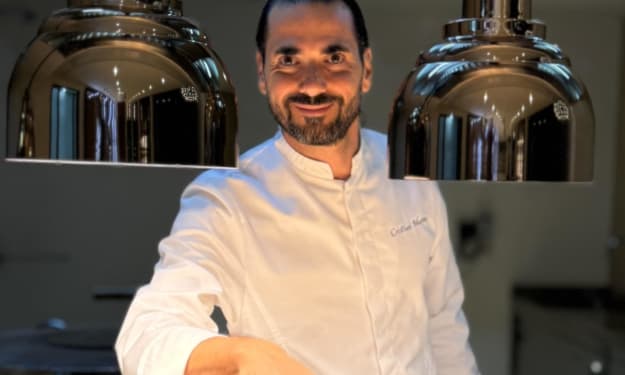
Chef Cristian Marino represents this modern interpretation of the role. An Italian Executive Chef and culinary consultant with over twenty five years of international experience, his work spans Europe, the Middle East, Asia, and the Maldives.
Rather than focusing on signature dishes, his approach centres on concept development, operational clarity, and team leadership. In luxury resorts, where multiple outlets and cultural influences coexist, this perspective becomes critical.
The goal is not to impose Italian cuisine, but to integrate its principles into dining experiences that feel authentic to the destination while remaining true to their roots.
Recognition as a Result of Consistency
In hospitality, recognition usually arrives late.
Often after the most difficult phases are already over.
In 2025, Chef Cristian Marino’s work in luxury resort dining in the Maldives was recognised by the Food & Drink Awards by Lux Life Magazine with the title of Luxury Resort Dining Innovator of the Year – Maldives.
The recognition reflects a wider shift in the industry. Innovation today is less about complexity and more about coherence. Less about performance, more about structure.
The recognition reflects a broader shift in the industry. Innovation today is less about complexity or spectacle, and more about coherence, leadership, and long-term thinking.
Leadership, Responsibility, and the Future
Italian cuisine carries a certain responsibility when presented abroad. It is not just about flavour, but about values. Teaching teams why things are done a certain way matters as much as teaching how to do them.
For Chef Cristian Marino, leadership in the kitchen is closely tied to education and shared responsibility. Creating strong teams means encouraging awareness, discipline, and respect for the craft, rather than relying solely on hierarchy.
This philosophy continues to shape his work across resort environments, where consistency and human connection often define the guest experience more than innovation alone.
Looking Ahead
Italian cuisine’s strength lies in its ability to adapt without losing its identity. That is why it remains relevant in modern hospitality, especially in destinations where guests seek authenticity alongside comfort.
Its future abroad will not depend on replication, but on thoughtful interpretation. Chefs who understand this balance play a quiet but essential role in shaping how Italian cuisine is perceived around the world.
In this sense, recognition is never an endpoint.
It is simply a moment along a longer journey, one built on leadership, responsibility, and daily practice.
About the Creator
Cristian Marino
Italian Executive Chef & author with 25+ years in 10+ countries. Sharing stories on kitchen leadership, pressure, and the human side of food.
Keep reading
More stories from Cristian Marino and writers in Journal and other communities.
Italian Cuisine Achieves UNESCO Heritage Status
Italian cuisine has officially been recognized as UNESCO Intangible Cultural Heritage, marking a historic moment not only for Italy, but for the global culinary community that celebrates and preserves its traditions every day. It is the first time a nation’s entire culinary identity — not a dish, not a practice, but the whole cultural system behind it — receives this level of recognition.
By Cristian Marino3 months ago in Journal
Author’s Advice
If you would’ve asked me 20 years ago did I know I’d become a writer and an author, I would’ve said “nope, ain’t happening”. As fate would have it I did become an author and I can honestly say I’m loving it so far. It really does feel good to be a writer. I’ve learned a lot on this journey and I feel like with even me being as new to this world as I am, there’s some wisdom I need to share with every other aspiring author.
By Joe Patterson4 days ago in Journal
Tiles 101: A Practical Guide to Choosing the Right Tile for Your Space
Tile has remained one of the most versatile and reliable building materials used in homes and commercial spaces. From kitchens and bathrooms to entryways and patios, tiles offer a combination of durability, style, and easy maintenance that few flooring options can match. Understanding the different types of tile and how they perform in various environments can help homeowners and property managers make more informed decisions.
By Jillian Rowe5 days ago in Journal



Comments
There are no comments for this story
Be the first to respond and start the conversation.