
It's the Fat that Gives it Flavor
What Readers Want from Stories and Why

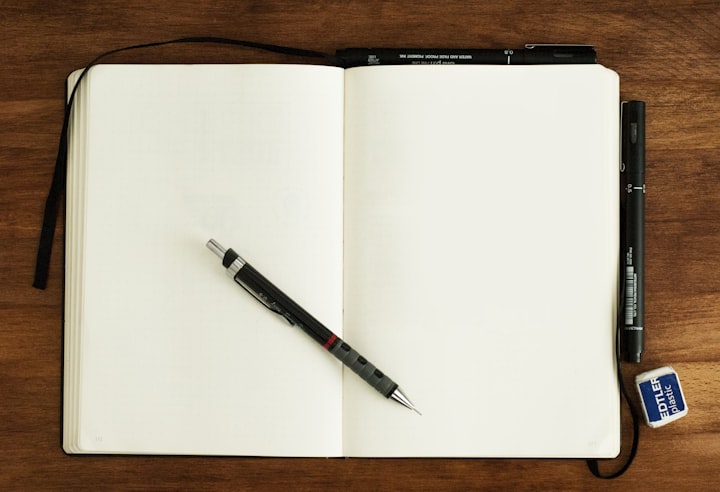
In the thirty odd years I've been writing, I've gotten two great pieces of advice in my life. One came from a professor at San Francisco State University: "If it still makes you cry, then it's not ready." What he meant was that writing may be an emotional act, but it also requires a certain detachment that allows objectivity. Or, to put it another way, you're going to have to "kill your darlings" eventually. It was strong advice that I've taken with me since.
The second advice came from an unlikely and unexpected source. She wasn't a writer, budding or experienced, but she had keen insight into what she considered good writing.
For one year, I worked at a store in Berkeley that sold and rented audiobooks to subscribers. It was appropriately called Talking Book World. When I started working there, I had just ended my first semester in college and had signed up for a summer class. Seventeen years after I had graduated from high school, working one dead-end job after the next and struggling to finish a novel that was driving me nuts, I decided I was ready for college. If I was going to go crazy I might as well do it among like-minded people. At the very least, I could pursue a degree in English lit and a better job. But in the meantime I still had to work.
My hours at Talking Book World were part-time and the pay was barely minimum wage, but it was better than most that I've had in the past. I had the run of the store to myself and I could listen to any of the audiobooks I wanted on the boombox behind the counter. I have a fond memory of listening to Rebecca by Daphne du Maurier one Sunday afternoon when a storm broke. Torrential rain fell beyond the tall plate glass windows in heavy sheets. The main avenue downtown was eerily empty. It was the perfect atmosphere for du Maurier's creepy thriller.
It was easy to see why customers were enthusiastic audiobook lovers. Being read to is the perfect comfort food. For the store's customers it certainly made the daily slog in Bay Area traffic less boring. But for one customer they were more than that.
I was on my usual weekend shift when she––let's call her Darlene––came in. She was one of the store's premiere subscribers. She'd never dropped by during the weekend shifts while I worked there, though I recognized her immediately. I had met her the year before during my first day of training when she picked up a few books to rent. My manager informed me confidentially that she was a nurse in the children's cancer ward at the local hospital. Listening to audiobooks kept her from going insane.
Darlene wore a sweater over hospital scrubs and soft-soled sneakers. She was short and middle-aged, but had a commanding demeanor. I imagine she wasn't the type to take crap from arrogant doctors. She had at once seemed intimidating but yet approachable.
She approached the counter with a bag of ten audiobooks to return and ten more to rent. I wondered how she found the time to read them all. While I checked out the books she rented, we fell into an easy conversation. We talked about the fiction she loved reading––mostly escapist fare, James Lee Burke's crime fiction and, if the fancy struck her or if nothing else was available, Judith Krantz romance novels. Considering how much of an emotional drain her work was, I thought her choice of crime fiction was interesting.
She had no tolerance for abridged audiobooks. The store had its share of those. She mentioned there was one particular book she was interested in, but decided against checking it out because it was abridged. She said this, not so much as a complaint, but an observation, or perhaps as a suggestion that the store should stock more unabridged audiobooks. Since my main responsibility was to encourage buyers to become rental subscribers, I wanted to practice my powers of persuasion, such as they were, on her. Instead we debated on the merits of abridgments.
I thought it didn't matter. As long as the heart of the story was still there, what difference did it make if a few filler scenes were cut out?
"It's like cutting the fat off a piece a meat. You get a leaner story," I said.
She had an entirely different take, however: "Yeah, but here's the thing," she said, "it's the fat that gives it flavor."
I started to counter, but was struck speechless. Having written a novel that had reached, at one point, over 100,000 words, I was consciously aware of my own struggles with economy and precision. But Darlene was a reader not a writer, and she knew what she wanted from stories. She wanted the spaces in between the plot, the fat that gave it authenticity, and built a world she could recognize as her own.
Isn't that what we all want?
She was right. The spaces in between the plot give an authenticity, meaning, and emotion to stories that draw in readers. Darlene wasn't looking for escapism, but a way back into reality, a way to make sense of the world she faced every morning she woke up, put on her scrubs, and drove to work to care for those young children whose lives and deaths had touched her and become a meaningful part of her life.
Really, isn't that what all readers want?
I nodded in agreement and thanked her.
Though I never saw Darlene again, her unwitting advice stayed with me. When I revise my stories I try to remind myself: Spare some of the fat. It's their flavor that makes the stories real.
This essay was originally published in my Substack newsletter, The Portal, where I post essays, articles, short stories, and novel excerpts from my SF eries, The Book of Dreams.
About the Creator
Cynthia C. Scott
Cynthia C. Scott is an award-winning author who lives in the SF Bay Area. She is currently working on an SF series, The Book of Dreams, which can be found on Amazon. Her work can also be found at https://cynthiacscott.substack.com/publish.
Reader insights
Outstanding
Excellent work. Looking forward to reading more!
Top insights
On-point and relevant
Writing reflected the title & theme
Eye opening
Niche topic & fresh perspectives
Expert insights and opinions
Arguments were carefully researched and presented
Heartfelt and relatable
The story invoked strong personal emotions
Easy to read and follow
Well-structured & engaging content
Excellent storytelling
Original narrative & well developed characters
Compelling and original writing
Creative use of language & vocab
Masterful proofreading
Zero grammar & spelling mistakes
Keep reading
More stories from Cynthia C. Scott and writers in Journal and other communities.
A Short Piece on Pop Culture
Wuthering Heights is probably the only book that almost moved me to tears. There's one scene, an image really, that lingers in my head: Catherine's gravesite on the moors as the wind swept through the heather she loved. I admit I got a lump in my throat. There aren't many books that brought me to tears, though I've read plenty that should have––Katherine Paterson's Bridge to Terabithia, for instance, or C.S. Lewis's The Lion, the Witch, and the Wardrobe, both of which I read and loved in grade school.
By Cynthia C. Scott3 years ago in Journal



Comments (25)
hi your words in the article really means a lot "If it still makes you cry, then it's not ready." https://www.mybkexperience.one
Hmmm...balance. That's my word. I am in a hurry to get the story down on paper (even 'virtual' paper), that I am often spare in style and lean in prose. So, get it down. Get the bare bones, let them inspire and go back in there and add the meat...juicy meat, accentuated with some good old fashioned FAT! The spice of life is just that--not the story--the flavor enhancer that makes it all worth the bother. And now here I've been going on and on...thanks for getting my juices flowing! Our teachers come into our lives, often when we least expect them, huh? Hmmm...
fiction IS a way to make sense of the world, so loved this piece. thank you.
Love it, totally agree!
I always write from the heart. Maybe that’s why I’m a bad writer.
Great post! This is always the balance I struggle with - great metaphor
This made so much sense!! Wow thank you for sharing this wisdom. And I heartily agree <3
Excellent Keep up the good work
I love this advice. It's an anchor for any writer to always remember, its the little things that matter and ultimately sticks with the readers.
This was spot on. Kill all the darlings you can...but keep it tasty! 🤔
Really, writing of books is an emotionally act and reading of books is to educate human. Excellent story.
Great advice! I tend to write "lean" like I was forced to do when writing university English essays in an effort to conform to the "clear, concise and elegant" standard. As a result, I tend toward writing, "just the facts, ma'am". Thanks for sharing this gem of advice. The trick will be to add "favorable fat".
I've found recently in revising some of my short stories, that I get too caught up in making something "clean". And now, writing my novel, I feel much less pressure to try to be precise. This article eased my nerves, great read!
Wow, this is a great story line. It is all too true also. Please read this story by me and let me know your thoughts: https://shopping-feedback.today/psyche/alex-and-maggie%3C/span%3E%3C/span%3E%3C/span%3E%3C/a%3E%3C/p%3E%3C/div%3E%3C/div%3E%3C/div%3E%3Cdiv class="css-w4qknv-Replies">
your story is very best please read my stories https://shopping-feedback.today/journal/the-accounts-that-don-t-get-perused%3C/span%3E%3C/span%3E%3C/span%3E%3C/a%3E https://shopping-feedback.today/fiction/phoebe-ride%3C/span%3E%3C/span%3E%3C/span%3E%3C/a%3E%3C/p%3E%3C/div%3E%3C/div%3E%3C/div%3E%3Cdiv class="css-w4qknv-Replies">
A delicate balance. Love it.
Wonderful story and best writing advice I have read since King, _On Writing_ and better written. I really like the fat/flavour quote and will see how it works with a short story I am self editing for an imminent deadline. As to objectivity I disagree. While it is important and necessary to view a WIP as an outsider I consider my best works to be the ones that can still make me tearful. My view is that emotional investment (and emotional intelligence) is as a important as being able to take an objective view or reader POV. Great read and thanks for sharing. Made my morning
Wonderful insight. I think it’s both, the fat needs trimmed but not too much. :)
Excellent advice told well. I enjoyed the anecdote and will take this with me as I edit my latest novel!
I love this. I always struggle with ending up with too much in my writing...always straining to stay under the word limit. It always pains me to start cutting things out. I've been trying to get better at it, which I know I do need to do, but at the same time... this is very validating! Thank you for writing and sharing. :)
Brilliant topic, and wonderfully written!
Such a great reminder for writers! Don't edit the heart out of your work. <3
Good advice here, I'll definitely keep this in mind.
Enjoyed this article. Both pieces of advice are so true. ❤️
This is great advice! Thank you for sharing it. :)