
Is the Stock Market Open Today? The Columbus Day Confusion Explained
The Market Never Sleeps… But Even the Bulls Take Holidays

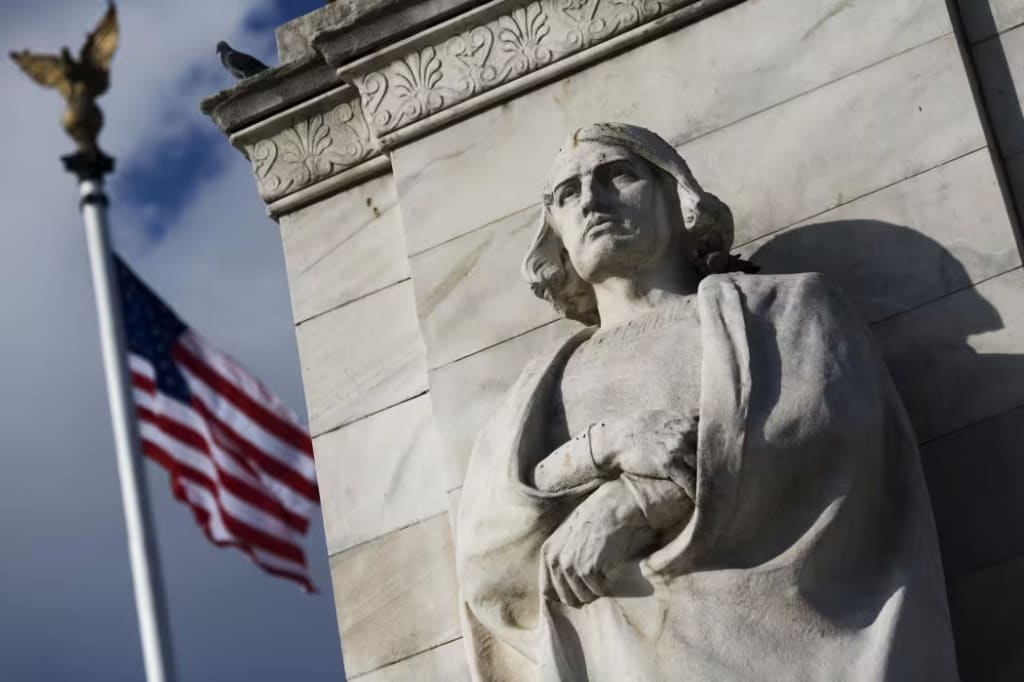
The Market Never Sleeps… But Even the Bulls Take Holidays
Wall Street is a bit like New York City: it doesn’t sleep, it just naps with one eye open.
But every so often, even the markets take a breather — and that moment, my friends, is now.
It’s Columbus Day in America — or, depending on where you live, Indigenous Peoples’ Day. A federal holiday that sits at the crossroads of finance, culture, and history.
And if you woke up this Monday morning wondering, “Is the stock market open today?” you’re not alone. Investors, traders, and even casual market watchers are tapping their phones and refreshing tickers, trying to decode whether Wall Street is in business or taking the day off.
So let’s clear the fog.
Here’s everything you need to know about Columbus Day trading hours, global market openings, and the unexpected rhythm of the financial world when America pauses.
🕒 Is the Stock Market Open on Columbus Day 2025?
Let’s start with the simple answer that hides a complex rhythm:
👉 Yes, the stock market is open. But not every market is dancing to the same beat.
Both the New York Stock Exchange (NYSE) and the Nasdaq will trade as usual.
However, if you’re dealing in bonds or over-the-counter markets, consider today a ghost town. Those are closed in observance of the federal holiday.
It’s like watching half of Wall Street sipping espresso in Manhattan while the other half is still in bed, dreaming of yield curves.
📈 The Backdrop: A Market Running on Caffeine and Chaos
Before we go deeper, let’s zoom out.
October 2025 hasn’t been kind to the nerves of investors.
The U.S. government entered a partial shutdown on October 1 after a deadlock over — you guessed it — healthcare and budget priorities. Washington gridlock has become the unwanted background music to this month’s trading floor.
And yet, amidst the noise, corporate America marches on.
Delta Air Lines (DAL) kicked off Q3 earnings with turbulence of its own, sliding 3.5%.
PepsiCo (PEP), in contrast, fizzed up with a 3.7% gain after strong sales.
Big banks like JPMorgan Chase (JPM) and Bank of America (BAC) are now stepping up to the plate, with investors eager to see if higher interest rates have fattened their profit margins — or just squeezed their customers.
This is the strange duality of Wall Street: part anxiety, part adrenaline.
And then along comes Columbus Day — a temporary pause button that reminds traders to exhale.
💼 So, What Exactly Is Closed?
While the stock market itself remains open, other parts of the financial ecosystem hit pause.
Here’s how the day unfolds:
Market / Institution Status on Columbus Day (Oct. 13, 2025) Notes
NYSE / Nasdaq ✅ Open Normal trading hours
Bond Markets ❌ Closed No activity in U.S. Treasury trading
CME (Commodities) ⚠️ Partially Open Futures on metals, grains, and livestock active; others limited
ICE Futures ⚙️ Modified Hours Coffee and cocoa open; canola contracts closed
Over-the-Counter Markets ❌ Closed Processing & clearing delayed
So while traders in stocks can still make moves, bond dealers, commodity brokers, and OTC players will find the doors locked.
It’s like watching a symphony where half the instruments suddenly go silent — the melody continues, but something feels missing.
🌍 Are International Markets Open?
Yes — and this is where global markets remind America that the sun doesn’t rise over Wall Street alone.
Major foreign exchanges are open and trading normally:
Shanghai Stock Exchange
Hong Kong Stock Exchange
Tokyo Stock Exchange
London Stock Exchange
These global markets don’t pause for Columbus Day, meaning international investors still have to manage cross-border momentum — especially with forex and commodities moving through global pipelines.
In simpler terms: even when the U.S. hits snooze, the rest of the world is already making coffee.
🏦 Banks & Post Offices: Closed for Business
Now, if you plan to visit your local bank branch, prepare for disappointment.
Following the Federal Reserve’s holiday schedule, most U.S. banks are closed — including Bank of America, JPMorgan Chase, Capital One, and Wells Fargo
However, digital banking is your lifeline. ATMs are operational, and mobile transactions are unaffected.
As for the U.S. Postal Service, the story is the same: doors closed, deliveries halted. Columbus Day is one of 11 USPS-observed holidays in 2025.
📦 But What About UPS and FedEx?
Good news for businesses and eCommerce hustlers: not everyone stops working.
UPS pickup and delivery services are fully available.
FedEx, however, operates with modified services — most notably FedEx Freight and FedEx Office, which run on adjusted hours. Expect early pickups and limited drop-box access in some regions.
So, if Wall Street takes a breather, the delivery trucks still hum through suburban streets — a metaphor for capitalism itself: always moving, always delivering.
📊 How Has the Market Performed Around Columbus Day?
Here’s where history whispers its secrets.
The so-called “October Effect” — the superstition that markets tumble every October — has haunted investors since the crashes of 1929 and 1987. But data says otherwise: October is more misunderstood than malevolent.
Over the past decade, performance around Columbus Day has been a mixed bag:
October 2024 → S&P 500: -1%, Nasdaq: -0.5%
October 2023 → Both indexes declined slightly amid rate-hike fears.
October 2022 → A comeback story: S&P 500 up 7.9%, Nasdaq up 3.9%
October 2015 → The big rally: S&P 500 soared 8.3%, Nasdaq 9.4%, thanks to global stimulus.
Translation? October isn’t cursed. It’s just emotional.
Markets in this month don’t die — they rehearse their rebirth.
⚖️ The Deeper Meaning: Columbus Day vs. Indigenous Peoples’ Day
Now let’s address the cultural compass of this holiday.
Columbus Day was born to commemorate Christopher Columbus’ 1492 voyage, marking Europe’s arrival in the Americas.
It became a federal holiday in 1971, symbolizing exploration and discovery.
But history, like markets, evolves.
In recent decades, growing awareness about Columbus’ treatment of Indigenous peoples has reshaped the conversation. Many now question whether the day honors exploration or erasure.
South Dakota led the way in 1990, renaming it Native Americans’ Day.
Berkeley, California followed in 1992, officially observing Indigenous Peoples’ Day.
Maine, New Mexico, and other states have since joined in.
President Joe Biden became the first sitting U.S. president to officially recognize Indigenous Peoples’ Day in 2021.
Still, it remains nonfederal, existing alongside Columbus Day rather than replacing it.
Meanwhile, Donald Trump, in a proclamation just last week, doubled down on the traditional narrative — defending Columbus as a “hero” and condemning efforts to “erase history.”
The cultural divide mirrors the markets: two sides interpreting the same chart, two stories about discovery and damage.
💬 The Symbolism of a Split Holiday
Columbus Day and Indigenous Peoples’ Day reveal a truth about America — and, by extension, its economy.
Every system has winners and losers, pioneers and the displaced. The financial markets themselves are built on cycles of discovery and correction. The explorers are traders; the explored are those who miss the signal.
Just as Columbus sought new routes to Asia but stumbled upon another world, investors often search for returns in one sector and find disruption in another.
History rhymes, even in economics.
💡 What Should Investors Do on Columbus Day?
With stock markets open but activity muted, Columbus Day is the perfect time for reflection, not reaction.
Here are four smart ways to use this trading lull:
Rebalance Your Portfolio:
October marks the start of Q4 — reassess your asset allocation, especially with inflation and rate shifts in play.
Review Your Tax Strategy:
With year-end approaching, capital gains planning becomes critical. Columbus Day offers breathing room to prepare.
Study Market Seasonality:
Historically, November and December deliver stronger returns. Prepare to pivot into growth sectors or dividend stocks.
Look Abroad:
With U.S. bond markets closed, international equities or ETFs may offer opportunities. Japan and Hong Kong remain active.
In essence, while Wall Street takes a breath, smart investors take notes.
🚀 Why This Holiday Still Matters to Markets
Columbus Day is more than a line on the calendar. It’s a mirror reflecting how America balances work and reflection, profit and principle.
Markets teach us discipline; holidays remind us of purpose.
Even when the charts pause, the stories don’t.
And maybe, just maybe, that’s the deeper message hidden between the opening bell and the closing candle: that progress isn’t always measured in points or pips — sometimes, it’s in perspective.
🧭 Final Thoughts: When Markets Pause, Minds Move
So, is the stock market open today?
Yes.
But that’s not the real question.
The real question is: what do you do when the noise stops?
Because every trader, every investor, every explorer — financial or otherwise — faces that same moment of silence before the next wave.
Columbus Day isn’t just about a man who crossed the Atlantic. It’s about what we do with discovery — and how we handle the responsibility that follows it.
So whether you’re charting equities or navigating ethics, today’s a good day to reflect.
Markets move in cycles. So does conscience.
And while the ticker still ticks, maybe the wisest trade you can make this Monday…
is simply to pause.
About the Creator
Omasanjuwa Ogharandukun
I'm a passionate writer & blogger crafting inspiring stories from everyday life. Through vivid words and thoughtful insights, I spark conversations and ignite change—one post at a time.
Keep reading
More stories from Omasanjuwa Ogharandukun and writers in Journal and other communities.
The goals I did not achieve
Every writing goal I made for the year is a wash. It has been this way for a while, but I think it's important to be open about my failures and the reality of how life can get in the way. This is especially true considering the several times I have posted on Vocal about my writing goals, how I was changing my approach, and where I was hoping to be for the upcoming year. I will probably do that again in a couple months, but for now, it is time to acknowledge where I am today.
By Kay Husnick22 days ago in Journal
Rightwingers of the World Unite to Endorse Orbán Ahead of Hungary’s Election
As Hungary gears up for its next parliamentary elections, Prime Minister Viktor Orbán has found support not just at home but across the global right-wing spectrum. From Europe to the Americas, conservative leaders, nationalist movements, and far-right political organizations are openly backing Orbán, citing his policies on national sovereignty, immigration control, and cultural conservatism as a model for their own agendas.
By Fiaz Ahmed Brohiabout 21 hours ago in Journal



Comments
There are no comments for this story
Be the first to respond and start the conversation.