
Is Email Marketing Dead? Then You Should Read This
Is email marketing dead? The answer is a ‘classic NO’. Email marketing isn’t dead - it still consistently delivers a higher return on investment.

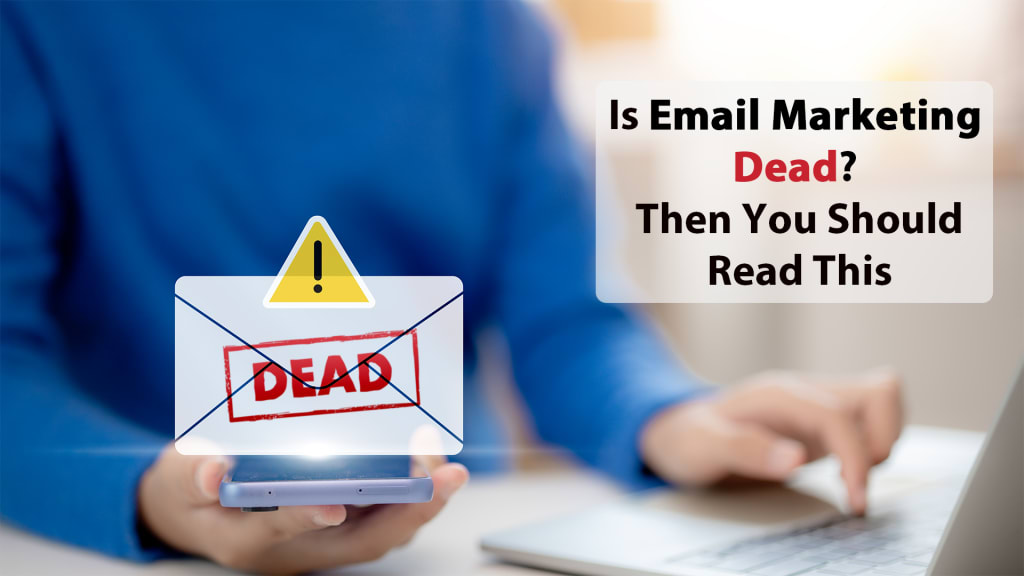
Under no circumstances is email marketing dead or not relevant. Emails have effortlessly adapted into our routine. From small-scale businesses to established brands, they still choose to market their products via email marketing. So, if you are concerned about the silent demise of email marketing, then let's understand briefly about its origin and let's bust some myths associated with email marketing.
History of Email Marketing
Earlier, businesses relied on distributing flyers, public speaker announcements, field services, radio broadcasts, and other channels to communicate with their customers to advertise their products in the market.
As time evolved, our human relationship with technology progressed with new services and innovations.
People living in this decade can hardly imagine a world functioning without email marketing. Let's explore the origins of email marketing. The year 1978 was prime time. It was a massive email marketing campaign, and Ray Tomlinson sent a few hundred emails to potential clients over the ARPANET system.
Furthermore, Gary Tucker sent an unsolicited email to promote his product to over 400 recipients. While the initial campaigns showed some queries and spam emails. It turned out to make a huge profit in the market. Hence, demonstrates its dominance over the world of marketing and is still proving to be one of the most popular and powerful tools for business marketing.
What is Email Marketing?
Email marketing is a digital marketing strategy for businesses to communicate directly with individuals to promote their brand products or services, build a business relationship over time, and drive sales outreach.
What Makes Marketers feel Email Marketing is Dead?
Well, marketers still have some preconceived notions about email marketing.
Let's address some common myths and facts about email marketing.
Myths vs. Facts
Myth 1: Is email marketing dead?
Fact: You must be living under a rock if you think email marketing is dead. This myth will be persistent because of the social media boom. But email marketing is here to stay and will continue to yield a significant return. As many people still rely on email marketing for both professional and personal use.
Myth 2: Consumers hate marketing emails
Fact: Consumers look forward to hearing from businesses about the latest announcements, updates, and offers. The key factor to consider here is segmenting your audience and how well the mail is crafted based on user-specific requirements.
Myth 3: Words like “free” end up in the spam
Fact: Earlier, “free” was termed as a trigger word for spam filters, but today's filters have outsmarted their system. Now they prefer the sender reputation, engagement value, and not just the words or syllabus used. This means as long as your email delivers on its promises and stays away from any spam practices, your business emails won't end up in the spam folder.
Myth 4: Your timestamp and moment matter
Fact: People check their inbox the first thing in the morning or at any particular time. Also, users don't restrict themselves to checking their inbox only on weekends. But the key factor is learning how to leverage the schedule for an effective marketing strategy. Businesses can experiment with different timing and days, tracking the results to understand how well readers perceive their email.
Myth 5: Unsubscribing can be an alarming factor
Fact: when businesses notice the unsubscribe numbers, it may impact the vision of the business owners. But it clearly shows the exact number of users who genuinely feel connected to your emails, and those who are not are not your ideal client. But to completely discard this rumor would not be wise. Businesses need to watch out for a rise in unsubscribers and work towards an efficient way to address this situation. Hence, creating valuable emails can reduce the number of unsubscribes for your business.
Myth 6: The subject lines must be simple enough.
Fact: When a user goes through their emails, the subject line catches their attention. The context to this is that users discard the email if the subject line is too prechy or too big to read or go through. But the fact is, the subject line is an anchor for users to learn the context of the email. Businesses can experiment with the length of the subject line and come up with new words or phrases that work well with the subscribers.
Myth 7: Email marketing is only beneficial for B2B companies
Fact: Email marketing is versatile and can be effective for both B2B and B2C businesses. The crucial element here is to understand how well businesses are familiar with users’ intent and curate their messages accordingly.
Use of AI in email marketing
People are still wondering if email marketing is even relevant or not. Well, email marketing is beyond leaps and bounds. Email marketing is just getting upgraded with new tools and channels available in the market. And no, AI integration is not the dead end for email marketing. AI is the missing link for efficient email marketing campaigns.
Email marketing is evolving with the new times and is open to adapting to fresh changes. With AI being implemented in every aspect of business, email marketing can leverage data from AI.
AI in Email Marketing
AI in email marketing uses machine learning algorithms and artificial intelligence to optimize email deliverability, personalize email campaigns, and segment audiences.
- Email Automation
AI in email marketing is not limited to sending pre-defined emails to subscribers when they sign up. But AI uses machine learning programs to analyze the data and draw conclusions about how to approach the recipient with engaging subject lines, when and whom to send marketing emails.
- AI-driven Email Personalization.
AI is a boon for email personalization. AI analyzes the user data, like purchase history or user response to email marketing, and generates personalized email content, subject lines, and the relevance of the email to the user's perception. This can relatively increase open and click-through rates.
- AI Segmentation
AI categorizes the user data based on demographics, purchase history, browsing behaviour, and brand engagement. AI uses machine learning to analyze the custom data and group the subscribers based on specific categories.
- Send time optimization
AI can generally analyse when the user is available to check and engage with emails. And automatically send emails according to the user's day-to-day schedule. This can increase open-through rates.
- A/B testing
AI quickly runs the tests to determine which of the versions will perform better and what works well with the target audiences. These approaches can increase open rates, link clicks, and reflect their results in marketing campaigns.
- Chatbots
Businesses can create chatbots in their emails for instant support or upcoming offers, or sales.
How to Create Email Marketing Campaigns in 2025
Email marketing is not about sending messages to your potential clients; it's about sending a value-added, intentional message to the customers at the right time. It's also understanding your audience and their acquired interests. Starting from intention, perception, behaviour, and lifestyle.
Businesses get an insight into how well the users have perceived their business. These factors will not only help to generate revenue from email marketing but also create brand awareness among users.
AI integration in an email marketing campaign can automate the personalization of email content and tasks, and it can also optimize the performance and drive better results.
Here are a few techniques that help you design effective email marketing
Establish clear goals and objectives.
Be mindful of what you are achieving in your email marketing campaign. Whether you want to improve your sales outreach or achieve time-bound goals or generate leads, or drive website traffic. Always be clear about your goals, as this will help with your marketing strategy. With AI integration, businesses can easily identify the specific objectives and key metrics to increase customer engagement and improve email deliverability.
- Build an email list
Building a quality and effective email list is crucial for the success of email marketing. Implementing opt-in strategies, like sign-up forms, email segmentation, loyalty offers, and social media, can grow the overall subscriber base. Whereas AI can predict the potential users and track the intent of users even before they search for it.
- Work on remodelling the content for your email marketing
It's vital to craft compelling content for email marketing. Businesses need to develop relevant, reliable, engaging content that resonates with the audience. You can also segment a set of audiences and curate content based on their behaviours, perception, attributes, and deliver relevant data. Also, optimizing subject lines can increase open rates. Your email resonates with your subscribers. AI helps to create dynamic email content with compelling subject lines.
- Choose the right email marketing platform.
Choose a platform that aligns with your business goals and budget constraints. Marketing automation, integration, and advanced analytics should be considered for choosing the right platform for your business vision. With AI in the picture, Businesses are choosing email marketing platforms with advanced automation capabilities to improve engagement and conversions.
- Practice email list hygiene
Having regular updates on how well your email list is maintained and how many active subscribers are connected is crucial for maintaining a hygienic email list. You can keep track of the users who did not engage with your email and set up an automation to remove them from your subscriber list. These factors still impact on bounce rate, email deliverability, and your emails may end up in spam folders. AI helps to maintain a clean and healthy email list by eliminating inactive or invalid subscribers.
- Set up email automation.
About 65% email marketers use email automation. Businesses can personalize automated emails based on user behaviour. Automated email marketing can help you connect with your subscribers and also benefit from email marketing campaigns.
- Mobile optimization
Many users access their email via mobile phones, and you need to ensure your emails are compatible on both desktop and mobile phones. Businesses can use mobile-friendly templates and designs for better display on all devices and contribute to profitable email marketing campaigns. The AI algorithm ensures that the automated email content consists of precise call-to-action buttons and simple yet efficient subject lines.
- A/B testing
In recent trends, many businesses are conducting tests to optimize the reach of their email elements. To begin with, they test the subject lines to check open rates, call to actions to check rate performances, and test image templates and layouts to check click rate performance. Through these tests, businesses identify what resonates with their audiences and use data-driven insights for future marketing campaigns. A/B testing is a part of Artificial Intelligence.
It helps to optimize the two different versions of emails and verify which performs better to drive higher engagement and conversion rates.
- Data compliance and regulation
Email marketing is evolving with new privacy and data laws. Businesses emphasize that their email marketing strategy and AI adhere to email regulations and compliance, like as GDPR. This provides data transparency with your audience and gives clear opt-out options.
Common Mistakes to Avoid in Email Marketing
With time, email marketing is only evolving, and no, it's not dead or has lost its credibility in the world. If your business is primarily using email marketing, there are several key points you should pay attention to. Email marketing is an effective means of boosting your business or enhancing brand recognition; however, bad practices in this area can negatively affect delivery rates and damage the company's reputation.
- Adding irrelevant subject lines
Subject lines are gateways for users to get a brief idea about the content in an email. Businesses must gauge the interest of the reader by writing clear, concise, and relevant subject lines. The subject line can motivate the reader to open your email, and businesses need to come up with more clickable subject lines and increase open rates.
- Not encouraging segmentation
Sending the same email blast to everyone in the recipient list is a big blunder. It is one of the most common mistakes in email marketing. Businesses need to consider segmenting their audience based on their interests, preferences, and personalized requirements. The process of segmentation is divided into three parts: demographic graphics, purchase history, and campaign engagement. Segmenting a specific message for each user can create an effective email marketing campaign. In today’s day and age, email segmentation has become a lot easier with some powerful tools like CRM ( customer relationship management tool ) that can offer you advanced segmentation and necessary advantages.
- Ignoring mobile optimization
Many readers access email on their mobile phones, and it would be frustrating if your emails are unable to be read or the images are wider than the screen. Mobile optimization is crucial for email marketing in 2025. And businesses need to ensure their email looks good even on mobile phones with responsive email designs and smaller subject lines. This will enhance the overall user experience and help in better conversions.
- Lack or overdo of call to action (CAT)
Call to action is a vital key for email marketing. CTAs give clear instructions for the reader to understand what to do next or what the next step is. Businesses need to be mindful about adding their CTAs in the email. Unclear or overuse of CTA can lead to confusion or fewer people taking action. If a Call to action is done rightly, the business can generate more leads.
- Inadequate email tracking
Tracking the performance of your email is important to analyze the success of your email and understand the areas of improvement. If businesses fail to track these numbers regularly, they won't be able to make any improvements in email marketing campaigns.
- Not using email automation.
Email automation is a new concept for traditional email marketers. In email automation, software is used to send emails to subscribers based on pre-defined requirements. Email automation is a powerful tool for email marketing campaigns, enabling marketers to automate the process of sending emails to customers. If businesses are not using an email automation tool, they are missing out on reaching out to customers and increasing their engagement.
- Sending too many emails
Sending too many emails and flooding the inbox of subscribers with offers can lead to unsubscribing and a decrease in open-through rates. Having said that, it is also important to send emails frequently to readers and ensure its relevant and engaging.
- Overloading emails with images and GIFs
If the email you send to readers consists of too many images, pop-up ads, videos, or GIFs cause an unpleasant user experience. Users may experience a lag in the page, and the actual context of your email may be lost in all the graphics, especially if you are opening emails on a mobile phone.
- Neglecting data privacy laws
Your email marketing must adhere to GDPR. This provides data transparency to users and gives opt-in and opt-out options. If a business neglects to follow these regulatory compliance can lead to a bad reputation for brands and land in legal troubles.
- Failing to use A/B testing
An A/B testing tool will do wonders for email marketing. The A/B testing tool can optimize your email marketing campaigns for better results. You can test subject lines, call-to-action, and design elements, and determine which versions resonate with your subscribers. This technique can increase customer satisfaction, increase sales outreach, and improve brand perception.
Future trends of Email Marketing: What Lies Ahead
Well, email marketing is not dead, but instead it has only progressed with time. Modern Email marketing is adapting to new tools and automated technologies like implementing AI, A/B testing, chatbots, etc. The latest email marketing trends focus on building engaging emails, automated email content, emphasizing data privacy laws, and creating engaging and resonating content for each of the subscribers.
Let's focus on a few future trends
- Hyper-personalization
If you are talking about regular personalization, businesses use a recipient's name in the subject line, therefore concluding the difference between other email recipients.
Whereas with AI-powered Hyper-personalization, it analyzes the behaviour of the user and their interactions with the brand, specific interests, purchase history, and site visits. AI curates email templates based on the individual customer's needs. Hence, your emails are differentiated by the customer behaviour and preferences.
- Interactive email content
In traditional emails, there was a depth of static email content with no clickable elements. But modern email marketing is designed to convert static email content into interactive content. Feel free to check out some interesting surveys, polls, and graphics on your screen. Which drives engagement and curates valuable data from the users. These factors will improve user experience and create excitement for everytime they open your email.
- Email Automation
Businesses are integrating AI in their marketing strategies. Starting from generating an automated email content, subject line, call-to-action elements, segmentation, and personalization. Since AI is taking care of all these factors, businesses can now focus on improving their email deliverability and work on email marketing campaigns.
- Hybrid Marketing
With evolving technology, people’s attention span is limited, and it gets difficult to gauge their attention for a long time. And if businesses are promoting their brands, they try to interact with multiple channels for brand visibility.
Omnichannel integration or hybrid marketing creates unified platforms for integrating email marketing in different digital channels, like social media, SMS, and CRM platforms.
This process will give an outlook on the customer's journey and deliver brand awareness across all platforms.
- Data Privacy and Compliance
The existing data regulations and compliance, like GDPR, CCPA, have been revised. Along with AI, these regulatory laws weigh on adhering to all data privacy standards.
The marketers seek explicit consent from the users and ensure data transparency among the subscribers. Building a robust data security will enhance data credibility and maintain data privacy regulations.
Conclusion
Businesses are self-aware of the present state of email marketing.
Traditional email marketing has evolved with time and adapted to newer marketing channels. Be it Artificial Intelligence, A/B testing, chatbot, or automated email content.
Email marketing is one of the old marketing channels and is still relevant to current marketing trends. Having said that, there were certain roadblocks like spam filters, social media, and other channels of marketing. But email marketing never shied away from its flaws; instead, it always improved its shortcomings and embraces change with the current times.
So, for those of you who thought email marketing is dead or not relevant to current demographics, it is not even close to reality.
Email marketing can still drive compelling results, strong ROI, better conversions, and adapt to diverse marketing channels and business needs.
With a healthy email practice, automated email content, compelling subject lines, and a higher deliverability rate. Business can drive the desired and engaging results.
So, if you are a business owner who is currently looking to optimize your email marketing campaign, then the aspects and strategies will help you improve your brand awareness among users and create a loyal subscriber base.
About the Creator
Zuri Carter
Content Creater, Content Writer at Data InfoMetrix
Keep reading
More stories from Zuri Carter and writers in Journal and other communities.
How to Build Real Estate Agents Mailing List
Building up a Real Estate Agents Mailing List can be challenging at times, but it is easy to do with the knowledge of right tools and strategies. Anyways Real Estate is a blooming industry nowadays and once with the correct approach it is considered to be an easy way to create the same. What all do you think must be the key points in building up a Real Estate Agents Mailing List? Let me tell you-
By Zuri Carter4 months ago in Journal
~ Fired ~
— Ai Intrusion ~ Are you Next ~ Is Ai Evolution after your job? — Few workplaces haven't been affected. Ai is in supermarkets, at doctors' offices, and even monitoring farms. I just can't think of anything this machine is not getting into, can you? For instance: Education ~ Law and Tech jobs will one day have a major influence or be taken over by these inanimate machines, with accuracy and vigor. From mechanics' diagnoses to a wide variety of everyday jobs, including fast food workers, with this input having the ability to cut their unnecessary work hours. I'm certain all of us have been touched by this with our short stories and colorful headings, have you? Even comments are very questionable 'Non-Robot' insertions.
By Jay Kantor6 days ago in Journal
Hydrogel Market Boom: Why Soft Materials Are Reshaping Industry
The material looks deceptively simple - soft, clear, almost fragile. But when you press it between your fingers, it resists just enough to remind you: this isn’t water, and it isn’t plastic. It’s something in between.
By efingutthomasabout 18 hours ago in Journal




Comments
There are no comments for this story
Be the first to respond and start the conversation.