
Is Adaptive Learning the Future of Education - or Its Reckoning?
How data-driven personalization is reshaping classrooms, corporate training, and the global learning economy
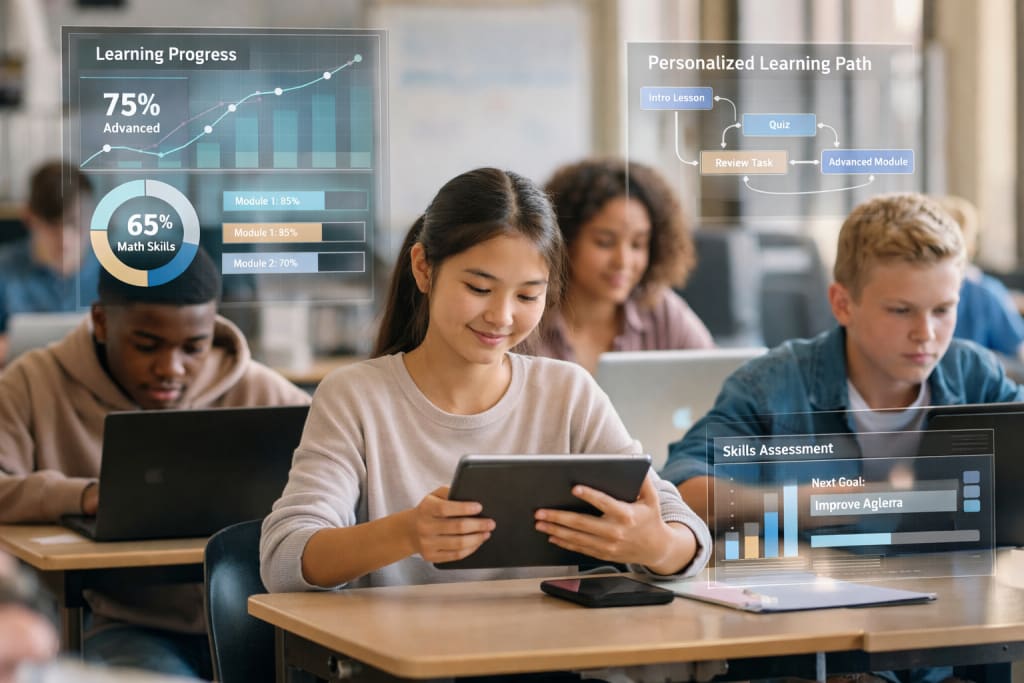
The student stares at the screen, not bored—focused. The lesson isn’t moving too fast or dragging behind. It’s adjusting. Every click, pause, and wrong answer quietly reshapes what comes next. No raised hands. No red pen corrections. Just a learning system that seems to know.
This isn’t science fiction or a pilot project tucked away in a Silicon Valley lab. It’s already happening—in schools, universities, and corporate training programs worldwide. Behind this shift is the adaptive learning market, an industry built on the idea that learning shouldn’t be one-size-fits-all. And the numbers suggest this idea is no longer optional—it’s inevitable.
From Static Classrooms to Living Systems
For decades, education scaled by standardization. Same textbooks. Same lectures. Same exams. But learners were never the same. Some raced ahead. Others quietly fell behind. Adaptive learning technology was born to close that gap—not by replacing teachers, but by amplifying insight.
At its core, adaptive learning systems analyze learner behavior in real time. They adjust content difficulty, format, pacing, and assessment paths based on individual performance. A student struggling with fractions may receive visual explanations and extra practice, while another moves on to algebra without waiting.
This approach has expanded far beyond K–12 education. Universities use it to reduce dropout rates. Enterprises deploy it to reskill workforces faster. Governments integrate it into national digital learning strategies. Together, these forces are driving sustained adaptive learning market growth across regions and sectors.
According to Mordor Intelligence, the adaptive learning market size stood at USD 5.13 billion in 2025 and is forecast to reach USD 12.66 billion by 2030, expanding at a 19.77% CAGR. That pace reflects more than hype—it signals structural change in how learning is delivered and consumed.
Why the Momentum Is Accelerating Now
Adaptive learning has existed in some form for years, but several converging forces pushed it into the mainstream.
First, data infrastructure matured. Cloud computing and AI models now process learner data at scale, enabling real-time personalization. Second, digital-native learners expect responsive, interactive experiences—not static PDFs or hour-long videos. Third, institutions face pressure to prove outcomes, not just enrollment numbers.
These forces are reshaping adaptive learning market trends. Platforms increasingly focus on measurable skill acquisition, predictive analytics, and continuous feedback loops. Learning is no longer a one-time event; it’s a living system that evolves with the learner.
In the corporate world, this shift is even more pronounced. Enterprises can’t afford long, generic training cycles when skill requirements change yearly—or even quarterly. Adaptive platforms shorten time-to-competency by tailoring content to individual roles, knowledge gaps, and performance data.
This widespread adoption directly impacts adaptive learning market share, as vendors differentiate through analytics depth, AI explainability, and integration with existing learning management systems rather than content libraries alone.
The Human Question Behind the Algorithms
Yet, the rise of adaptive learning isn’t just a technical story. It’s a human one.
Critics ask: does personalization isolate learners? Does algorithm-driven education risk narrowing curiosity instead of expanding it? These questions matter—and they’re shaping how the adaptive learning industry evolves.
The most successful implementations treat adaptive systems as co-pilots, not replacements. Teachers remain central, using dashboards to spot patterns they’d otherwise miss. Trainers shift from content delivery to coaching and mentorship. Learners gain agency, seeing progress mapped clearly instead of guessed at.
This balance explains why the adaptive learning market forecast remains strong. Adoption isn’t driven by cost-cutting alone, but by outcomes: higher engagement, better retention, and more equitable learning experiences across diverse populations.
Where the Adaptive Learning Market Is Heading Next
Looking ahead, the adaptive learning industry is moving toward deeper contextual intelligence. Systems are beginning to factor in not just what learners know, but how and when they learn best. Micro-learning, multilingual adaptation, accessibility-focused design, and AI-driven assessment are no longer add-ons—they’re expectations.
As institutions demand proof of impact, analytics will play a larger role in procurement decisions. Platforms that clearly demonstrate learning efficiency gains will command greater adaptive learning market share, reinforcing consolidation around data-rich ecosystems.
Importantly, this growth trajectory remains anchored in the same data point: a market projected to more than double between 2025 and 2030, underpinned by a 19.77% CAGR. That single figure encapsulates the confidence institutions place in personalization as the future of learning.
The Bigger Picture
Adaptive learning isn’t about machines teaching humans. It’s about systems finally adapting to how humans actually learn—nonlinearly, emotionally, and unevenly. The technology succeeds when it fades into the background, letting learners feel seen rather than managed.
As the adaptive learning industry continues its rapid expansion, the real question isn’t whether personalization will dominate education. It’s how thoughtfully we design it—and who we include in the process.
Do you see adaptive learning as a breakthrough that democratizes education, or a tool that risks over-automating it?
About the Creator
Keep reading
More stories from Andrew Hamilton and writers in Journal and other communities.
Autonomous Delivery Robots Are Booming—Here’s What’s Next
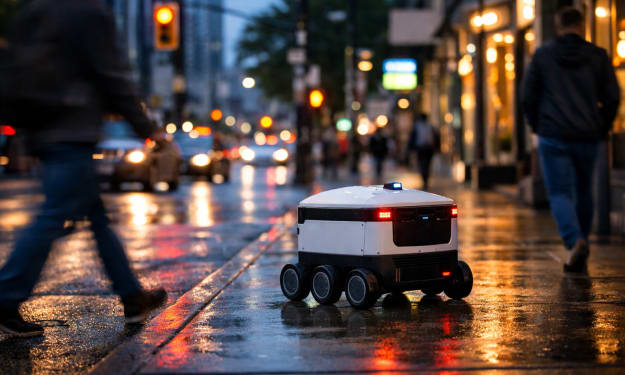
At 9:47 p.m., the street is almost silent. Then you hear it—not an engine, not footsteps—but a soft electric hum. A knee-high robot pauses at the crosswalk, scans the road, and politely waits its turn. Inside its locked compartment is someone’s dinner, still warm, navigating the city without a driver, a tip, or a complaint about traffic.
By Andrew Hamiltona day ago in Journal
~ Fired ~
— Ai Intrusion ~ Are you Next ~ Is Ai Evolution after your job? — Few workplaces haven't been affected. Ai is in supermarkets, at doctors' offices, and even monitoring farms. I just can't think of anything this machine is not getting into, can you? For instance: Education ~ Law and Tech jobs will one day have a major influence or be taken over by these inanimate machines, with accuracy and vigor. From mechanics' diagnoses to a wide variety of everyday jobs, including fast food workers, with this input having the ability to cut their unnecessary work hours. I'm certain all of us have been touched by this with our short stories and colorful headings, have you? Even comments are very questionable 'Non-Robot' insertions.
By Jay Kantor5 days ago in Journal
An AI can predict the risk of developing more than 100 diseases with just one night of sleep
An artificial intelligence (AI) system developed by Stanford University is capable of predicting the risk of more than 100 diseases based on data collected during a single night of sleep, which could transform the early detection of serious illnesses in the future.
By Omar Rastelli4 days ago in Journal
The Devil's Triangle
The sails ruffled in the breeze as we cruised along. The Sea Breeze was a mid-size catamaran that sailed out of Royal Naval Dockyard in Bermuda. We had booked this trip weeks in advance and were now looking at our Captain, Spike and two boat hands. Paddy and Wilson seemed like nice guys, joking around with the passengers and telling us some stories about Bermuda that only locals would know. Their island accents sounded almost British but they were pleasant to listen to.
By Barbara Gode Wiles3 days ago in Fiction


Comments
There are no comments for this story
Be the first to respond and start the conversation.