
Iran Acquired Over $500 Million in USDT — Likely to Support Local Currency and Settle Trade: Elliptic
“Iran turns to $500 million in USDT stablecoins to support the rial and settle international trade amid sanctions, highlighting a new era of digital finance for sovereign states.”

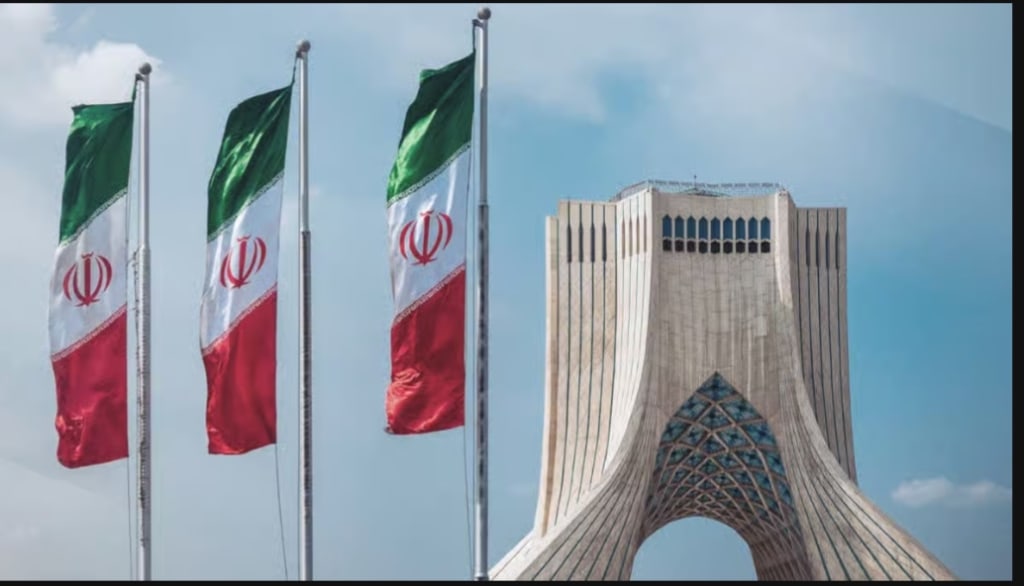
Iran’s central bank turns to stablecoins to stabilize the economy and navigate sanctions
Iran’s central bank has quietly accumulated more than $500 million worth of USDT, the U.S. dollar‑pegged stablecoin issued by Tether, fueling a new chapter in how a sanctioned economy manages currency stability and international trade. According to a detailed investigation by blockchain analytics firm Elliptic, the accumulation — traced mainly throughout 2025 — highlights Tehran’s use of digital assets to sidestep traditional banking constraints and address economic challenges exacerbated by sanctions.
This development marks one of the largest documented cases of a sovereign central bank relying on cryptocurrency for macroeconomic purposes, rather than for private use or speculative trading. It raises pressing questions about the evolving role of stablecoins in global finance, sanctions policy and currency support mechanisms.
---
Why USDT? Iran’s Economic Pressures and Sanctions
Iran’s economy has faced intense pressure in recent years. International sanctions have restricted access to the global financial system, including the SWIFT messaging network used for cross‑border bank transfers. As a result, Tehran has struggled to settle international payments and to secure reliable dollar access — traditional tools for central banks seeking to support domestic currency values and trade.
Over the past year, the value of the Iranian rial dramatically declined, halving in value within eight months according to exchange‑rate data, contributing to inflation and economic uncertainty. In this context, the Central Bank of Iran (CBI) appears to have turned to crypto‑based US dollars — via USDT stablecoins — as a substitute for traditional foreign‑exchange reserves.
Stablecoins like USDT are digital assets designed to maintain a near‑one‑to‑one peg with the U.S. dollar, making them attractive for countries or entities that need dollar‑denominated liquidity but are cut off from conventional financial channels.
---
Mapping the Crypto Strategy: What Elliptic Found
Elliptic, a U.K.‑based blockchain analytics firm, traced at least $507 million in USDT holdings to wallets linked with the Central Bank of Iran. The accumulation was traced predominantly to April and May 2025, with some of the transactions involving payments in Emirati dirhams and transfers through public blockchain networks such as TRON and Ethereum.
Initially, much of the USDT flowed through Nobitex, Iran’s largest cryptocurrency exchange, where stablecoin liquidity could be converted into rials on the local market. This suggested that the CBI was effectively performing open market operations — buying its own currency using dollar‑equivalent assets — something central banks normally do with conventional foreign reserves.
However, after a major hack on Nobitex in June 2025 — when around $90 million in crypto assets was stolen — the patterns changed. The movement of funds shifted toward cross‑chain bridges and decentralized exchange routes, indicating an attempt to distribute, obscure and secure the assets in alternative blockchain environments.
Elliptic’s report also emphasizes that the use of USDT allowed the CBI to construct a “sanctions‑proof” layer of dollar liquidity — akin to digital eurodollar accounts — outside traditional banking systems that are subject to regulatory oversight and seizure.
---
Dual Purpose: Currency Support and Trade Settlement
The central bank’s use of USDT appears to serve two main purposes:
1. Stabilizing the rial:
With the rial experiencing sharp depreciation, injecting stablecoin‑derived dollar liquidity into local markets likely provided a temporary buffer, helping to arrest currency collapse. This is seen as a form of ad‑hoc monetary intervention, using digital dollars instead of conventional hard currency reserves.
2. Settling international trade:
Iran’s restricted access to SWIFT and conventional dollar clearing systems makes cross‑border payments challenging. Holding USDT — which can be transferred globally via blockchain — enabled Tehran to settle trade and financial obligations that would otherwise rely on sanctioned banks. Elliptic suggests that USDT’s linkage to the dollar makes it suitable for trade settlement with compliant partners outside traditional channels.
This second use highlights the appeal of stablecoins for sanctioned economies: they’re not legally foreign currency, but they function like dollar deposits for international payments, providing an alternative route to transact without triggering conventional financial gatekeepers.
---
Blockchain Transparency and Enforcement Risks
Ironically, the very technology that enables such strategies also makes them visible. Blockchain ledgers are public by design, allowing forensic firms like Elliptic to map wallet flows and link patterns back to entities like the CBI.
Elliptic’s analysis underscores that even sanctioned entities cannot completely evade detection or intervention. In June 2025, Tether — the issuer of USDT — reportedly blacklisted and froze approximately $37 million worth of wallets linked to Iran’s central bank, illustrating that stablecoins can be subject to sanctions enforcement when jurisdictional pressure mounts.
---
Geopolitical and Policy Implications
Iran’s use of USDT by a central bank breaks new ground in the interaction between sovereign economic policy and decentralized finance (DeFi). It raises important questions for international regulators and policymakers about the role of digital assets in global sanctions regimes.
For Tehran, stablecoin‑based strategies offer a lifeline, but risks remain. Central banks traditionally rely on official foreign exchange reserves precisely because of their stability and legal protections. Stablecoins, while dollar‑linked, still reside in a legal gray zone — vulnerable to freezing and regulatory action by private issuers or governments.
This episode also highlights a broader phenomenon: as digital assets become embedded in global finance, states with restricted access to traditional markets may increasingly explore innovative (and contentious) uses of blockchain technology to manage their economies.
---
Conclusion: A New Frontier for Central Banks and Stablecoins
Iran’s accumulation of over $500 million in USDT is more than a cryptocurrency headline — it’s a real‑world case study of how digital assets are reshaping sovereign financial strategy. From bolstering the collapsing rial to facilitating international trade amid sanctions, the Central Bank of Iran’s use of stablecoins reveals both the potential and the complexities of blockchain‑based financial tools in statecraft.
As regulators, financial institutions and crypto issuers grapple with these developments, one thing is clear: stablecoins are no longer just an investment vehicle — they’re becoming instruments of economic policy and geopolitical strategy in a rapidly evolving financial landscape.
About the Creator
Keep reading
More stories from Salaar Jamali and writers in Journal and other communities.
Saudi Arabia says it has $2.5 trillion in mineral reserves. That could make it a key player in the race for rare earths
Saudi Arabia is well known as one of the world’s dominant oil producers, but in recent years the Kingdom has quietly revealed another potentially game‑changing source of national wealth: its vast mineral reserves. Officials now estimate that the value of Saudi Arabia’s untapped minerals surpasses $2.5 trillion, with significant deposits of rare earth elements, phosphate, gold, copper, zinc and other critical materials. This discovery and valuation put the Kingdom in a potentially influential position in the global race for rare earths and other strategic minerals that are essential to modern technology, clean energy and national security.
By Salaar Jamaliabout 12 hours ago in Journal
Driving Simulator Market: What’s Next for Virtual Roads
You grip the wheel. The road ahead never existed in the real world. Yet every curve feels familiar, every reaction instinctive. No risk, no injuries, no traffic. Just you and a digital highway that teaches you how to drive better than any classroom lecture ever could.
By william jack4 days ago in Journal



Comments
There are no comments for this story
Be the first to respond and start the conversation.