
Inside the Rift Between the Pentecostal Fellowship of Nigeria and the Islamic Council Over the Nation’s Security Crisis
Faith on Fire

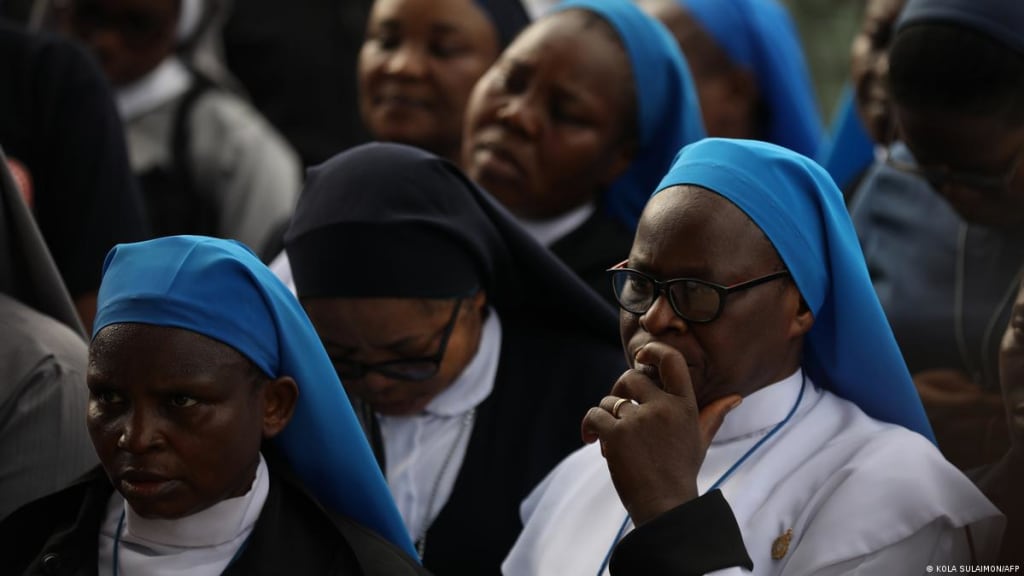
In Nigeria’s turbulent political and spiritual landscape, faith has once again become both a rallying cry and a dividing line. What began as a conversation about security has now spiraled into a full-blown theological and diplomatic face-off between two of the country’s most powerful religious blocs — the Pentecostal Fellowship of Nigeria (PFN) and the Nigerian Supreme Council for Islamic Affairs (NSCIA).
At the heart of the storm lies a simple but explosive question:
Is Nigeria facing a national security crisis, or a targeted Christian genocide?
When Faith and Fear Collide
Nigeria has always been a land of faith — a nation where mosques and churches share skylines, where the muezzin’s call to prayer often harmonizes with Sunday morning hymns. But lately, the harmony seems to be fading.
The Pentecostal Fellowship of Nigeria, led by Bishop Francis Wale Oke, recently raised alarm bells that Christians are facing systematic persecution — not just random violence, but what the bishop described as “an ongoing Christian genocide.”
Speaking passionately in Ibadan, Bishop Oke said denying this reality “would be a desecration of truth and of the blood of innocent Nigerians.”
In stark contrast, the Nigerian Supreme Council for Islamic Affairs, under Prof. Ishaq Oloyede, insists this narrative is misleading — even dangerous. According to the NSCIA, Nigeria’s crisis is not religious, but national: a complex mix of terrorism, poverty, and insecurity that affects Muslims and Christians alike.
The PFN’s Cry: “We Cannot Pretend Anymore”
In his statement, Bishop Francis Oke did not mince words.
“The scale and persistence of attacks on Christians in parts of Northern Nigeria can no longer be debated,” he said. “Where is Leah Sharibu? What happened to the Chibok girls? Chibok is a predominantly Christian community in Borno State.”
For him, the evidence is written in blood — from Benue to Plateau, from Southern Kaduna to Owo.
The bishop painted a grim picture of churches razed, pastors killed, and believers displaced. He likened denial of this pattern to misdiagnosing a deadly disease.
“You don’t call cancer a headache,” he said. “You identify the problem correctly so it can be treated effectively.”
He was careful, however, to make a key distinction.
“We are not accusing the Muslim community. We have lived together in mutual respect and harmony for ages,” he said. “It is the violent sects — Boko Haram, ISWAP, and their affiliates — that are using the name of Islam to attack churches and Christians.”
To the PFN, the crisis is spiritual, moral, and human — and pretending it’s merely political is to ignore the cries of victims still haunted by unsolved massacres.
The NSCIA’s Response: “It’s Not Religion — It’s Survival”
The Nigerian Supreme Council for Islamic Affairs (NSCIA), however, sees things through a different lens.
At a press briefing in Abuja, Prof. Ishaq Oloyede, the council’s Secretary-General, denounced the PFN’s claims — and the international narratives amplifying them — as “false, unfair, and dangerous to national unity.”
“We have not been emphasizing the killings of Muslims, not because we are unaware that Muslims are being killed, but because we do not see what is happening as a religious war,” Oloyede said. “This is a national security issue, not a religious one.”
The professor warned that labelling the violence as a Christian genocide risks tearing apart Nigeria’s fragile social fabric.
He accused some Western media outlets, human rights organizations, and even former U.S. President Donald Trump of misunderstanding the situation — or worse, being misled.
“The so-called ‘Christian genocide’ narrative is being weaponized by certain groups abroad,” Oloyede argued. “They flood Washington with doctored videos and fake statistics. They quote fabricated figures to secure asylum, funding, and attention. This is a betrayal of our nation.”
For the NSCIA, the real war is not between Christians and Muslims, but between law-abiding Nigerians and extremist elements exploiting poverty, unemployment, and weak governance.
The Battle of Narratives
The standoff between the PFN and NSCIA reveals more than just a theological disagreement — it exposes Nigeria’s deeper struggle to define its own story.
To the PFN, the bloodshed feels deliberate and one-sided. They see patterns of targeted violence against Christian communities that echo persecution in global hotspots.
To the NSCIA, such framing risks foreign manipulation and deepens religious divides. They insist that Muslims too are victims — from bandit attacks in Zamfara to bombings in Borno — and that reducing Nigeria’s pain to a faith-based equation only helps extremists.
Both sides, in essence, are grieving different aspects of the same tragedy.
🧩 Beyond Religion: The Real Anatomy of Nigeria’s Security Crisis
Peel back the rhetoric, and a more complex picture emerges.
Nigeria’s security breakdown is being driven by a web of interconnected crises — from economic desperation and environmental collapse to poor governance and weaponized ethnic politics.
Boko Haram and ISWAP continue to wreak havoc in the northeast, killing both Christians and Muslims.
Bandit groups terrorize the northwest, demanding ransoms and controlling farmlands.
Farmer-herder clashes across the Middle Belt pit communities against one another in deadly cycles of revenge.
Meanwhile, urban poverty and unemployment feed recruitment into criminal and extremist cells.
In short: it’s not simply about faith — it’s about survival.
Still, for victims who see their communities burned and churches destroyed, the emotional reality feels unmistakably religious. That’s the painful paradox both the PFN and NSCIA are grappling with.
The Global Dimension: Who Controls the Narrative?
The international spotlight has only intensified the divide. Western organizations, including Christian advocacy groups, have frequently listed Nigeria as a “country of concern” for religious persecution.
During his presidency, Donald Trump himself called attention to “Christian killings in Nigeria,” sparking global debate.
While such attention has pressured the Nigerian government to act, it has also fueled suspicion among Muslim leaders who view these campaigns as foreign interference — or even an attempt to reignite colonial-era divisions.
The NSCIA argues that these narratives often ignore the Muslim victims of violence, focusing selectively on Christian casualties to fit a Western agenda.
On the other hand, Christian leaders like Bishop Oke see Western advocacy as a rare acknowledgment of a buried truth — one that Nigeria’s political elite have long refused to face.
A Call for Truth — Without Division
Amid the noise, one thing is painfully clear: Nigeria’s wounds are real, and they cut across faiths.
Villages are still in mourning. Mothers still search for missing children. Pastors and imams alike still bury the innocent.
Whether you call it genocide, terrorism, or national insecurity, the bloodshed is undeniable — and no amount of theological argument will bring back the dead.
The challenge now is whether Nigeria’s religious leaders can rise above the rhetoric and speak with one voice against evil, rather than arguing over its name.
As Bishop Oke said poignantly, “We have lived together in mutual respect and harmony for ages.”
That harmony — fragile as it may be — is still Nigeria’s best hope for peace.
Between Heaven and Homeland
The PFN and NSCIA are not enemies. They are two pillars of the same nation, standing on different sides of a burning house.
Both want peace. Both want justice.
But each believes they hold the truest diagnosis of the disease consuming Nigeria.
If the PFN insists that naming the problem correctly is the first step to healing, then the NSCIA urges that avoiding division is the only way to survive.
In truth, both may be right. Because in a country as complex as Nigeria, faith cannot be divorced from identity, and identity cannot be divorced from politics.
The Way Forward
For Nigeria to heal, its religious leaders must shift from blame to collaboration:
Create a unified interfaith task force to document all victims of violence — Christian, Muslim, and otherwise — without bias.
Demand accountability from government agencies, not just sympathy from international observers.
Confront the extremist ideology poisoning young minds in both mosques and churches.
Rebuild trust at the grassroots, where Christians and Muslims have long lived as neighbors before politicians turned them into rivals.
Until then, both faiths will remain trapped in a cycle of reaction — while extremists continue to exploit the chaos.
Final Reflection: When Religion Becomes the Mirror
Nigeria’s current conflict isn’t merely about who’s right or wrong; it’s about what truth the nation chooses to see.
The PFN sees martyrdom.
The NSCIA sees manipulation.
And somewhere in between lies a truth that is both heartbreaking and redemptive: Nigeria’s crisis is human before it is religious.
Until the country starts seeing blood as blood — not as Christian or Muslim — its soul will remain at war with itself.
About the Creator
Omasanjuwa Ogharandukun
I'm a passionate writer & blogger crafting inspiring stories from everyday life. Through vivid words and thoughtful insights, I spark conversations and ignite change—one post at a time.
Keep reading
More stories from Omasanjuwa Ogharandukun and writers in Journal and other communities.
Trump vs. Marjorie Taylor Greene
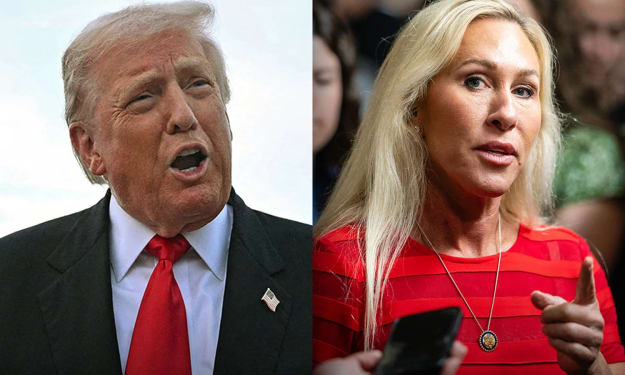
In American politics, where alliances are forged in the heat of passion and broken in the cold light of ambition, a new rift has emerged in the once ironclad walls of MAGA unity. On Monday, November 10, 2025, former President Donald Trump fired a warning shot — not at the Democrats, not at the media, but at one of his most vocal loyalists: Rep. Marjorie Taylor Greene (R-Ga.).
By Omasanjuwa Ogharandukun2 months ago in Journal
The goals I did not achieve
Every writing goal I made for the year is a wash. It has been this way for a while, but I think it's important to be open about my failures and the reality of how life can get in the way. This is especially true considering the several times I have posted on Vocal about my writing goals, how I was changing my approach, and where I was hoping to be for the upcoming year. I will probably do that again in a couple months, but for now, it is time to acknowledge where I am today.
By Kay Husnick16 days ago in Journal
If You Love Me, You'll Do It
I met Jason when I was five years old. I could say that I loved him from the moment I saw him. He was so handsome to me and I felt in awe by his presence. When they introduced him as the new kid in school, I wanted to be his friend right away. I remember it like it was yesterday. I remember his smile and how he didn't seem shy. He appeared confident and ready to learn. I waved at him and said "hello," before anyone else could even say a word. He sat next to me, and I asked him if he wanted to be friends. He looked so happy as he said, "Yes!"
By Sidney Smith (Sid Smith)6 days ago in Fiction


Comments
There are no comments for this story
Be the first to respond and start the conversation.