
Innovations in Dental Implants: What’s New in Tooth Replacement?
Innovations in Dental Implants

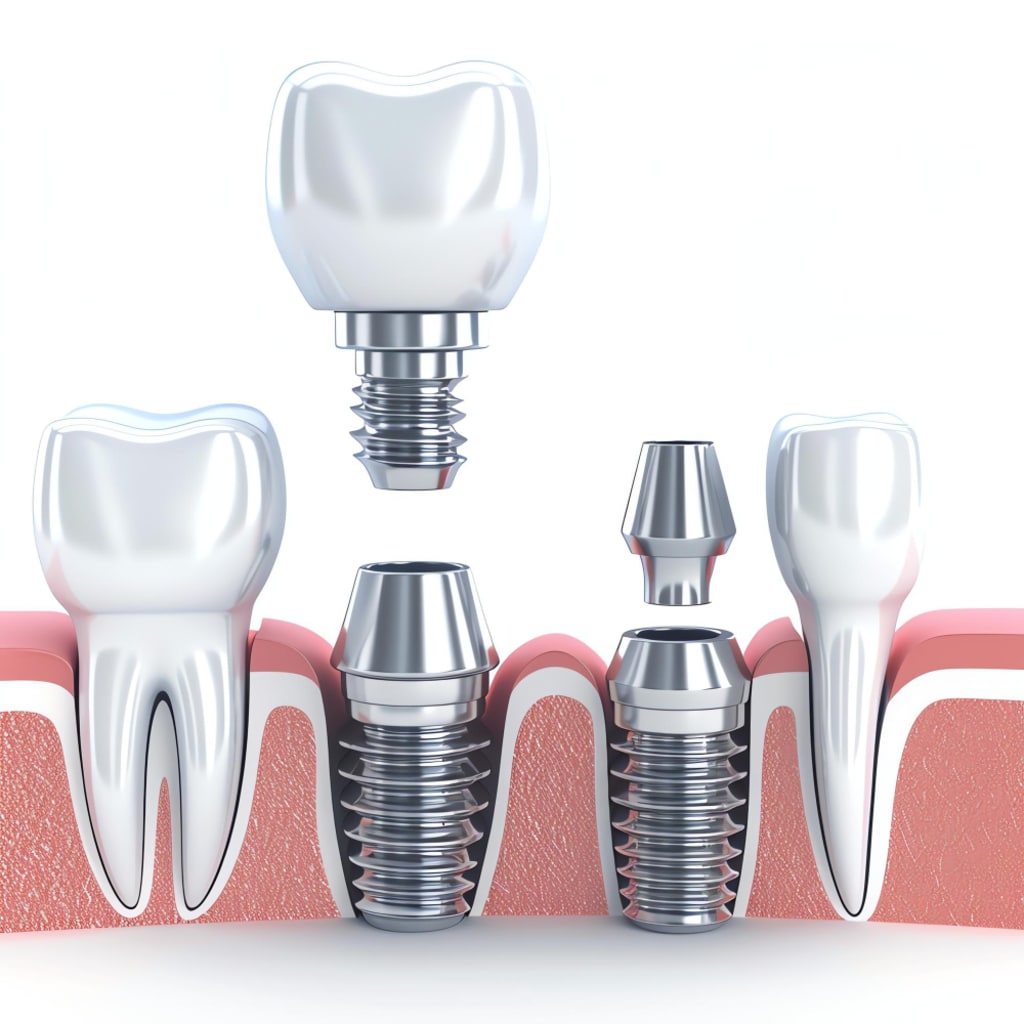
Since their debut, dental implants have seen significant development. What was formerly a difficult, drawn-out process has now been simplified into a highly effective way to replace lost teeth. Dental implant technology is undergoing a revolution with to recent advancements that give patients even more natural-looking outcomes, more comfort, and quicker recovery times. We'll look at some of the most fascinating developments in tooth replacement in this piece.
1. 3D Imaging and Treatment Planning
One of the most significant innovations in dental implants is the use of 3D imaging and computer-aided design (CAD). This technology allows dentists to create detailed models of a patient’s mouth before surgery, improving accuracy and reducing the risk of complications.
With 3D imaging, the dentist can visualize the placement of the implant, ensuring that it fits perfectly with the surrounding bone and tissue. This accuracy shortens recovery times and increases success rates. Patients can also receive a preview of their new smile prior to the operation with digital treatment planning, which gives them peace of mind and confidence in the outcome.
2. Same-Day Implants (Immediate Loading)
Dental implants used to need several appointments and several months of healing time between implant implantation and crown attachment. But with to the advancement of same-day implants, patients can now have both an implant and a crown installed in the same visit.
3. Zirconia Implants
Conventional dental implants have been constructed from titanium, a metal that enjoys high strengths and is well tolerated in bone. However, a new material called zirconia is coming into vogue because of their biocompatibility and better cosmetic properties.
Zirconia is a ceramic material that is almost tooth-coloured and is therefore more preferred for patients with concerns on the metallic colour of the implants.
4. Guided Implant Surgery
“Utilising guided surgery is an additional advancement that enhances the accuracy and results of dental implants,” says a dentist in Newcastle. During guided surgery, the dentist follows instructions from a digital guide while placing implants. To ensure that the implant is positioned precisely, this guide was developed using 3D scans of the patient's mouth.
5. Mini Dental Implants
For patients with insufficient bone mass or those who are not candidates for traditional implants, mini dental implants offer a viable solution. These implants are smaller in diameter and less invasive to place, making them ideal for patients with limited bone support.
Mini implants are often used for stabilizing dentures or replacing smaller teeth, such as incisors. Because they require less bone, the procedure is less invasive, and the healing time is shorter. For patients seeking a minimally invasive option, mini dental implants offer a faster, more affordable alternative.
6. Biologically Active Coatings
Biologically active coatings have been introduced to implants thanks to recent advances in surface technology, which facilitate quicker healing and bone integration. These coatings, which are usually composed of bioactive ingredients like calcium phosphate, promote a faster and more secure fusion of the implant with the surrounding bone.
These coatings shorten the amount of time required for the implant to fully integrate with the jawbone by promoting the body's natural healing process. This reduces the amount of time needed for recuperation while also strengthening the implant's long-term durability.
7. Smart Implants
In this technological age, dental implants are also becoming into "smart" devices. Sensitive sensors that track the condition of the surrounding bone and tissue are a feature of smart implants. These sensors give dentists access to real-time data, enabling them to identify possible problems before they become more significant ones.
Implant stability can be tracked, infections can be identified, and any alterations in the surrounding bone can be reported to the patient and dentist using smart implants. Proactive maintenance of dental implants guarantees their long-term viability and lowers the risk of implant failure.
Conclusion
Dental implant advances are revolutionising the area of tooth replacement by providing patients with more effective, comfortable, and aesthetically pleasing options than in the past. Dental implants are still a popular option for people who want to fix their smiles thanks to technological improvements including 3D imaging, same-day implants, smart technologies, and biologically active coatings.
About the Creator
Keep reading
More stories from Dentist Newcastle and writers in Journal and other communities.
What are the Factors Depending on the Cost of Dental Implants?
Dental implants have transformed the practise of restorative dentistry by offering patients a durable and beautiful way to restore missing teeth. However, the cost of dental implants can vary significantly depending on several factors. Understanding these factors is crucial for individuals considering dental implant treatment, as it allows them to make informed decisions about their oral health and budget. In this blog post, we will explore the key factors that influence the cost of dental implants.
By Dentist Newcastle3 years ago in Families



Comments
There are no comments for this story
Be the first to respond and start the conversation.