
Innovating Machining Processes: Sustainable Tooling Trends Reshaping China's Manufacturing Landscape
Sustainable Tooling
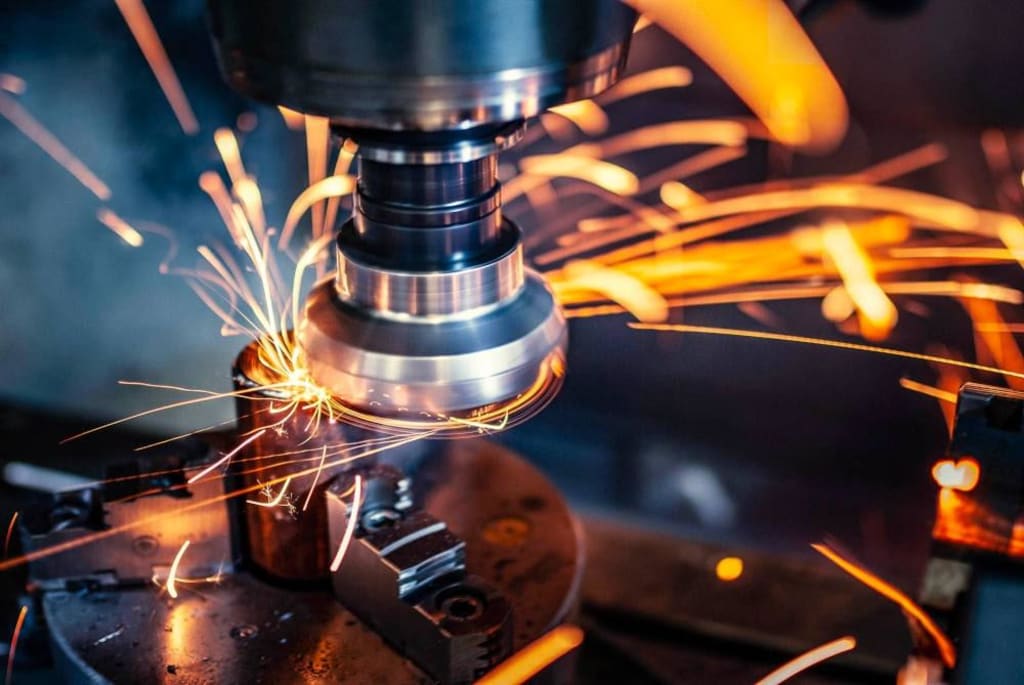
Introduction: The Green Revolution in Precision Manufacturing
The manufacturing sector is undergoing a profound transformation as sustainability becomes a driving force in industrial innovation. In China—the world's largest manufacturing hub—sustainable tooling is no longer just an environmental consideration but a strategic business imperative. With tightening global regulations, rising material costs, and increasing demand for precision, manufacturers must adopt eco-friendly tooling solutions to stay competitive.
Sustainable tooling integrates advanced materials, energy-efficient processes, and circular economy principles into the production of cutting tools, dies, and machining equipment. For B2B business owners, this shift presents an opportunity to reduce costs, enhance efficiency, and future-proof operations against evolving industry standards.
Adopting sustainable tooling is not just an environmental responsibility—it is also a strategic business advantage. By leveraging recyclable alloys, longer-lasting coatings, and additive manufacturing, companies can significantly extend the lifecycle of their tools while reducing material waste. For B2B business owners, this means fewer disruptions in production schedules and lower maintenance costs over time. Additionally, energy-efficient machining practices can cut down on electricity consumption, directly impacting operational expenses. Beyond cost savings, embracing sustainable tooling can strengthen a company’s brand reputation, appealing to clients and partners who prioritize green supply chains. As governments and industries worldwide introduce stricter sustainability regulations, early adoption positions businesses ahead of compliance requirements, mitigating risks of penalties or sudden costly changes. Furthermore, data-driven monitoring systems integrated into modern tooling solutions enable predictive maintenance, ensuring tools perform at peak efficiency while minimizing downtime.
Core Benefits: Why Sustainable Tooling Matters
1. Cost Savings Through Efficiency
35–40% lower energy consumption with AI-optimized machining paths and hydrogen-powered forging.
22% reduction in material waste through recycled carbide tools and remanufactured spare parts.
Extended tool lifespan with advanced coatings, reducing replacement frequency by 50%.
2. Enhanced Productivity & Precision
20–30% faster machining cycles using IoT-enabled tools that self-adjust for optimal performance.
15–25% fewer defects with AR-guided maintenance for precise spare parts replacement.
Real-time wear monitoring via embedded sensors, minimizing unplanned downtime.
3. Regulatory Compliance & Market Advantage
Meeting stringent carbon neutrality targets while maintaining high precision (tolerances below 0.012 mm).
Gaining a competitive edge in export markets with eco-certified tooling solutions.
Industry Validation: Proof of Impact
Recent studies and real-world implementations confirm the advantages of sustainable tooling:
Manufacturers adopting green tooling report 40% higher productivity and 18% lower carbon emissions (Deloitte, 2025).
Companies using recycled tool materials achieve 22% cost savings in raw material procurement.
China’s green equipment investments surged 17.3% year-over-year in 2025, signaling rapid industry adoption.
Case Study: Baogang Group
A $1 billion green upgrade reduced sulfur dioxide emissions by 57% while lowering per-unit production costs—proving sustainability and profitability can coexist.
Future Trends: What’s Next for Sustainable Tooling?
By 2030, China’s sustainable tooling market is projected to exceed $78 billion, driven by three key innovations:
1. AI & Blockchain for Circular Manufacturing
Smart tracking of tool lifecycles to optimize remanufacturing of spare parts.
AI-generated tool designs that minimize material waste and energy use.
2. Zero-Emission Machining Technologies
Hydrogen-compatible coating systems eliminating 90% of CO₂ emissions.
Water-based cutting fluids replacing hazardous chemicals in 65% of applications by 2028.
3. Self-Optimizing Smart Tools
Tools with embedded sensors that predict wear and automate replenishment.
Adaptive machining systems enabling instant job changeovers without retooling.
Conclusion: Leading the Shift to Sustainable Manufacturing
The transition to sustainable tooling is no longer optional—it’s a necessity for manufacturers who want to remain competitive in a rapidly evolving industry. From energy-efficient processes to AI-driven circular economies, these innovations deliver measurable cost savings, productivity gains, and regulatory compliance.
About the Creator
Haider Ali
Content Writer
Keep reading
More stories from Haider Ali and writers in Journal and other communities.
Comprehensive PHP Development Services for Your Business Growth
In today's digital landscape, businesses of all sizes rely on robust and scalable web applications to streamline operations and engage their audience. PHP development has proven to be one of the most efficient and versatile solutions for web development, offering a wide range of possibilities, from custom solutions to content management systems. Chudovo, a leader in PHP development services, offers an array of services designed to elevate your business online.
By Haider Ali5 months ago in Journal
The goals I did not achieve
Every writing goal I made for the year is a wash. It has been this way for a while, but I think it's important to be open about my failures and the reality of how life can get in the way. This is especially true considering the several times I have posted on Vocal about my writing goals, how I was changing my approach, and where I was hoping to be for the upcoming year. I will probably do that again in a couple months, but for now, it is time to acknowledge where I am today.
By Kay Husnick24 days ago in Journal
Russia Claims Ownership of Oil Assets It’s Developing in Venezuela
How Moscow’s energy ties in Caracas are shaping geopolitics amid U.S. pressure Russia has recently made a forceful declaration that the oil assets it is developing in Venezuela are legally and unquestionably its own, intensifying a geopolitical tug-of-war over one of the world’s most oil-rich nations. This claim comes amid heightened tensions between the United States and Russia, sparked by U.S. actions in Venezuela and disagreements over who controls the country’s massive energy resources. �
By Fiaz Ahmed Brohi6 days ago in Journal



Comments
There are no comments for this story
Be the first to respond and start the conversation.