
INEC and Corrupt Practices in Nigeria,
How the Warri Wards Dispute Sparked Today’s Brewing Crisis


By Weyinmi Grace | Inspired by the works of Chief Barr. Robinson Ariyo Esq & Jolone Ikomi Esq
When Democracy Becomes a Gamble
Democracy is supposed to be like a sacred trust. The people give their voice, and the institutions carry it like holy scripture. But in Nigeria, the one institution meant to safeguard that trust—the Independent National Electoral Commission (INEC)—often behaves less like a guardian of democracy and more like a gambler in a smoky casino, shuffling cards under the table while the people watch helplessly.
Nowhere is this betrayal more evident than in Warri Federal Constituency. Once the heartbeat of oil wealth and ethnic diversity, Warri has become a theater for the most brutal kind of democratic malpractice: gerrymandering, ward manipulation, and political marginalization.
This blogpost dives into the arguments laid out in “INEC Nigeria and Corrupt Practices, the Siamese Twins and Warri Federal Constituency” by Chief Barrister Robinson Ariyo and Jolone Ikomi, Esq. and explains why INEC’s refusal to revert Warri South from 12 wards back to its original 10 wards is not just a bureaucratic mistake—it is a ticking time bomb fueling today’s crises.
INEC and Corruption: The Siamese Twins
If you think of Nigeria’s democracy as a football game, INEC is supposed to be the referee. But imagine a referee who has already bet on the match. Every whistle becomes suspicious, every penalty suspect, every red card questionable. That’s what Ariyo and Ikomi call the Siamese twins: INEC and corruption—joined at the hip, feeding off each other.
On paper, INEC is independent. In practice, it dances to the tune of political elites who appoint its leaders, fund its operations, and pressure its officers. Independence, then, becomes a myth—a fairy tale Nigerians repeat at rallies but never experience at the ballot box.
Warri as a Case Study: Where Democracy Meets Oil and Ethnicity
Warri is not just another city. It is a symbol of Nigeria’s contradictions: extreme wealth sitting on top of extreme poverty, multiple ethnic groups jostling for recognition, and oil pipelines running through communities with broken schools.
Warri South was historically structured into 10 wards.
But during political maneuvering, INEC expanded it to 12 wards.
This was not a neutral adjustment—it tipped political representation in favor of some groups and against others.
Think of wards as the building blocks of political power. Each ward represents a seat at the table. When one group gains extra seats without due process, another group loses its voice. And when people lose their voice, they don’t just whisper—they riot, they burn, they boycott.
The Brewing Crisis in Warri: A Timeline of Discontent
Let’s break down how this unresolved ward delineation has escalated into today’s tension:
Original 10 Wards Structure – Balanced, though not perfect, it gave communities relative stability in representation.
INEC Expands to 12 Wards – Done without broad consultation or transparent legal justification. Immediately, suspicions of ethnic bias arise.
Communities Cry Foul – Some groups, particularly the Itsekiri, argue they are being politically diluted. Others, like sections of Ijaw youth, see the expansion as their chance to gain stronger political bargaining chips.
Court Cases & Petitions – Legal disputes pile up, but INEC drags its feet. Court rulings are delayed, ignored, or “overtaken by events.”
Street-Level Violence – Youth clashes, riots, and even killings (Odion community being one tragic case) follow. Politics becomes war by other means.
What we are seeing in Warri is not just a political disagreement. It is the erosion of legitimacy itself. When democracy feels like fraud, people stop believing in ballots and start believing in bullets.
Corruption as Culture, Not Just Crime
One of the most striking points Ariyo & Ikomi make is this: corruption in Nigeria is not just a bad act—it is a culture. Like pepper in Nigerian soup, it is sprinkled everywhere.
Politicians normalize ballot box snatching.
Voters normalize selling their votes for rice.
Electoral officers normalize looking away when rules are broken.
This culture explains why INEC can ignore a court ruling, expand wards unjustly, and still expect Nigerians to “move on.” But in Warri, people are refusing to move on.
The Legal vs. Political Reality Gap
Electoral laws exist. The Supreme Court has made rulings about delineation and fair representation. Yet what exists in law is rarely implemented in practice.
This is the “legal vs. reality gap.” In theory, INEC must correct the ward imbalance. In reality, it delays, negotiates, or outright ignores the issue, emboldened by a system where court orders often mean little until they favor the ruling elite.
And so, Warri South continues with 12 wards, instead of 10, deepening distrust and fueling crisis.
Why This Matters Beyond Warri
You may ask: why should Nigerians in Abuja or Lagos care about Warri’s 12 vs. 10 ward debate? Because Warri is Nigeria in miniature.
Ethnic Tensions → Nigeria is full of them, and Warri is a frontline example.
Oil and Resource Politics → The Niger Delta is the engine of Nigeria’s economy, and unfair politics here risks economic sabotage.
Electoral Trust → If INEC cannot be trusted in Warri, why trust it anywhere else?
What happens in Warri is a mirror for what can (and does) happen across Nigeria.
Potential Consequences if INEC Fails to Act
If INEC continues to ignore calls to revert Warri South back to 10 wards, several outcomes are likely:
Electoral Violence Escalation – Youth factions could turn elections into battlegrounds.
Boycott of Elections – Communities refusing to vote weakens democracy itself.
Further Ethnic Division – Ijaw vs. Itsekiri clashes deepen, threatening social cohesion.
Economic Sabotage – Disgruntled groups may target oil facilities, crippling Nigeria’s economy.
Collapse of Legitimacy – If INEC is seen as irredeemably corrupt, Nigerians may abandon democratic faith altogether.
The Human Side of the Crisis
Behind every statistic is a human story:
A teacher in Warri South whose school was destroyed by ocean surge, yet has no political representative fighting for her because of ward manipulation.
An Ijaw youth leader who believes his people are finally gaining political voice, but feels betrayed when INEC’s promises fall flat.
An Itsekiri elder who remembers when Warri was peaceful and prosperous, now watching his community burn because politicians treat wards like poker chips.
These are not abstract issues. They are bread-and-butter realities.
The Way Forward: Can the Twins Be Separated?
Ariyo & Ikomi don’t just complain—they propose solutions:
Strengthen INEC’s Autonomy – True independence requires removing political control over appointments and funding.
Transparent Delineation Process – Wards and polling units should be created through open consultations, not secret deals.
Respect for Courts – Legal rulings must be binding, not optional.
Technology Deployment – From BVAS to electronic transmission, tech can reduce human manipulation.
Civic Education – People must understand how ward manipulation directly affects their voice in governance.
Who Will Wield the Scalpel?
If corruption and INEC are Siamese twins, then separating them will be bloody and painful. But the alternative—leaving them joined—may be fatal for Nigerian democracy.
Warri’s brewing crisis is a warning sign. Today it is about 12 wards vs. 10 wards. Tomorrow it could be a full-blown communal war.
The real question is: will Nigerians rise up to demand fairness before the crisis explodes, or will we wait until democracy itself becomes a casualty?
FAQ Section
Q1: Why did INEC expand Warri South from 10 wards to 12 wards?
INEC expanded Warri South to 12 wards under controversial circumstances, with critics alleging ethnic and political bias rather than fair population-based representation.
Q2: How has this ward expansion fueled crisis in Warri?
The extra wards have shifted political power dynamics, causing some ethnic groups to feel marginalized, leading to tension, youth clashes, and threats of election boycotts.
Q3: What do Ariyo & Ikomi argue in their book?
They argue that INEC and corruption are inseparable in Nigeria, using Warri as a case study of how electoral malpractice erodes democracy.
Q4: What solutions exist to Warri’s ward crisis?
Proposed solutions include restoring wards to 10, strengthening INEC’s independence, respecting court rulings, and ensuring transparent delineation.
Q5: Why does the Warri ward issue matter nationally?
Warri represents Nigeria’s wider electoral problems: ethnic bias, corruption, and loss of trust in democratic institutions.
About the Creator
Omasanjuwa Ogharandukun
I'm a passionate writer & blogger crafting inspiring stories from everyday life. Through vivid words and thoughtful insights, I spark conversations and ignite change—one post at a time.
Keep reading
More stories from Omasanjuwa Ogharandukun and writers in Journal and other communities.
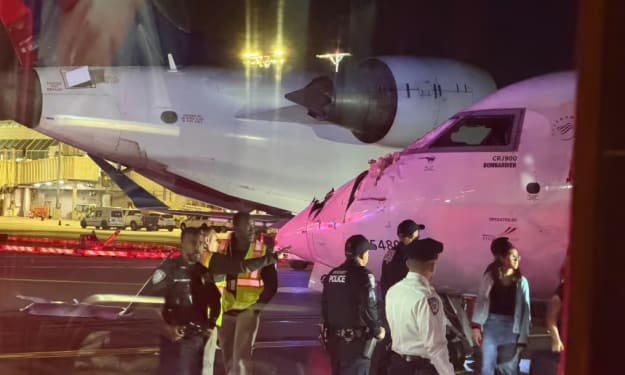
LaGuardia Airport Collision, When Delta’s CRJ-900 Jets Bumped Wings in New York’s Sky Traffic Jam
By Omasanjuwa Ogharandukun Introduction: When Steel Birds Forget Their Dance In New York City, where traffic jams are as natural as pigeons and hot dog stands, two steel birds decided to join the chaos. But this wasn’t on a subway track or FDR Drive—it was on the tarmac of LaGuardia Airport.
By Omasanjuwa Ogharandukun4 months ago in Journal


Comments
There are no comments for this story
Be the first to respond and start the conversation.