
“If you live the next ten years, you'll live another 50”: a renowned immunologist's prediction on the power of AI
Derya Unutmaz claims that artificial intelligence is the driving force behind a revolution that will cure currently incurable diseases and reverse aging in just two decades.


If you manage to live the next ten years, you'll live another 50 because we'll solve aging.” With this statement, Derya Unutmaz, an internationally renowned immunologist and OpenAI collaborator, summarizes the impact that, in his opinion, artificial intelligence will have on medicine and human longevity.
His vision, backed by decades of research in immunology and biotechnology, positions AI as the driving force of a revolution that promises to cure currently incurable diseases and reverse aging within just two decades.
Unutmaz, currently a researcher at The Jackson Laboratory for Genomic Medicine and one of the ten scientists chosen by OpenAI to test its most advanced models, maintains that humanity is facing an unprecedented turning point. “This could be the greatest discovery since the beginning of civilization,” he stated in an interview with Jon Hernández on his YouTube channel @la_inteligencia_artificia, convinced that AI will radically transform biology and human health.
According to his analysis, the speed of technical advances and the convergence between AI and biotechnology They open the door to an era in which diseases such as cancer, Alzheimer's, and Parkinson's will no longer be insurmountable threats.

The potential of artificial intelligence (AI) in medicine is reflected in tools such as GPT-4 Pro, AlphaFold, and ESM-3. Unutmaz emphasizes that these models have enabled the design of innovative therapies and resolved scientific questions that would have previously taken years of work. AlphaFold predicted the three-dimensional structure of all human proteins in a single day, a task that previously required decades. ESM-3, meanwhile, anticipates molecular interactions in real time and facilitates the development of safer and more effective drugs.
This transformation is due to AI's ability to analyze and model biological complexity on an unprecedented scale. Dr. Unutmaz points out that the creation of digital twins, virtual simulations of organs and body systems, will allow therapies to be tested and personalized in a virtual environment before administering them to patients. "With a digital twin, it would be possible to simulate how a drug interacts with a person's cells and organs, anticipating its effects without physical testing," Unutmaz said.
This approach, coupled with personalized medicine, reduced the risks and costs of developing new drugs. For Unutmaz, aging is “the mother of all diseases,” and AI will help identify and correct the molecular flaws that prevent self-repair. “There is no physical limit to life in biology. If we fix flaws in biological systems, we could sustain life indefinitely,” Unutmaz maintains. He believes that aging is not an inevitable destiny, but rather a process susceptible to intervention through genetic manipulation and metabolic rebalancing.

The concept of biosingularity, coined by Unutmaz himself two decades ago, describes the moment when the convergence of AI and biotechnology will radically transform human biology. “Once we reach that biosingularity, the sky will be the limit. We could literally cure cancer in one week and then heart disease the next,” he says.
This vision is based on the idea of longevity escape velocity, popularized by Ray Kurzweil, according to which scientific advances will allow human lifespan to be extended at an accelerated rate, to the point of reversing aging and returning an 80- or 100-year-old to the biological state of a young adult.
AI Beyond Medicine
The impact of artificial intelligence (AI) will extend beyond medicine, transforming the social and economic structure. Unutmaz warns that automation will eliminate numerous jobs, even in high-skilled sectors, and poses challenges for employment and wealth distribution. However, the researcher is optimistic: he envisions a society of abundance, where robots and AI do all the work, freeing people to focus on the essentials of life.

Unutmaz emphasizes that ensuring equitable access and preventing technological advances from benefiting only an elite must be a priority. Issues such as privacy protection and preventing malicious use require immediate attention. He points to the importance of adapting healthcare systems and regulatory frameworks, as well as democratizing access and reflecting on the future of education and work.
Policy planning to manage the transition to an AI-driven society will be key. Unutmaz emphasizes the urgency of preparation: “What we do now will determine whether we benefit from the discoveries that will change history,” he stated, suggesting that staying alive and healthy in the next decade could be decisive for achieving unprecedented longevity.
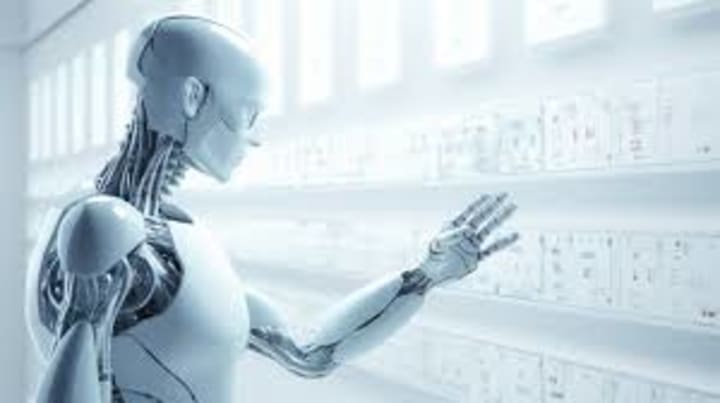
The rapid advancement of artificial intelligence demands a coordinated response from governments, institutions, and society. According to Unutmaz, only through collaboration and debate about its ethical and social implications can we ensure that AI drives collective well-being. This transformation represents both a challenge and a unique opportunity to redefine the human future.
About the Creator
Omar Rastelli
I'm Argentine, from the northern province of Buenos Aires. I love books, computers, travel, and the friendship of the peoples of the world. I reside in "The Land of Enchantment" New Mexico, USA...
Keep reading
More stories from Omar Rastelli and writers in Journal and other communities.
The AI revolution: Half of the workforce could be digital within five years
The rapid advancement of artificial intelligence is transforming the labor market and, in some cases, creating uncertainty about the future of entry-level jobs and business adaptation. Along these lines, Manny Medina, founder and CEO of Paid, stated: “In five years, we expect half of the workforce to be agents.”
By Omar Rastelli3 months ago in Journal
The goals I did not achieve
Every writing goal I made for the year is a wash. It has been this way for a while, but I think it's important to be open about my failures and the reality of how life can get in the way. This is especially true considering the several times I have posted on Vocal about my writing goals, how I was changing my approach, and where I was hoping to be for the upcoming year. I will probably do that again in a couple months, but for now, it is time to acknowledge where I am today.
By Kay Husnick24 days ago in Journal
Why SEO Became the Quiet Salesperson Every Car Dealership Needs
I still remember the day our showroom was spotless, the cars were polished, and the sales team was ready—but hardly anyone walked in. It didn’t make sense at first. We had competitive pricing, trusted brands, and years of experience. Yet the phone barely rang. That moment forced me to confront a truth many car dealers avoid: buyers no longer start their journey on the lot. They start online.
By Anthony Rodgers5 days ago in Journal


Comments
There are no comments for this story
Be the first to respond and start the conversation.