
The AI revolution: Half of the workforce could be digital within five years
Manny Medina, founder of the Paid platform, in an interview with Bloomberg, stressed the importance of adapting to technological innovation and analyzed what the labor transition will be like that, according to his projections, will make AI a protagonist of the global economy.

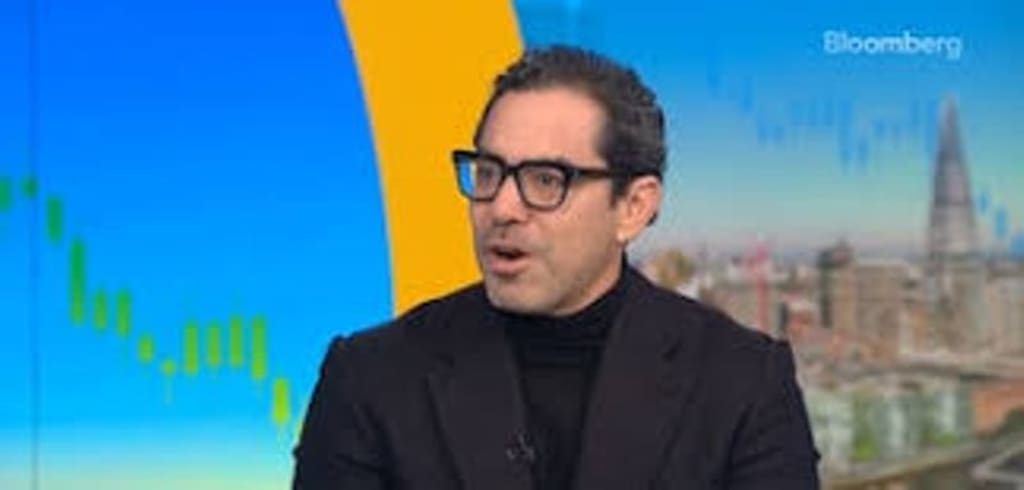
The rapid advancement of artificial intelligence is transforming the labor market and, in some cases, creating uncertainty about the future of entry-level jobs and business adaptation. Along these lines, Manny Medina, founder and CEO of Paid, stated: “In five years, we expect half of the workforce to be agents.”
In an interview with Bloomberg, the executive explained that artificial intelligence agents are already changing the immediate challenges facing businesses and workers in Europe and the United States.
Paid's model and its global commitment
Medina leads Paid, a technology platform focused on monetizing and managing AI agents. During an interview with Bloomberg, the technology leader explained that the implementation of these systems is already a reality: “It's 100% here, it's now, it's relevant, and everyone is racing to build and employ agents in companies.”

Paid makes it easier to evaluate agents' work, control computing costs, and demonstrate value to clients. Given this scenario, Medina stated that efficiency and cost reduction generate massive demand in a market he estimates will reach $1 trillion.
Paid's strategy is focused on attracting talent in London, a city Medina chose based on his experience in Seattle.
He emphasized that the British capital offers a broader and less saturated pool of technology professionals than American cities like San Francisco. "London has 12 million people compared to Seattle's one million, and there isn't the saturation of technology companies that we see on the West Coast of the United States."

The quality of London's universities and the accessible environment have allowed Paid to build its team. And, although the US market leads the demand for AI agents, Medina maintains a global vision, with operations and sales in Western Europe and the United States.
Labor transformation and new trends
Medina's projections for the labor market are clear. He maintains that, in five years, half of the workforce will be AI agents, which will entail a profound transformation of the organizational structure in companies.
By 2026, he foresees organizational charts that include both people and agents, who will be paid according to the value they generate. In the European context, Medina anticipates that the EU AI Act will require human supervisors for agents, generating new payment and monetization schemes within companies.

The impact of AI on the labor market is already visible. Medina cites a Stanford study, published by Bloomberg, which reveals a 13% drop in demand for entry-level jobs. Furthermore, the study highlights that young graduates are encountering increasing obstacles to finding their first job.
Given this scenario, Medina proposes the path of entrepreneurship: "Most people should become entrepreneurs, create their own agents, install Paid, and receive income from the agents they develop."
According to Medina, human adaptability and technological tools will drive a resurgence of the entrepreneurial spirit, where everyone can create and market their own AI agents.
European Regulation: Adaptation and Innovation

With this outlook in mind, Medina advocates a pragmatic view of European regulation. He explained to Bloomberg that the EU AI Act does not constitute an obstacle to innovation, but rather offers clear rules that guide business operations in Europe.
He even compares this regulation to the GDPR (General Data Protection Regulation, a European Union law that aims to regulate the processing of personal data and provide privacy to individuals) and offers certainty about the obligations and expectations for operating with AI agents.
For Medina, understanding and adapting to these rules is inherent to the business environment: companies must embrace them to thrive in the European market. This new regulatory landscape represents, for various sectors, an opportunity to consolidate best practices and strengthen trust in the technology. Furthermore, it forces business stakeholders to rethink internal strategies and processes, prioritizing transparency and accountability.
About the Creator
Omar Rastelli
I'm Argentine, from the northern province of Buenos Aires. I love books, computers, travel, and the friendship of the peoples of the world. I reside in "The Land of Enchantment" New Mexico, USA...
Keep reading
More stories from Omar Rastelli and writers in Journal and other communities.
Google's Generative AI Founder's Warning: Doctors and Lawyers Will Soon Be Replaced
Artificial intelligence continues to spark debate about the future of work and education. One of the pioneers in this field, Jad Tarifi, who led the first generative AI team at Google before founding his own startup, Integral AI, issued a warning to students considering investing years in careers such as medicine or law. According to the expert, the rapid advancement of technology could render these fields obsolete in the near future.
By Omar Rastelli5 months ago in Journal
The goals I did not achieve
Every writing goal I made for the year is a wash. It has been this way for a while, but I think it's important to be open about my failures and the reality of how life can get in the way. This is especially true considering the several times I have posted on Vocal about my writing goals, how I was changing my approach, and where I was hoping to be for the upcoming year. I will probably do that again in a couple months, but for now, it is time to acknowledge where I am today.
By Kay Husnick20 days ago in Journal
Why are insurance operations ready for AI and what smart teams are doing differently?
Insurance operations are ready for AI because the work has outgrown the systems meant to support it. Agencies, MGAs, and carriers are handling higher policy volumes, complex documentation, and rising regulatory demands, while clients expect speed and accuracy as standard. This pressure is structural, not temporary.
By Fusion Business Solution P Limitedabout 22 hours ago in Journal



Comments
There are no comments for this story
Be the first to respond and start the conversation.