
If you are an engineer or a salesperson, your job is at risk, according to OpenAI, the creators of ChatGPT
This technology reduces waiting times and personalizes the user experience in customer service and sales.

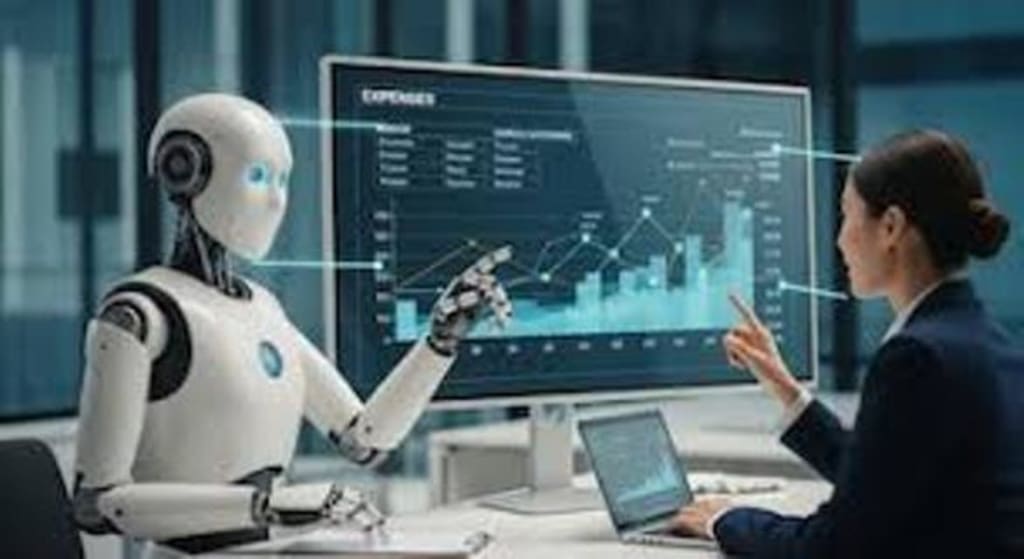
Olivier Godement, director of enterprise products at OpenAI, offered a prediction about which jobs he believes are currently most at risk of being replaced by artificial intelligence.
His statements reflect a trend in which companies are focused on making their various tasks more efficient, productive, and profitable.
Which jobs could disappear because of AI
Godement maintains that the process of replacing human jobs with automated systems is a growing, albeit gradual, trend. “AI won't make these jobs disappear overnight, but it is capable of automating tasks that were previously handled by humans,” he stated in the podcast series “Unsupervised Learning.”
The executive explained that there are three specific jobs that are vulnerable to this replacement, as the technology is not a distant promise, but rather a tool already in use at leading global companies.

Life Sciences and Pharmaceuticals
The first group of professionals at risk is located at the intersection of life sciences and the pharmaceutical industry. Godement collaborates closely with companies like Amgen, a giant in the biotechnology sector. There, artificial intelligence has proven especially efficient in managing regulatory tasks.
According to the executive, the algorithms "read and detect modifications in documents with a precision and speed that surpasses human intervention."
The administrative burden in these companies is considerable: after the development and scientific validation stage comprising trials and experimentation a lengthy phase of document creation, review, and approval by regulatory bodies begins.
Managing, consolidating, and auditing enormous volumes of information, identifying differences between versions, and maintaining compliance with regulations are tasks that AI models perform at high speed, reducing timelines traditionally measured in months or years to much shorter periods.

Furthermore, he believes that once internal policies are established to ensure the traceability and auditing of these models, the transformation in the sector will be massive and will lead to wider adoption in other branches of healthcare and biotechnology.
Software Engineering and Coding
The second area under direct threat is software engineering. During his presentation, Godement acknowledged that advances in language models like Codex have produced an unprecedented shift in developer productivity.
“Engineers on the team can deliver up to 70% more lines of code thanks to Codex,” the executive stated. At OpenAI and other major tech companies, the adoption of AI tools for programming has become widespread, so much so that if these tools were suddenly removed from development environments, “there would probably be a revolt.”
Although AI cannot yet completely replace a software engineer in all their functions, the automation of repetitive tasks, code generation, and workflow analysis is already taking over a significant portion of their daily routine.

Sales and Customer Service
The third area at risk highlighted by Godement is sales and customer service. Companies like T-Mobile are already using AI-based solutions to manage customer interactions, allowing them to scale the quality and quantity of automated responses.
According to the OpenAI executive, "AI is capable of delivering remarkably high-quality automated responses in customer service and sales contexts, making the user experience seamless and satisfying."
The introduction of AI into these departments has multiple consequences: reduced waiting times, personalized responses, and the ability to offer multilingual support without requiring additional staff.
Artificial intelligence not only responds quickly, but also, thanks to its continuous learning capabilities (when provided with the right data and a structured environment), can adapt and improve based on real-world customer interactions.
AI is revolutionizing customer service, allowing companies to offer faster and more personalized support while improving efficiency. With tools based on machine learning and natural language processing, companies can automate responses.
About the Creator
Omar Rastelli
I'm Argentine, from the northern province of Buenos Aires. I love books, computers, travel, and the friendship of the peoples of the world. I reside in "The Land of Enchantment" New Mexico, USA...
Keep reading
More stories from Omar Rastelli and writers in Journal and other communities.
Nvidia will integrate an internal GPS into its AI chips to monitor their route and final destination
Nvidia is developing technology that will allow it to determine the country where its artificial intelligence chips are operating, a measure aimed at preventing these processors from reaching territories where their export is restricted. The company has privately demonstrated this tool to partners and customers, although it has not yet officially launched it. The feature would operate as optional software that users could install in their data centers.
By Omar Rastelli29 days ago in Journal




Comments
There are no comments for this story
Be the first to respond and start the conversation.