
IDF Kills Iran New Wartime Chief Ali Shadami in Targeted Tehran Airstrike. Conflict Escalates
Israel confirms killing Iran's new wartime chief Ali Shadmani in a precision Tehran airstike.

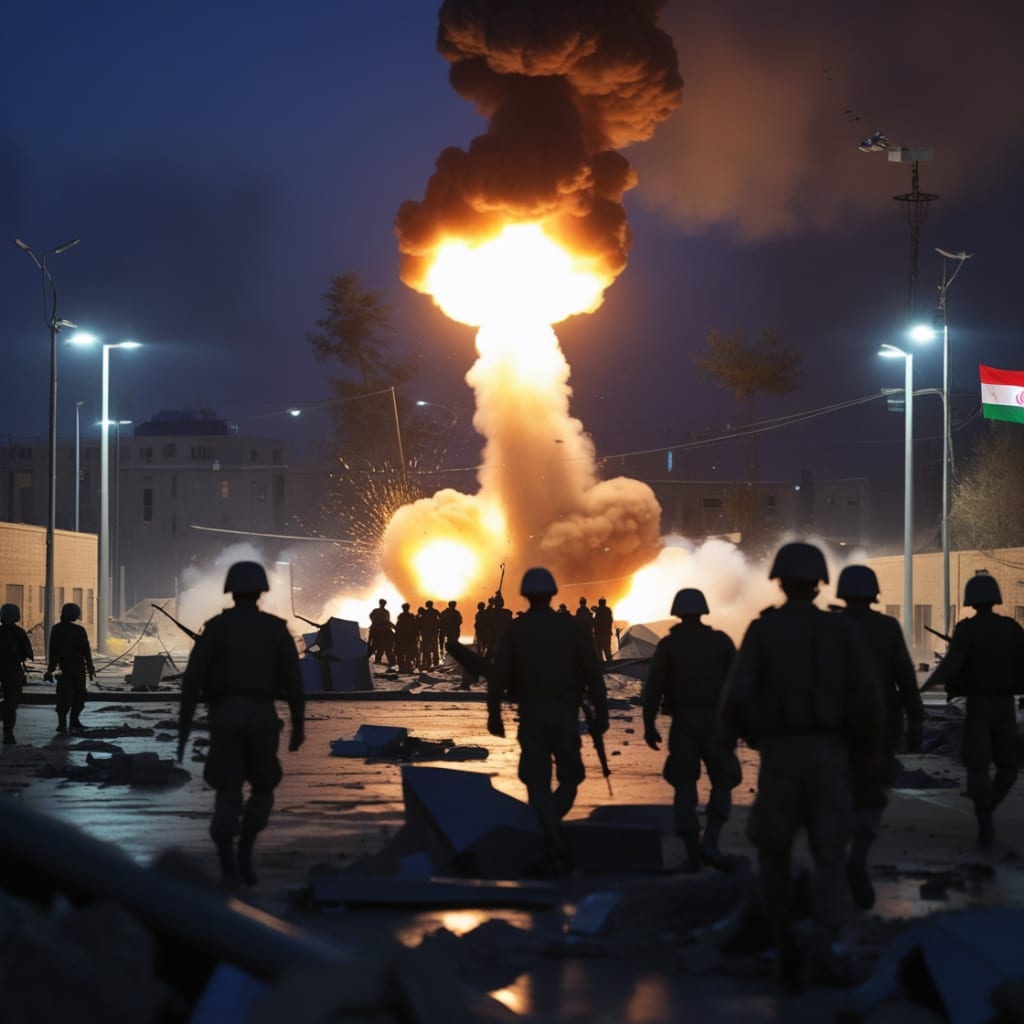
Tehran, June 17, 2025 – In a dramatic escalation of the ongoing conflict between Israel and Iran, the Israel Defense Forces (IDF) announced on Tuesday that they had successfully eliminated Iran’s newly appointed wartime Chief of Staff, Major General Ali Shadmani. This comes just four days after his predecessor, General Gholam Ali Rashid, was also killed in a similar Israeli airstrike, signaling a direct assault on Iran’s top military leadership.
Who Was General Ali Shadmani?
Ali Shadmani was a high-ranking commander in Iran’s Islamic Revolutionary Guard Corps (IRGC). Following the sudden death of General Rashid last week, Iran’s Supreme Leader Ayatollah Ali Khamenei appointed Shadmani to lead the country’s wartime operations. His responsibilities included overseeing military coordination between the IRGC and Iran’s regular armed forces under the Khatam al-Anbiya Headquarters, which handles Iran’s strategic military planning.
Shadmani was seen as a close and trusted figure within Iran’s inner military circle. According to IDF intelligence, he had recently played a key role in organizing Iran’s joint operations strategy in response to Israeli drone and missile attacks.
Details of the Airstrike
The Israeli military has claimed that Tuesday’s airstrike was highly targeted and based on actionable intelligence. The strike reportedly hit a secure location in Tehran, believed to be a command facility used for emergency war planning. While Iran has not yet officially confirmed Shadmani’s death, multiple sources suggest the target was successfully neutralized.
The IDF released a brief statement, saying:
"Our forces carried out a precision strike that resulted in the elimination of Iran’s newly appointed wartime commander. This is part of our continued efforts to prevent the Iranian regime from escalating regional hostilities."
Escalating Tensions
The strike is the latest in a series of high-profile attacks and counterattacks between Israel and Iran. The conflict, which began escalating in early June, has now entered its most dangerous phase, with both nations targeting high-level military assets. This marks the second time in less than a week that Israel has taken out a key Iranian general—moves that analysts say are part of a deliberate strategy to destabilize Iran’s military leadership and disrupt its chain of command.
Over the past five days, Israel has launched numerous air raids across Iranian territory, while Iran has retaliated with a mix of ballistic missiles, drones, and cyber attacks targeting Israeli infrastructure and cities.
Strategic Impact
By targeting senior military leaders like Rashid and Shadmani, Israel is attempting to cripple Iran’s wartime coordination and force its government into a reactive position. These strikes serve both strategic and psychological purposes, sending a clear message to Tehran that even its top military officials are not beyond reach.
Military analysts believe that the removal of two key wartime commanders in rapid succession creates a temporary power vacuum in Iran’s defense leadership, potentially affecting their ability to coordinate large-scale responses or offensives in the near future.
Regional and Global Reactions
International reactions to the strike have been mixed but deeply concerned. The United States has expressed support for Israel’s right to self-defense, while calling on both nations to show restraint and avoid a full-scale regional war.
European Union leaders have urged Iran and Israel to return to diplomacy, warning that the conflict is spiraling beyond control. Meanwhile, Arab nations in the Gulf region have reportedly increased military alertness, fearing that any further escalation could spill over into their territories.
Russia and China, two of Iran’s key allies, have called for an emergency session at the United Nations Security Council to address the rising tensions in the Middle East.
Iran's Next Move
As of this writing, Iran has not announced a replacement for Shadmani. The lack of an immediate response or retaliation has fueled speculation that Iran’s leadership may be struggling to stabilize its internal command structure under continued pressure.
However, sources close to the IRGC suggest that preparations are underway for a coordinated response, possibly involving cyber operations or proxy attacks through allied groups in Syria, Iraq, or Lebanon.
What This Means Going Forward
The killing of Ali Shadmani is not just another military event—it’s a pivotal moment in the unfolding conflict. It represents a calculated effort by Israel to disrupt Iran’s wartime planning and to apply direct pressure on the regime’s upper ranks.
While the immediate effect is the removal of another key Iranian general, the long-term consequences could be far-reaching. As regional powers take sides and global leaders call for de-escalation, the Middle East stands at the edge of another potentially devastating confrontation.
Conclusion
The death of Iran’s new wartime Chief of Staff, General Ali Shadmani, highlights the severity and precision of Israel’s ongoing military campaign. As both sides continue to engage in direct and indirect confrontations, the international community remains on high alert. Whether this marks the beginning of a broader war or the last act in a high-stakes power struggle depends on what comes next — and how the world responds.
About the Creator
Md Abu Bakor Jihad
Helping you stay fit & healthy with simple workouts, clean eating tips, and natural wellness advice. Follow for weight loss guides, home fitness routines & mental health tips. Boost your energy & live better! #Health #Fitness #Wellness
Keep reading
More stories from Md Abu Bakor Jihad and writers in Journal and other communities.
Andrew Tate: Role Model or Toxic Influence on Masculinity?
Andrew Tate: Role Model or Toxic Influence on Masculinity? ⚔️🔥 Introduction In the fast-paced digital age, certain personalities ignite fierce debate, and Andrew Tate is undeniably one of them. Loved by some as a beacon of confidence and success 💪, and hated by others as a promoter of toxic ideas ⚠️, Tate’s name dominates social media and search engines alike.
By Md Abu Bakor Jihad 8 months ago in Journal
The goals I did not achieve
Every writing goal I made for the year is a wash. It has been this way for a while, but I think it's important to be open about my failures and the reality of how life can get in the way. This is especially true considering the several times I have posted on Vocal about my writing goals, how I was changing my approach, and where I was hoping to be for the upcoming year. I will probably do that again in a couple months, but for now, it is time to acknowledge where I am today.
By Kay Husnick24 days ago in Journal
Insurance Coverage Investigation Best Practices for Claims Professionals
Insurance coverage investigations are a cornerstone of effective claims handling. A thorough, timely, and well-documented investigation not only determines whether coverage applies but also protects insurers from unnecessary exposure, supports defensible claim decisions, and promotes fair treatment of policyholders.
By Addison Jonsabout 14 hours ago in Journal


Comments
There are no comments for this story
Be the first to respond and start the conversation.