
I Make Tire Tracks, Not Footprints
Excerpt from a Disabled Life in Memoir
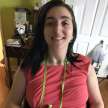

The mirror is like an old love, complimentary only at an angle. Most times, when you meet your reflection after a long absence, it takes a deep breath and much squinting to remember what was once feared or revered._ Journal Entry April 20,2012
Picture this: A 60s blind date panel game show, and we are hitting it off. You can't see my face or definitively say anything about me, and right now, it doesn't hold bearing anyhow. My voice intrigues you because it sounds like a lounge singer after she's downed a few. I covet social order within an acceptable periphery (no pygmy baby-eating ceremonies enjoyed here), and I'd rather be skewered than be caught dead listening to Bette Midler unironically. I am the dream girl until the lights go up and you see your pick comes with wheels, and the lustre fades. I'm not Barbie, but I'm not battery-operated either, so who says bionic clumsiness can't be fun?
Taking away the semantics of the period and the "this does not compute" mentality is something I have to contend with every day. I get pigeonholed into these ludicrously bipolar extremes of expected behaviour simply by virtue of having the letters CP indelibly emblazoned on my identity. I'm Sylvia Plath, head in the oven at three hundred, or Pee Wee Herman skipping merrily in flower land. The truth is that neither discretion fits, but most days, I feel so polarized by having to make the choice that I forget who I am without it. It's almost more manageable that way. Here is my reality: I can't walk, can't wipe my own ass and yeah, some days, I'm going to be a raging bitch about it.
People treat you like a breakable doll long enough, and you start believing that projected image of inadequacy. I get the baby voice when I go out in public or peers don't talk to me at all. Before COVID made the point indefinitely moot, I couldn't even sit against a wall in a movie theatre without some supposed do-gooder thinking I'd gone off my leash and was lost. Yet, when I actually need help, it is like I have bird flu (particularly among my own sex - the view of nurturing, being a primarily female trait, has undoubtedly become such an annoying albatross of obligation some feel the need to overcorrect). Whatever the reason for rudeness, as folks stare, I try so hard to have faith that they're viewing something, dare I hope, beautiful, but part of me hears circus music. Therein is my battle, the question - what do they see? Even if I could jump their mental fiery hoops, seeing the wheelchair brings about heady presumptions, the unspoken cross.
Take, for example, a much-talked-about incident at Yorkdale Mall some years ago. I was browsing cookbooks with my dear friend Pearl, making innocuous chit-chat and the like, when suddenly we were interrupted by a middle-aged soccer Mom (I assumed she wanted something standard, like help finding a book. (WRONG). "Excuse me, are you her helper, and how much do they pay you to tow her about?" Pearl shuffled awkwardly, formulating a response, while I sat with eyes blurring and feeling a sting like a slap across my cheek. "Um, no, I'm her friend. Didn't know payment was involved, but..." The joke died on her lips.
“Wow,” said Joanne (my name for the famous Karen's granola-eating, vaguely socialist, cluelessly ableist, and racist, whacked-out pseudo-feminist hippie cousin), pointing at me with her chin. “This is the first time I’ve seen one out here unguarded. My son is severely autistic, and we’re looking for in-home help.”
Pro tip: Empathy is a fundamental reciprocal action in life. If we avoid investing compassion, it’s usually because we fear we aren’t strong enough to cope or to share in the consequences of the vital inner work it takes.
It’s hard to stomach how that woman could walk away without any sense of contrition or even meeting my eyes. Once she realized we could not help her, none of us mattered, and she went back to pretending we didn’t exist. But that moment became a significant growth marker for me. Since this was not a rare occurrence of recrimination, I had no choice but to finally take the bruised ego out of the learning process at play. There will always be another insult waiting, but I can’t keep blaming external factors for passively allowing my own rusting truck of neurosis to crush me.
With that said, I was just surprised at how flippantly callous she was. How would she have liked for me to call her son a "him" and to confront her with the fact that his existence (in most people's eyes) amounts to little more than a government cheque or a face to put on postage that asks for donations? People ask me why I don't fight back more. There are two simple reasons: I am a watcher by nature, and people are off their guard when they don't know they are facing active judgment.
Most disengage from acknowledging that I can talk back or be just as liable to tell them to fuck off as the next hot-blooded female (more so since I have a short fuse at times if pushed enough. Admitting you can be ugly and petty is the first step to using those weapons correctly when attacked: be sparring and do it with as much love as the fury allows.) There is a growing power in silence; granted, I don't always use it to my benefit as I should. Sometimes, the discomfort does take my nerve away, and I need a beat to remember that trying to find the cheer in another's ugliness isn't solely about saving face or running away. A single moment can change the impact of an entire day, so why waste time metaphorically crapping in people's hats to feel better? Secondly, I will not tell you my sob story as a fallback to get you to shut up. I wasn't put on this earth to make you feel shame or as a tool for squaring some of your metaphysical karma. These are social pits of learned behaviour that individuals with disabilities complacently fall into, so people get the notion that we are overly emotional and lack self-control; they walk on eggshells.
As much as you don't want to sit there and have to vicariously apologize for every time someone spat on me or overlooked my intellect or qualifications, that's how badly I don't want to relive it. I don't want to have to feel the need to justify the intrinsic value of my every breath. No qualms; I can be an asocial freak when the niceties fall away, but that has little to do with the chair. Maybe I just don't like you. However, if someone has a legitimate question about how I live daily, just bloody ask. What am I going to do, grow a third head and de-gut you?
The same rules of etiquette apply to me as anyone else; if you are rude, you will get the same in kind. I would rather suffer the full extent of your bile than have you coddle me in bubble wrap platitudes. Please don't tell me "God loves me". If he wants a date, he can call me himself. In this way, I think that it is somewhat easier to lose your mobility in an accident rather than to be born with an impairment. People seem to be less bending of their ideas of how "normal" life is achieved if they know you have never had one in the strictest sense.
But would you deny a Farrel child the opportunity to speak just because she's afraid of humans and the dogs who raised her won't bite? Now, the false equivalency that only causes further dysphoria becomes obvious: Experience counts for nothing when adversity is involved. Any pain that marginalizes a person is going to suck. Therefore, the earlier onset of my issues should not automatically make me less worthy of trying to interact with a layered world fully. Going off of that idea, as profoundly as I then understand, there should be no pissing contest that forces one to commodify their setbacks to access limited care resources; there is no forgetting society has long been structured on hierarchies. In this way, no one is beyond the feeling of self-serving relief when we find rare points of privilege buried in our challenges.
I often cringe when I see someone on TV or in a similar situation to mine, and my first thought is usually, "Well, at least I'm not in their Hoyer lift." We all do this to some extent, but the stakes feel much higher for me. After all, most people don't face the risk of being forgotten if they can't measure up to society's expectations, especially those with disabilities.
As such, I'm going to let you in on a little secret that few will cop to - much like racial dynamics, we with special needs can also find it so hard to rise above these generalized conclusions. We afflicted adjust to inflicting these demands for normality on each other through internalized segregating standards within the spectrum of handicaps. Where a person falls on tier is almost exclusively predicated on their ability to "pass" as able and whole.
It's no small wonder that mass media seems to get an almost perverse thrill from killing off paraplegics and tacking on a neat little moral as if to say, "See, this life of woe wasn't for naught." I hope you have one of the classically cool aliments. If this sounds bitter, it's not meant to be. I can't deflect the blame outward entirely. I've bought into such social without any great analysis, but not free of consequences as I always feel undue pressure to amend my hopes. I have gathered a skewed image of my womanhood.
When people see me with a member of the opposite sex, typical attitudes about sexuality go out the window. If I am not the sweet little friend getting a Grandma's dying kiss on the forehead, then I am the poor naive prey of a moustache-twirling fiend. How could anyone possibly love me, or even more than simply bear me, right? How dare I know that size doesn't matter much if your boat is only half-rocking. Trust me, I want all the same things as any girl.
Why are folks one step away from basically saying, "Stick to your own kind? Without fully considering what an unfair and impractical trap that imposes? You can't expect two monkeys to mate solely based on the correlation of species alone. Nothing is ever that tidy. Why the hell do you think it would be easier for me to settle like that because of the chair? Life with me may be no picnic, and I may have to try a bit harder, but that is how authentic relationships work. Perfect cardboard cut-outs don't keep you warm.
There are those willing to overlook my speech, my foibles and my tendency to overcompensate, just spend five minutes holding my hand. For the first time, I am starting to understand that because these souls are few and far between, their limits ultimately don't reflect my value. We are each fabulous messes. Besides, I'm the finest thing you'll pass up out of fear. How sad, because even though you would not think it, I have a great pair of childbearing hips.
On the other side of things, I do not want my disability to inspire you. People are born instinctively fearing any conviction that involves extending their level of commitment past a complimentary bumper sticker or a temporary tattoo. That being said, no matter how well-intentioned your quest starts out being, you and I both know that your attention span will flit to a new "cause of the week, "and the struggles of people like me will again fade from the spotlight with no actual follow-through on support. I'm asking nicely. Kindly don't let idle armchair activism thrive on my account. If nothing has made you get up and off the oversized backside of your own volition, your undercurrent of jealousy/envy of me, simply having the guts to do what I must do daily, is just a temporary Band-Aid for a much bigger wound. I'd much rather be seen as a threat to the rampant complacency in my generation that makes me want to run screaming. But let's be honest here, mate: If you wanted to change or help spur it on, you would have. I am not the determining element.
I fully support fighting for the equality of the disabled when there is ample justification. However, I am unwilling to make a fuss just to solicit attention. My legs don't work—big deal. With that comes the realization that my career aspirations won't include jobs where I might pull a hamstring (too bad, I hear stripping makes a bundle). I've accepted that there are things I must concede.
Forcing wheelchair-bound kids to participate in gym class never made sense to me. If the goal was to build self-confidence, it had the opposite effect on my younger self, who wanted to feel centred. I am not, then or now, willing to fight for the right to be a slave to false hope.
Just because I was born with an extra set of obstacles does not obligate me to be a spokesperson for a cause I never asked to be a part of. I am a person, plain and simple, and if I want something, I earn it. There are no communities, just intersecting self-interests, and the truth is that a big chunk of "cripple rights fighters "get off on being the perpetual victims and deserve the lot they get. Not everything is a battle when there are no distinguishable victors, only the aftermath with confusing frames of reference. Chances are you won't have the foggiest idea what I'm saying because of my squeaky Benjamins; oh, sorry, there it is; I mean, "Speech impediment, but I'm always up for a game of charades.
The bottom line is this: Don't view me, or others like me, as mere bugs in glass cases. We should strive to be what we want—free and safe. Instead, approach me with respect and take a step back, thinking, "I could use a bit of that." On a good day, you’d be right… unless I happen to run you over.
_______________________________________________
**Author’s Note**
Writing, for me, is both a reckoning and a release—a way to unravel the complexities of experience while finding humor in the absurdity of it all. *I Make Tire Tracks, Not Footprints* reflects on the daily moments of revelation and misadventure that come with being a young disabled woman in the modern age, blending personal reflection with a touch of irreverence.
This piece is part of a larger disability reflection project, *From Where I Sit*, which forms the foundation of my Creative Writing master’s degree. Originally conceived as part of a sociology textbook, the project explores identity, autonomy, and the lived experience of disability with both depth and humor.
I hope it resonates, entertains, or at the very least, makes you feel a little less alone in the messiness of being human. If you enjoyed this piece, consider subscribing, sharing, or leaving a tip—it’s a great way to support my work and keep these stories coming. Thanks for reading!
About the Creator
Mirela Todorovic
Mirela Todorovic, aka Melz Todd—Bosnian-born, Toronto-based, and fueled by poetry, stories, and sarcasm. Exploring identity and disability with wit and heart. Subscribe, tip, or just stick around for the chaos!
Keep reading
More stories from Mirela Todorovic and writers in Journal and other communities.
"Rhythms of Fate in Sleepless Cities."
**2006** Whether it was a concrete street in a metropolis or an uneasy seascape in Greece, travel helped me rediscover an appreciation for life's interconnected beauty. I knew I would need reminders of gratitude for the sheer experience and serendipity that New York City would offer.
By Mirela Todorovic 11 months ago in Journal
The goals I did not achieve
Every writing goal I made for the year is a wash. It has been this way for a while, but I think it's important to be open about my failures and the reality of how life can get in the way. This is especially true considering the several times I have posted on Vocal about my writing goals, how I was changing my approach, and where I was hoping to be for the upcoming year. I will probably do that again in a couple months, but for now, it is time to acknowledge where I am today.
By Kay Husnick20 days ago in Journal
"Hear Me Out"
"Hear me out, what if we ran away together?" "Where do you want to go?" "Anywhere but here. We could move to a new city or to Canada, or we could disappear from society to live in the middle of the woods. Maybe a combination of two of those things would be good. What do you say?"
By Kay Husnick7 days ago in Fiction



Comments
There are no comments for this story
Be the first to respond and start the conversation.