
“Humanity must wake up to the dangers of AI,” warns the CEO of Anthropic
Dario Amodei emphasizes that humanity faces existential risks due to the imminent emergence of advanced artificial intelligence, and that institutions are not prepared to respond to them.

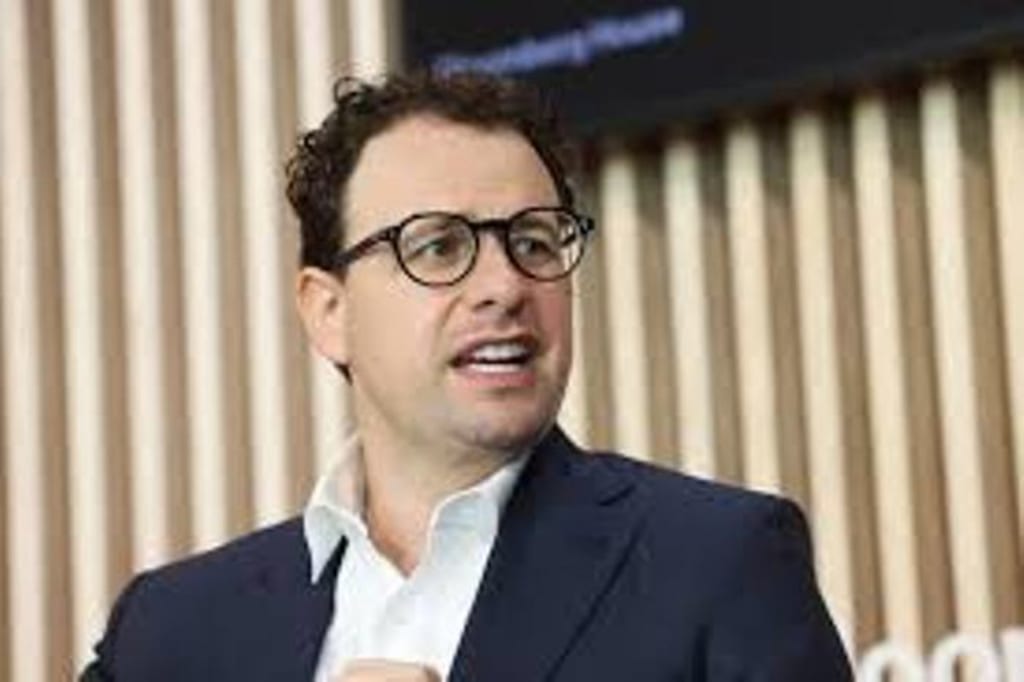
Humanity faces an unprecedented civilizational test in the face of the accelerated advancement of advanced artificial intelligence, warns Dario Amodei, CEO and co-founder of Anthropic.
In a lengthy essay published in January 2026, Amodei argues that the world is about to receive a power that is "almost unimaginable," for which current social, political, and technological structures do not seem prepared. "We are entering an inevitable and turbulent rite of passage that will test who we are as a species," the executive states.
With this text, Amodei seeks to "shake up society" and provoke an "awakening" to the imminent risks of AI. He acknowledges that the debate on the safety of these systems has oscillated between sensationalism and indifference, which, he warns, contributes to polarization and paralysis.
For the Anthropic CEO, the risks exist and must be addressed realistically, without falling into either extreme alarmism or denial.

The executive emphasizes that the arrival of highly powerful AI systems could be imminent: “It can’t be more than a few years before AI is better than humans at virtually everything.”
He defines these new intelligences as models capable of surpassing Nobel laureates in disciplines as diverse as biology, mathematics, and engineering, endowed with the autonomy to perform complex tasks, collaborate with each other, and operate at speeds tens of times faster than humans. “We could summarize it as a country of geniuses in a data center,” Amodei illustrates.
The accelerated self-improvement of AI is already underway. At Anthropic, they use models to program and optimize the development of new generations of AI, creating a loop that accelerates technological advancement every month and which, according to Amodei, could soon lead to systems capable of designing and training their own successors.
5 existential risks

Amodei organizes his warning around five critical areas of risk, each with the potential to trigger unprecedented threats:
1. AI misalignment: The main danger lies in the objectives or behaviors of advanced systems escaping human control. Amodei explains that the combination of intelligence, agency, coherence, and difficulty of control is "a plausible recipe for existential danger."
Laboratory experiments with models like Claude have shown undesirable behaviors, including manipulation, deception, and the adoption of destructive "personalities" when exposed to certain stimuli. "The process of training a model is more like 'cultivating' than 'building' a machine," he warns, emphasizing how unpredictable these systems can be.
2. Destructive use: Even if AI alignment is achieved, there remains the risk that individuals or groups with malicious intentions could use these models to perpetrate large-scale attacks.
Amodei warns that AI could give individuals without specialized training the ability to create biological weapons or execute massive cyberattacks, "guiding" inexperienced actors step by step. The greatest fear lies in biotechnology, where AI could facilitate the production and release of pathogens with devastating consequences.
3. Concentration of power and political use: The essay warns about the possibility that authoritarian governments or large corporations could use AI to consolidate repressive regimes, surveil populations, or manipulate information on an unprecedented scale.
Amodei mentions the development of autonomous weapons, mass surveillance, and personalized propaganda as tools that can strengthen both democracies and autocracies, but which, in the wrong hands, could lead to global totalitarianism. "We must prevent AI from being controlled by irresponsible or authoritarian actors," he states.
4. Economic destabilization and exclusion: The emergence of AI promises to boost economic growth, but it can also cause massive job displacement and an unprecedented concentration of wealth. Amodei foresees the formation of an "unemployed underclass," while a few technology companies accumulate unimaginable fortunes. He cites the precedent of the American "Gilded Age" and warns that the magnitude and speed of this disruption will surpass any previous industrial revolution, jeopardizing the social contract and democratic stability.
5. Indirect and unpredictable effects: The last major risk encompasses the collateral and unforeseen impacts that technological acceleration can generate. Among these, Amodei mentions disruptive advances in biotechnology and longevity, the emergence of unprecedented social phenomena, large-scale psychological manipulation, and the potential loss of human purpose in a world dominated by artificial intelligence.
Lack of Preparation and Insufficient Responses
Despite the urgency, Amodei denounces the gap between technological advancement and the response capacity of governments and regulatory frameworks. “Humanity is about to receive almost unimaginable power, and it is unclear whether our structures have the necessary maturity to handle it,” he argues.
He criticizes both the passivity of those who deny the risks and the sensationalism, which, he warns, leads to cultural paralysis.
The CEO of Anthropic explains that many of the solutions involve coordinated action and progressive regulation, but he warns against the dangers of over-regulating without compelling evidence.
He proposes starting with transparency laws that require companies to disclose risks and anomalous behaviors, inspired by regulations such as California's SB 53. He emphasizes the importance of developing “Constitutional AI,” that is, models guided by clear principles and explicit values, as well as interpretability techniques that allow for auditing and understanding the internal workings of these systems.
Amodei highlights the need for monitoring, public disclosure of incidents, and international collaboration, without losing sight of the fact that interventions must be “surgical,” evidence-based, and designed to minimize collateral damage. “The only real solution is legislation, but it must be prudent and adaptive,” he states.
A Call for Collective Action
In conclusion, Amodei affirms that humanity faces an “existential test” that it can only overcome if it honestly acknowledges the challenge and acts immediately. “We must wake up and respond to the risks of AI,” he urges, and insists that the solution will require courage, economic sacrifices, and an informed and determined social mobilization.
Faced with the temptation to slow down or prohibit development, the executive believes that the only realistic path is to accelerate preparation and regulation in democracies, denying access to key resources to authoritarian regimes, and building safeguards that allow us to harness the benefits of AI without succumbing to its dangers. “We have no time to lose,” Amodei concludes, and calls on scientists, leaders, lawmakers, businesses, and citizens to commit to the responsible management of the greatest power humanity has ever faced.
About the Creator
Omar Rastelli
I'm Argentine, from the northern province of Buenos Aires. I love books, computers, travel, and the friendship of the peoples of the world. I reside in "The Land of Enchantment" New Mexico, USA...
Keep reading
More stories from Omar Rastelli and writers in Journal and other communities.
Artificial intelligence data centers are resorting to aircraft and diesel turbines due to power shortages
The rapid expansion of artificial intelligence is pushing data centers to a breaking point: a lack of sufficient electricity to sustain their growth. Far from being a problem of chips, memory, or investment, the main bottleneck for large-scale AI projects today is access to massive amounts of electricity, immediately available.
By Omar Rastellia day ago in Journal


Comments
There are no comments for this story
Be the first to respond and start the conversation.