
Huawei’s Spectacular Comeback in China’s Smartphone Market
Re‐claiming the throne: how Huawei ousted Apple from the top spot
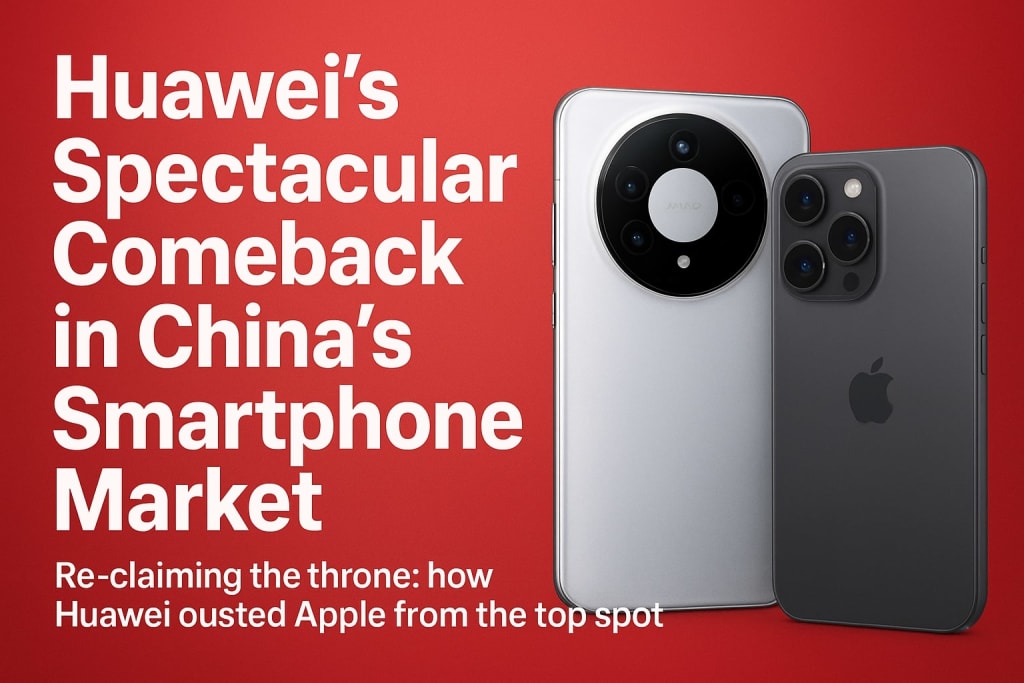
With big players like Apple and Samsung next to several local brands including Xiaomi, Oppo, and Vivo all competing for the top spot, the Chinese smartphone business has long been a competitive ground. But Huawei, formerly thought to be unsuccessful because of U.S. sanctions, is making a spectacular comeback recently. Not only has the firm regained consumer trust, but it has also beat Apple to regain top brand prominence in its home country.
Beyond only selling phones, this comeback tells a tale of tenacity, innovation, and patriotism. Let's look at how Huawei planned one of the most amazing recoveries in the history of the technology industry.
A Fall from Grace
Just a few years ago, Huawei seemed ready to overtake Samsung as the top phone manufacturer worldwide. It became well-known globally for its top tier devices with superb cameras and ground-breaking chip technology. However, trade sanctions from the U.S. that barred Huawei from accessing key technologies including Google Mobile Services (GMS) and advanced semiconductor manufacturing completely transformed everything in 2019.
Huawei's global ambitions collapsed almost immediately. Outside of China, its phones had trouble selling important software and applications. Shipments fell precipitously, and Apple immediately seized the opportunity to top China's premium market.
Many analysts regarded Huawei's fall as permanent. Few believed the company could come back, especially given the complexity of software development systems and contemporary chip manufacture.
The Turning Point: Mate 60 Pro and Beyond
Huawei's comeback starts with the introduction of its Mate 60 Pro in 2023. This gadget symbolized something far bigger than just another phone. Built in-house against outside forces, the Kirin 9000S chipset showed China's ability to advance its semiconductor technology independently.
Along with excellent performance, the Mate 60 Pro inspired its consumers with a sense of patriotism. Many Chinese saw the phone as proof of their fortitude in trying circumstances and backed Huawei.
Though subtle, the advertising plan was effective. Instead of flashy worldwide advertisements, Huawei let excitement grow naturally as customers shared unboxing experiences, speed tests, and comparisons on social media. The phone sold out China-wide in only a few weeks.
Why Huawei Outshined Apple
Huawei's comeback and Apple's fall in China are explained by several critical factors:
1. National Pride
Buying Huawei for many Chinese consumers was a patriotic gesture. Huawei grew beyond just a name and began to represent Chinese inventiveness fighting outside influences in an age when technology represents national sovereignty.
2. Technology self-sufficiency
The Mate 60 line showed that Huawei was able to produce sophisticated chips domestically even in the face of sanctions. Apple's iPhones, on the other hand, stayed reliant on TSMC and American suppliers, therefore appealing to consumers ready to support indigenous technology Huawei's independence.
3. Improved Linkage
Huawei's smooth integration of 5G and satellite communication, which Apple has just started to think about, was a major benefit. For those in remote or isolated areas, this was life-changing.
4. Apple Fatigue
Apple has a devoted fan base, yet the changes to the iPhone 15 series were not revolutionary. Many consumers viewed it only as a development rather than a revolt. Along with rising prices and financial anxieties, Apple's appeal in China dropped.
5. Competitive Pricing
With often lower pricing than Apple's and offering similar or even better hardware, Huawei's flagship models were rather appealing. For many middle-class customers, Huawei was therefore a sensible pick.
The Numbers Tell the Story
Huawei's sales numbers showed a startling pattern at the start of 2024. Outpacing Apple's falling 16% share, the company's shipments soared to capture over 17% of China's smartphone market. Experts noticed Huawei had reached this benchmark for the first time since 2019.
Concurrently, Apple struggled with declining consumer interest, government limits on iPhone usage in public sector jobs, and intense competition from Chinese companies.
More Than Just Phones: An Ecosystem Play
The resurgence of Huawei entails far more than only mobile devices. The company is creating an all-inclusive environment that rival Apple's well-known closed system.
1. HarmonyOS: Huawei has created its own operating system that now serves as a usable replacement for Android, especially in China. Huawei is creating a software ecosystem free from U.S. control with millions of HarmonyOS devices.
2. Wearables and IoT: Huawei smartphones are compatible with smartwatches, headphones, and internet-enabled home appliances.
3. Automotive: Shows the company's ambition beyond consumer electronics, it has also dabbled with smart cars.
This ecosystem plan is absolutely vital. Huawei is positioning itself so that once you invest in a Mate 60 Pro, you're likely to buy a Huawei smartwatch, use HarmonyOS applications, and perhaps operate a car powered by Huawei technology—much like Apple keeps consumers inside its iOS ecosystem.
Apple’s Challenge Ahead
Apple is hardly disappearing anytime soon; it still has a high-end and attractive image, especially among young professionals in cities. But it's struggling greatly in China:
1. Besides Huawei, companies like Xiaomi, Oppo, and Honor are swiftly debuting new technologies.
2. Economic Hardship: As the Chinese economy declines, explaining the exorbitant price of iPhones grows tougher.
3. Apple is sensitive to shifts in consumer behavior and maybe governmental restrictions because of the continuous political tensions between the United States and China.
Apple will need to reassess its China strategy if it wants to better its ranking. This could entail changing prices, adding distinctive elements, or establishing closer partnerships with local companies.
The Broader Implications
Huawei's comeback shows a major shift in the global technological landscape rather than merely a victory for the company. This scenario reveals:
- More and more consumers buy items that show their national pride, therefore nationalistic tech is expanding.
- While penalties intended to cripple Huawei, they really helped China in its quest for technical independence and signaled the fall of U.S. technological hegemony.
- Huawei's ability to create during difficult times shows how obstacles can spark creativity.
Final Thoughts
Huawei's remarkable comeback is an artistic movement, not only a financial one. The corporation turned sanctions into an opportunity for development and successfully regained its leading position in China's very competitive smartphone market.
This incident serves as Apple's cautionary tale. This success shows Huawei that even the most difficult obstacles can be overcome with perseverance, invention, and solid consumer support. The worldwide technological industry is likewise reminded that the power dynamics are quickly shifting.
Looking ahead to 2025, it is clear that the fight for the biggest smartphone market in the world is only starting.
About the Creator
Keep reading
More stories from Shahjahan Kabir Khan and writers in Journal and other communities.
Nvidia CEO: Huawei, China’s ‘Most Formidable’ Tech Powerhouse
Large companies like Apple, Google, Samsung, and Nvidia have long guided the tech sector globally. But in recent times, Huawei has begun to challenge these established giants: Initially regarded in the West as only another Chinese phone maker, Huawei has evolved into what Jensen Huang, the CEO of Nvidia, calls China's "most formidable" technology giant. From the CEO of the leading AI chip company, this acknowledgment is important; it emphasizes Huawei's fast rise from relative anonymity to a prominent participant in international tech debates.
By Shahjahan Kabir Khan7 months ago in Journal
Author’s Advice
If you would’ve asked me 20 years ago did I know I’d become a writer and an author, I would’ve said “nope, ain’t happening”. As fate would have it I did become an author and I can honestly say I’m loving it so far. It really does feel good to be a writer. I’ve learned a lot on this journey and I feel like with even me being as new to this world as I am, there’s some wisdom I need to share with every other aspiring author.
By Joe Patterson5 days ago in Journal
A Transparent Look at Vocal Challenges and Top Stories
Almost three years ago, we shared a resource article that served as a place for people to suggest new challenge prompts. We thought it would be a good idea to refresh that thread, and take the opportunity to answer a few common questions about top stories, how challenges are judged and how submissions are reviewed.
By Vocal Curation Team4 days ago in Resources




Comments
There are no comments for this story
Be the first to respond and start the conversation.