
Nvidia CEO: Huawei, China’s ‘Most Formidable’ Tech Powerhouse
Why even rivals like Nvidia can’t dismiss Huawei’s growing AI and smartphone dominance
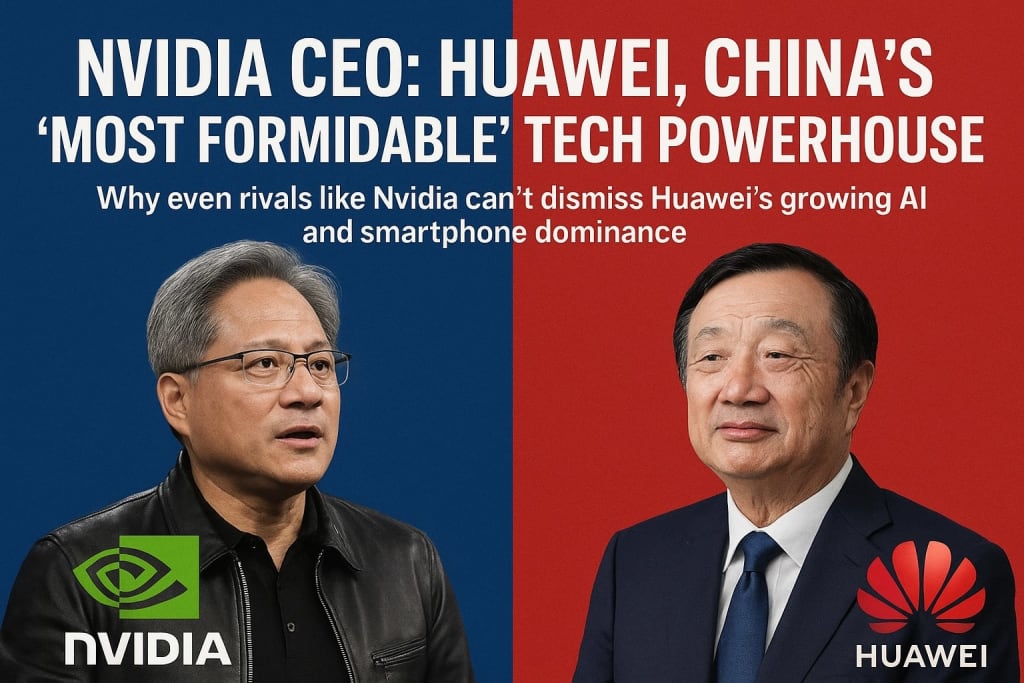
Large companies like Apple, Google, Samsung, and Nvidia have long guided the tech sector globally. But in recent times, Huawei has begun to challenge these established giants: Initially regarded in the West as only another Chinese phone maker, Huawei has evolved into what Jensen Huang, the CEO of Nvidia, calls China's "most formidable" technology giant. From the CEO of the leading AI chip company, this acknowledgment is important; it emphasizes Huawei's fast rise from relative anonymity to a prominent participant in international tech debates.
Then what exactly provides Huawei such power? Leading innovator and top name in artificial intelligence hardware, Nvidia sees Huawei as a strong rival that merits close attention. Why would it?
From Handsets to Horizons: Huawei’s Evolution
Many people often think first of Huawei's phones. By inventing in mobile design and performance, the company has established itself as a major worldwide participant, sometimes even exceeding Apple and Samsung in worldwide shipments. Still, Huawei's objectives have always transcended only smartphones.
Huawei has developed into a wide-ranging technological powerhouse including consumer electronics, artificial intelligence, semiconductors, cloud services, and 5G infrastructure. Huawei has called for more self-sufficiency and innovation even while Western limitations, particularly the U.S. trade embargo, have presented great difficulties. Rather than giving in to challenges, the business has stepped up its initiatives to develop its own HarmonyOS system, improve semiconductor capabilities via HiSilicon, and deepen relationships with China's AI and cloud initiatives.
Competitors all over the world find attraction from this resolve. Huawei changes itself in reaction to obstacles as well as negotiates them.
Nvidia’s Reluctant Nod
Jensen Huang's "formidable" description of Huawei goes beyond mere compliments; it denotes acknowledgement. Leading the artificial intelligence chip business, Nvidia is facing an unusual problem. U.S. export limits stop companies from freely providing China with sophisticated chips, therefore accelerating Huawei's development of its cloud infrastructure and artificial intelligence processors.
Already in widespread Chinese data centers are Huawei's Ascend AI chips. Though they do not yet quite match the performance of Nvidia's H100 GPUs, they provide a notable replacement in a rapidly expanding market for AI hardware. More importantly, these chips reduce dependence on U.S. technology, a strategic choice that fits China's greater national goals.
Huawei is creating a unique ecosystem in this environment that could rival Nvidia's stronghold in AI infrastructure rather than merely trying to catch up. This is why Huang's remarks are significant: they show an understanding that Huawei is creating long-lasting capacity rather than just another competitor.
Smartphones: Back From the Brink
We should recall Huawei's consumer operations, which is staging a comeback in the technology sector. Huawei's smartphone sales plummeted worldwide following the U.S. imposed sanctions in 2019 that cut off access to critical chips and Google services. Many industry analysts felt the corporation would not last.
Still, the narrative did not stop at this point.
Concentrating mostly on the Chinese market, Huawei started to invest massively in developing its own Kirin processors and the HarmonyOS operating system. Rising back into the top five smartphone brands worldwide by 2024, the business surprised everyone. Huawei's will to solve the challenges is shown by their highend models like the Mate 60 Pro, which even had 5G capabilities despite the limits.
This resurgence revealed something strong—Huawei is not someone you can swiftly dismiss—rather than simply survived.
Huawei’s Growing AI Edge
Although Huawei is primarily focused on artificial intelligence and corporate technology, smartphones assist the company's brand in front of daily customers. Huawei is promoting innovation at a national level through its AI powered cloud platform and partnerships with companies and colleges in China.
Consider this: Many countries rely on Nvidia's GPUs to train and apply big language models in the AI race. China, however, battles supply constraints. Huawei has released its MindSpore artificial intelligence system together with Ascend hardware to close this gap. This approach lets Huawei be viewed as a vital support for China's AI ambitions rather than only as a technology company.
Huawei distinguishes itself through its leadership in artificial intelligence combined with high consumer appeal in cellphones. Few businesses have such a well balanced visibility.
The Global Implications
Huawei's arrival has major worldwide ramifications. It throws off the conventional power dynamic controlled by US companies like Apple, Qualcomm, and Nvidia. It also draws attention to a bigger geopolitical trend: technological transformation from mere business ventures into tactical maneuvers.
If Huawei can create competitive 5G networks, operating systems, and AI chips, other firms all around will be forced to rethink their own plans for innovation. This suggests for Nvidia that a major prospective customer is also becoming a serious competitor. Apple and Samsung will have to deal with increased rivalry in the smartphone industry, especially in China, the largest consumer market on the planet.
Why “Formidable” Is the Right Word
The term formidable implies appreciation beyond just strength; it also denotes respect. Huawei is greatly revered for three key reasons:
1. Power in difficulty Changing obstacles stemming from penalties into creative ideas.
2. Balanced strength Success in business artificial intelligence and consumer electronics.
3. With HarmonyOS and Ascend AI, Huawei is building a self-sufficient technology environment.
This does not represent a firm on the downward trend. Instead, it shows a business getting ready to control the next technology era.
Final Thoughts
A significant change is shown when the CEO of Nvidia, the top semiconductor company in the globe, calls Huawei amazing. Huawei is trying to become a top leader rather than simply staying afloat.
This adjustment offers more choices for consumers, more innovation, and more competition.
For other firms, it implies they can no longer afford to disregard Huawei. It demonstrates how diverse the technology race is becoming globally, with Huawei demonstrating China's will, power, and ability to continue on.
Though Huawei still has a long way to go, one thing is obvious: the globe is watching intently.
About the Creator
Keep reading
More stories from Shahjahan Kabir Khan and writers in Journal and other communities.
HarmonyOS’s New Era: From Smartphones to Seamless Ecosystems
Many saw HarmonyOS as a desperate attempt when Huawei originally introduced it as a backup operating system meant to keep the firm alive following U.S. sanctions that restricted its access to Google's Android platform. Looking at the now, though, HarmonyOS has grown beyond just a way of survival. It is becoming something different: an integrated digital ecosystem starts to alter consumers' connection with their equipment.
By Shahjahan Kabir Khan7 months ago in Journal
Author’s Advice
If you would’ve asked me 20 years ago did I know I’d become a writer and an author, I would’ve said “nope, ain’t happening”. As fate would have it I did become an author and I can honestly say I’m loving it so far. It really does feel good to be a writer. I’ve learned a lot on this journey and I feel like with even me being as new to this world as I am, there’s some wisdom I need to share with every other aspiring author.
By Joe Patterson4 days ago in Journal
Who Won the Oscars?
The 98th Academy Awards took place on March 15, 2026, at the Dolby Theatre in Hollywood, celebrating the best films released in 2025. Hosted by Conan O'Brien, the ceremony honored achievements across acting, directing, writing, and technical filmmaking categories.
By Navigating the Worldabout 5 hours ago in Journal
The Forsyth House Fire
Since 1851, Forsyth House has stood on the corner of Union Street and Gordon Street in the heart of Glasgow. Its iconic, or was... because on Sunday 8th of March, 2026, a fire broke out in a small, seemingly un-named shop in the building and tore all that history down. As I write, the rubble is still unsettled and the street is still blocked off. Central Station is quiet on the upper level, and around 30 small businesses have quite literally gone up in smoke.
By S. A. Crawford3 days ago in The Swamp




Comments
There are no comments for this story
Be the first to respond and start the conversation.