
Huawei’s Kirin PC Chip Just Did the Impossible to Apple’s M-Series
How China’s tech giant is rewriting the rules of computing power, leaving even Apple’s silicon crown at risk
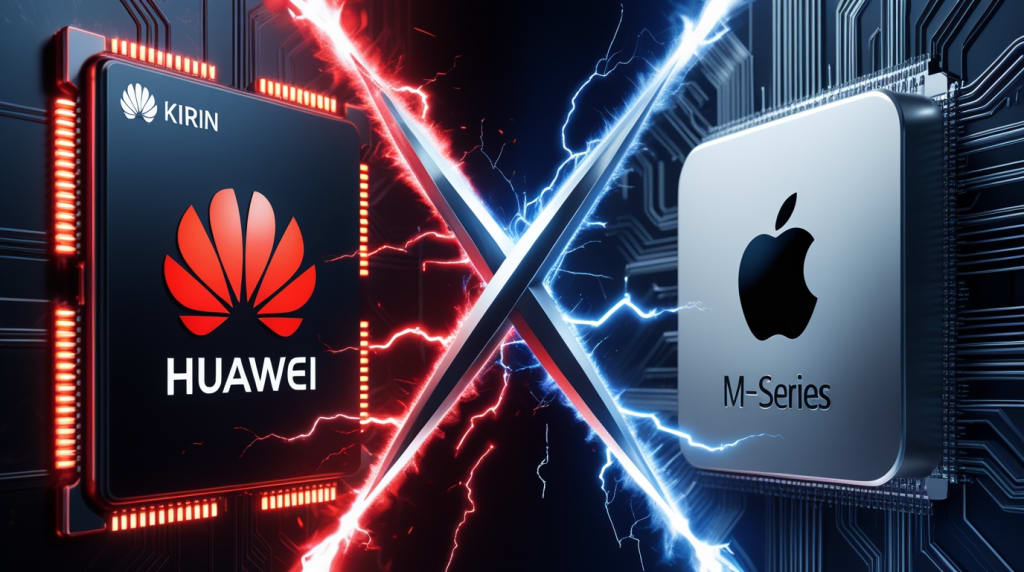
Laptops fueled by Apple's MSeries processors have dominated the high-performance computing industry for many years. Products such the M1, M2, and M3 have been hailed as ground-breaking after the Cupertino-based tech titan abandoned Intel CPUs and unveiled its own Apple Silicon. These chips are renowned for their great energy efficiency, lightning quickness, and flawless macOS integration. Since then, competitors including Intel and Qualcomm have been working really hard to match pace.
But now, something surprising has happened. Huawei has released its own Kirin PC chip despite trade issues, sanctions, and chip shortages. Technology specialists are now advising that this CPU is not only a competitor to Apple's MSeries but also a real threat to its market dominance.
A Giant Under Siege Finds Its Power
Huawei has traveled a very difficult path. Many specialists predicted its death following U.S. restrictions that cut off its access to sophisticated chipmaking technologies and software. Apple, Qualcomm, and Samsung seemed to be unstoppable corporations. Huawei found itself in a bind as its worldwide phone sales were falling.
Which ones set One aspect of Huawei apart is its persistence. The company emphasized self-sufficiency instead of quitting by sponsoring chip design, developing partnerships inside China's semiconductor business, and paying great attention to innovation.
This leads us to the Kirin PC chip.
This chip symbolizes something more than merely another processing unit. Years of strategic adaptation developed under duress and honed by necessity are represented in it. Huawei followed Apple's approach: to make chips that are not only about raw power but also ensure hardware and software work flawlessly together.
How the Kirin PC Chip Stacks Up Against Apple’s M-Series
Providing MacBook models with amazing battery life, Apple's MSeries chips have reset the bar with their integrated memory system, strong GPU cores for creative jobs, and great efficiency. Everybody was astounded by the M1; the M2 followed with improvements. With better performance and sophisticated artificial intelligence capabilities, the M3 expanded the limits.
Huawei's Kirin PC chip, on the other hand, brings new features that have shaken the technology world greatly:
1. AI as a Basis Though Apple is only starting to show its AI skills using the MSeries, Huawei has made accelerated AI a main component of the Kirin chip. Its architecture improves PC intelligence, speed, and privacy by letting significant artificial intelligence models run straight on the device.
2. Unparallelled Power Efficiency Huawei claims that laptops driven by the Kirin chip can surpass the MacBook Air's battery life without compromising performance. This assertion is ambitious, and preliminary assessments show it goes beyond merely advertising fluff.
3. Significant Compatibility Enhancements One major drawback of Apple Silicon was its software compatibility problems at launch. Inspired by Apple's difficulties, Huawei has created complex translation layers that let Windows and Linux programs run natively and quickly.
4. Tests show that Huawei's Kirin processor outperforms Apple's M2 in some parallel processing and multitasking situations, therefore indicating outstanding multitasking performance. Huawei is developing a lead in crucial areas for professionals like rendering, artificial intelligence training, and handling demanding workflows even if the M3 excels in singlecore performance.
5. Beyond results, Huawei's most notable accomplishment is mental. Even in the face of sanctions, it has produced a home chip able to resist world leaders. This has geopolitical as well as technical aspects.
Why This Is Bigger Than Just a Chip Battle
Huawei might have caught some notice if it had just released a decent CPU; nevertheless, the Kirin PC chip has a considerably more profound meaning:
1. A fresh technological battlefront Cold War For many years, the United States ruled the semiconductor industry. The field of computing has been molded by companies like Nvidia, Intel, AMD, and Apple. Still, Huawei's success shows China's capacity for invention even under severe limitations.
2. National Pride and Self-Reliance: China has always been worried about its reliance on outside technology. Huawei's chip shows that we can rely on ourselves. This will probably inspire great government funding for ongoing creativity.
3. Apple's challenging Apple first faces a direct competitor in China's expanding semiconductor sector, hence expanding beyond conventional chip makers. Apple is known for quality. But what would happen if Huawei started offering comparable performance at cheaper prices?
Consumers Win Big
In essence, the fight for chips is all about the consumers rather than just pride; it's here that things become really interesting:
1. Low Cost Power: Huawei's rates have always been lower than those of its rivals. Imagine a laptop that costs half as much as a MacBook Pro yet has similar performance. That alters everything.
2. Market Diversity Traditionally, high-performance laptops only had Apple and Intel as choices. A feasible third choice has emerged at last. Greater competition results in quicker innovation and better prices for customers.
3. availability of artificial intelligence While Apple is, Huawei's Kirin processor will make artificial intelligence features available to all, therefore turning it from a luxury to a normal one. gradually adding artificial intelligence into its goods. This balances the technological scene.
Can Huawei Really Beat Apple?
Certainly not everything is going flawlessly; Apple has great strengths:
1. Loyal Mac owners who support one another.
2. Perfect harmony between their hardware and software.
3. First advantage in world markets.
- Huawei, however, has several problems:
1.Limited availability of sophisticated lithography for chip manufacturing.
2. Political dispute-related global trust problems.
3. Beyond China, challenges with its app environment.
Therefore, although Huawei's Kirin chip matches Apple's MSeries in performance, the main issue is: can it win consumers all over the world's love as Apple has?
The Bigger Picture: A Future of Tech Rivalry
Beyond a battle in chips, what we are seeing heralds the beginning of a new age in computing.
1. The United States and China Fight in Silicon Every new Huawei step drives competition farther. Expect intense responses from Apple, Qualcomm, and Intel.
2. AICentric Calculations: Apple and Huawei both see a future driven by artificial intelligence. Chips nowadays are more on their intelligent features than on their speed.
3. A Varied Tech Terrain: Many years ago, Silicon Valley was the top invention leader. Huawei's developments show that originality is no longer limited to the West. From Shenzhen, not San Francisco, future inventions might originate.
Conclusion: A Shockwave Across the Tech World
Many screamed, "This will change everything," when Apple unveiled the M1. With Huawei's Kirin PC chip, history seems about to repeat itself—but this time from China.
This growth is a declaration, Huawei won't be overlooked, not just an engineering achievement.
The critical issue now is not whether Huawei can keep its ground. Rather, it's whether Apple and the larger Western chip sector may adjust to a world in which China is not only catching up but also blazing the trail.
The Kirin chip did what seemed impossible; it didn't merely face the MSeries.
About the Creator
Keep reading
More stories from Shahjahan Kabir Khan and writers in Journal and other communities.
10 Days Until the iPhone 17 Pro: All the Rumors You Need to Know
Everybody is excited; we are currently in the middle of apple season. The iPhone 17 Pro is expected to be released in just 10 days, therefore leaks, rumors, and insider reports abound online. For those who love technology, it resembles an early Christmas. For more casual users, it raises the question: Which new technologies might Apple introduce this season?
By Shahjahan Kabir Khan7 months ago in Journal
Author’s Advice
If you would’ve asked me 20 years ago did I know I’d become a writer and an author, I would’ve said “nope, ain’t happening”. As fate would have it I did become an author and I can honestly say I’m loving it so far. It really does feel good to be a writer. I’ve learned a lot on this journey and I feel like with even me being as new to this world as I am, there’s some wisdom I need to share with every other aspiring author.
By Joe Patterson4 days ago in Journal
Mastering Operational Excellence
In today’s fast-paced business environment, organizations are constantly searching for ways to stay competitive, maintain quality, and scale efficiently. While strategy, innovation, and market positioning are important, the true differentiator often lies in operational excellence. It’s not a buzzword—it’s a discipline that transforms ordinary organizations into high-performing, resilient enterprises.
By Kenneth Kremsky4 days ago in Journal




Comments
There are no comments for this story
Be the first to respond and start the conversation.