
How Virtual Employee Services Are Transforming the IT Industry
Exploring the Impact of Virtual Employee Services on IT Efficiency, Cost Savings, and Business Growth

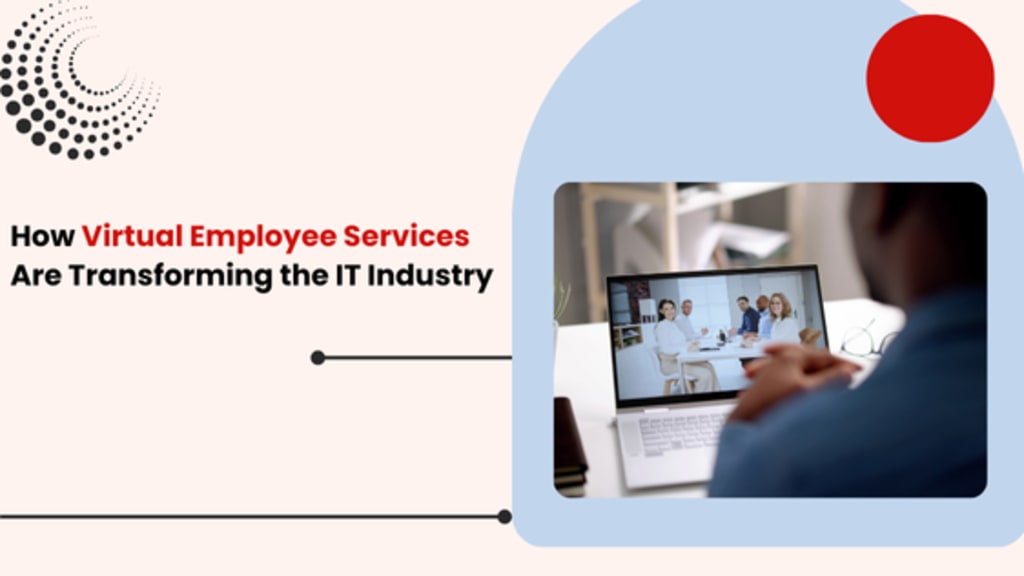
The IT industry is constantly evolving, and businesses are always on the lookout for innovative ways to stay ahead of the competition. One of the most impactful shifts in recent years has been the rise of Virtual Employee Services. These services are reshaping how IT companies operate, offering flexibility, cost-efficiency, and access to global talent.
By leveraging remote professionals, companies can scale operations, reduce overhead costs, and improve productivity. This transformation is not just a passing trend but a fundamental shift in how IT teams are structured and managed. Let’s explore how Virtual Employee Services are revolutionizing the IT industry and why more companies are adopting this model.
1. Expanding Access to Global Talent
Hiring locally often limits businesses to a specific talent pool, making it difficult to find the right expertise. With Virtual Employee Services, companies can access skilled IT professionals from around the world, allowing them to:
- Find highly specialized professionals for niche IT projects.
- Work across multiple time zones to ensure round-the-clock productivity.
- Bring in diverse perspectives and innovative problem-solving approaches.
This global reach means businesses can hire top-tier talent without geographical restrictions, ultimately leading to better project outcomes and enhanced innovation.
2. Reducing Operational Costs Without Compromising Quality
Building an in-house IT team comes with significant expenses, including salaries, benefits, office space, and infrastructure. By opting for Virtual Employee Services, companies can significantly cut costs while still maintaining high-quality work.
Key Cost Benefits:
- No expenses on office space, utilities, or equipment.
- Reduced recruitment and training costs.
- Pay only for the specific skills and hours required.
This cost-effective approach allows startups and enterprises alike to allocate resources more efficiently, investing in business growth rather than unnecessary overhead.
3. Boosting Productivity and Efficiency
Traditional office environments come with distractions, long commutes, and rigid schedules, all of which can impact productivity. Virtual Employee Services introduce a more flexible work structure, leading to higher efficiency.
- How Virtual Employees Enhance Productivity:
- Employees can work from their preferred environment, leading to better focus.
- Flexible work hours ensure peak productivity times are utilized.
- Remote collaboration tools streamline workflows and communication.
- Companies adopting remote IT teams often see a significant increase in project completion rates and overall work efficiency.
4. Enhancing Cybersecurity and Data Protection
With more companies adopting remote work models, cybersecurity concerns have become a top priority. Virtual Employee Services ensure that businesses can maintain data security while working with remote teams.
- Security Measures in Virtual Work Environments:
- Implementation of Virtual Private Networks (VPNs) for secure connections.
- Use of cloud-based security solutions for data protection.
- Multi-factor authentication and access control measures.
IT firms working with virtual employees must establish strong security protocols, ensuring that sensitive information remains protected at all times.
5. Scaling IT Operations with Greater Flexibility
One of the biggest advantages of Virtual Employee Services is the ability to scale operations based on business needs. Whether a company needs to expand its IT support team or add developers for a new project, virtual employees offer unparalleled flexibility.
Scalability Benefits:
- Easily add or reduce staff based on project requirements.
- No long-term hiring commitments, making it ideal for startups.
- Access to specialists for short-term or complex IT tasks.
This flexibility allows companies to adapt quickly to market demands and technological advancements without the constraints of traditional hiring models.
6. Improving Work-Life Balance and Employee Satisfaction
The IT industry is known for its demanding work schedules, often leading to burnout and high turnover rates. Virtual Employee Services promote a healthier work-life balance, which directly impacts employee satisfaction and retention.
How Remote Work Enhances Employee Well-Being:
- Eliminates long commutes, reducing stress and fatigue.
- Allows employees to create a comfortable and productive work environment.
- Provides greater control over work schedules, improving job satisfaction.
Happy employees are more motivated, engaged, and productive, leading to better performance and company success.
7. Leveraging Cutting-Edge Collaboration Tools
Managing remote teams effectively requires the right technology. IT companies using Virtual Employee Services rely on advanced collaboration tools to maintain seamless communication and project management.
- Essential Tools for Virtual Teams:
- Project Management: Trello, Asana, Jira
- Communication: Slack, Microsoft Teams, Zoom
- Cloud Storage & File Sharing: Google Drive, Dropbox, OneDrive
These tools ensure that virtual employees stay connected, aligned with company goals, and able to deliver high-quality results efficiently.
8. Enhancing IT Support and Customer Service
For IT service providers, offering 24/7 support is crucial. Virtual Employee Services allow businesses to provide continuous customer support by leveraging global teams.
- Benefits of Virtual IT Support Teams:
- Round-the-clock assistance due to different time zones.
- Faster response times and issue resolution.
- Cost-effective customer service solutions.
This model ensures that businesses can meet customer expectations without overburdening in-house teams.
9. Increasing Business Agility and Innovation
In a fast-paced industry like IT, agility is key to staying competitive. Virtual employees bring fresh perspectives and diverse skill sets that drive innovation.
- Ways Virtual Teams Foster Innovation:
- Access to a broader range of expertise for complex projects.
- Faster implementation of new technologies.
- Collaboration between global professionals with different problem-solving approaches.
By incorporating remote talent, IT companies can stay ahead of industry trends and drive meaningful technological advancements.
10. Future-proofing IT Businesses with Remote Work Strategies
As the IT industry continues to evolve, businesses that embrace Virtual Employee Services will have a competitive edge. Remote work is no longer just an alternative—it is becoming the standard in modern IT operations.
- How Businesses Can Adapt to This Shift:
- Develop a strong remote work culture with clear communication strategies.
- Invest in cybersecurity measures to protect virtual workspaces.
- Utilize AI and automation to streamline remote team workflows.
By proactively integrating virtual employees into their workforce strategy, IT companies can future-proof their operations and remain resilient in a rapidly changing landscape.
Final Words
The adoption of Virtual Employee Services is fundamentally changing the IT industry. From reducing costs and improving productivity to enhancing cybersecurity and driving innovation, the benefits are undeniable. Companies that embrace this transformation can scale efficiently, attract top global talent, and remain competitive in an increasingly digital world.
As businesses continue to prioritize flexibility and efficiency, Virtual Employee Services will play a crucial role in shaping the future of IT. Whether you're a startup looking to scale or an established company seeking to optimize operations, leveraging remote professionals is a strategic move that can drive long-term success.
Read Our Recent Article- Forget Freelancers: Here’s Why Virtual Employee Services Are Better
About the Creator
Anjelina Jones
Anjelina is passionate about writing and has authored numerous articles covering topics such as entrepreneurship.
Keep reading
More stories from Anjelina Jones and writers in Journal and other communities.
Forget Freelancers: Here’s Why Virtual Employee Services Are Better
The modern workforce is evolving rapidly. While freelancers have been the go-to choice for businesses looking for flexible talent, virtual employee services are emerging as a more reliable and efficient alternative. Whether you’re a startup, a growing enterprise, or an established company, hiring a virtual employee instead of a freelancer can provide more consistency, control, and long-term benefits.
By Anjelina Jones12 months ago in Journal
THE GLACIER AND THE FIRE
Greenland has never known true silence. Beneath the apparent immobility of its frost-laden shrouds, the island throbs with a millennial movement—a muted language composed of tectonic cracks, abyssal currents, and aeolian rages. But this murmur of genesis, once reserved for the Arctic’s initiates, has shifted into a clamor of a different sort. It is no longer merely the song of ice collapsing into the Atlantic or the groan of the ice cap thinning under the assault of carbon; it is the thud of boots and the cold calculations of general staffs. It is the roar of covetousness. Greenland, this white giant once thought to be slumbering on the fringes of history, has become the epicenter of a geopolitical earthquake capable of shattering the West. What is unfolding today is no longer a mere diplomatic rivalry, but the specter of a total rupture within the Atlantic Alliance, where the rights of peoples vanish before the logic of the strongest.
By Laurenceau Porte7 days ago in Journal


Comments
There are no comments for this story
Be the first to respond and start the conversation.