
How to Prevent Bad Builds From Reaching App Stores?
A late-night submission, a quiet user message, and the moment I realized confidence is not the same as readiness

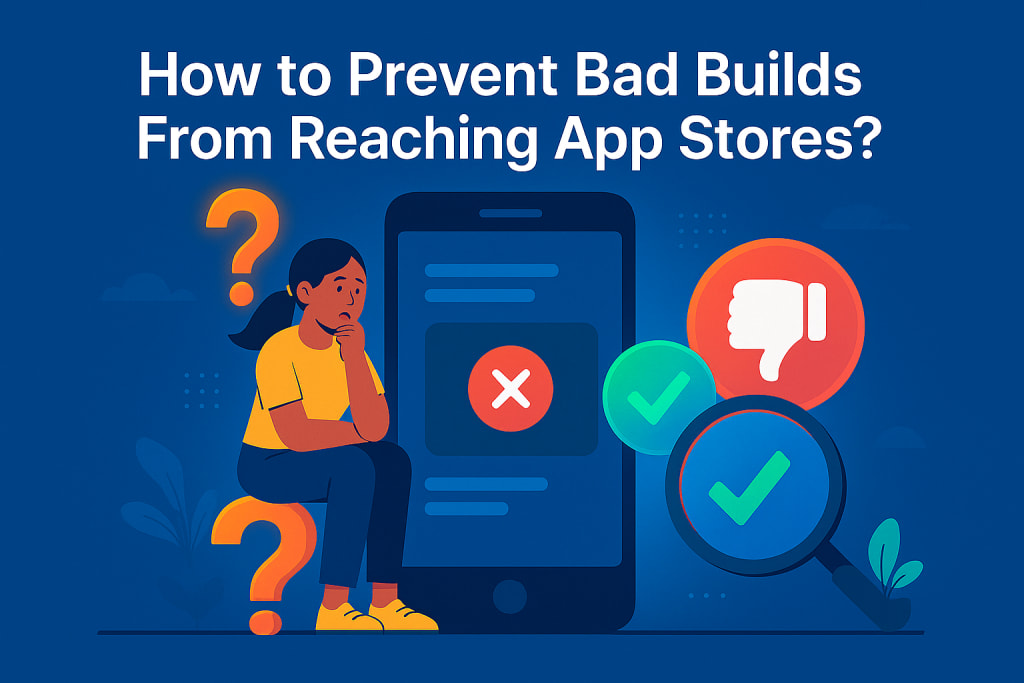
The night it happened, I was still sitting at my desk long after I should have gone to bed. The room was quiet in that way that only exists after midnight, when even your thoughts start to echo. My phone lit up face down on the table. I didn’t need to see the message to know something wasn’t right.
The build had already been submitted. The confidence in the room earlier that day had been real. Everyone believed it was ready. Still, that message arrived before the rollout had even finished, and I felt that familiar drop in my stomach. Bad builds don’t always announce themselves with crashes. Sometimes they whisper first.
False Calm Before Submission
There is a strange calm that settles in right before an app goes to the store. The tests have passed. The green checkmarks line up neatly. The team is tired enough to want closure.
I’ve learned that this calm is dangerous. According to industry surveys from mobile analytics firms, nearly thirty percent of production issues are traced back to builds that passed internal testing but failed under real user conditions. That number used to surprise me. It doesn’t anymore.
The problem is not lack of effort. It’s context. Internal environments are polite. Real users are not.
When Confidence Outpaces Reality
Earlier that day, I watched the build run smoothly on every device we tested. The flows made sense. The performance felt acceptable. Nothing looked broken.
Still, confidence has a way of smoothing over doubts. Someone says they tested that edge case. Someone else assumes it hasn’t changed. Momentum takes over.
I’ve been part of teams where speed felt necessary and caution felt optional. That balance always shows up later, usually in public.
What App Stores Don’t Forgive
Once a bad build reaches an app store, control changes hands. Reviews arrive faster than fixes. Ratings drop before explanations catch up.
Data from app store monitoring platforms shows that a single bad release can drop an app’s rating by up to one full star in less than a week. Recovery takes far longer. Users remember the moment something failed them, even if it was brief.
That weight sits with me every time I tap the submit button. It is not just a deployment. It is a promise being made loudly.
Build That Looked Fine Until Morning
The message I received that night came from a user in a different time zone. They weren’t angry. They were confused. A screen wouldn’t load the way it used to.
I opened the app and followed the same path. It worked for me at first. Then I tried it again with slower network conditions. The issue surfaced quietly.
That’s when I remembered how many users experience the app outside ideal conditions. Industry data shows that more than forty percent of mobile sessions happen on unstable or slower networks. If a build only works well in perfect scenarios, it is already fragile.
Learning to Respect the Last Mile
Preventing bad builds is less about adding more checks and more about respecting the last mile. The space where the app meets real life.
I started paying closer attention to moments that felt inconvenient to test. Slow connections. Old devices. Half-finished user flows. These moments are uncomfortable because they break the illusion of readiness.
Over time, I noticed a pattern. Builds that survived those uncomfortable tests rarely caused public damage. Builds that skipped them often did.
Why Speed Is a Poor Judge of Readiness
The industry loves speed. Faster releases. Shorter cycles. Quick wins. Statistics often celebrate teams that ship more frequently.
Still, frequency without reflection carries risk. Research from software quality studies shows that teams with aggressive release schedules experience more user-visible issues unless they pair speed with deliberate pause points.
I’ve learned to slow down at the very end. Not dramatically. Just enough to question assumptions one last time.
Watching Users Become the First Testers
One of the hardest truths to accept is how often users become the final test environment. They discover issues we didn’t anticipate, in contexts we didn’t simulate.
When that happens, users feel used even if that was never the intention. They didn’t agree to test. They agreed to trust.
Preventing bad builds means honoring that trust by reducing how often users are placed in that position.
Role of Human Judgment
No amount of automation replaces human judgment. Tools can tell you what happened. They cannot always tell you what it will feel like.
Before submissions now, I open the app and use it slowly, without trying to break it. I use it the way someone would while distracted, tired, or in a hurry. That perspective catches things dashboards miss.
This habit has saved more releases than any single tool ever did.
What Statistics Don’t Capture Well
Metrics measure crashes, not disappointment. They track errors, not hesitation. Yet hesitation is often the first sign something is wrong.
User behavior studies show that even small usability regressions can reduce session length noticeably. People leave without reporting anything. They simply stop trusting the app.
Bad builds don’t always fail loudly. They fail emotionally.
Day I Stopped Rushing the Button
That night ended with a rollback request and a long morning ahead. We fixed the issue before most users noticed, but the lesson stayed.
I stopped treating submission as the finish line. I started seeing it as the point of no return.
Now, when I prepare a build for the store, I imagine the person who will open it first tomorrow morning. I think about where they are, what kind of day they’re having, and how little patience they will have for friction.
Holding Space for Doubt
Preventing bad builds is not about perfection. It is about humility. It is about allowing doubt to exist long enough to be useful.
The best teams I’ve worked with are not the fastest or the loudest. They are the ones willing to pause when everything looks fine and ask whether fine is enough.
I still feel nervous before submissions. I hope I always do. That nervousness keeps me present.
Because once a build reaches the store, it stops being just code. It becomes part of someone else’s day.
About the Creator
Keep reading
More stories from Mary L. Rodriquez and writers in Journal and other communities.
Why Innovation Cycles Are Making Software Markets More Unpredictable?
For much of the early digital era, software markets followed relatively predictable patterns. New products launched, adoption grew gradually, competitors emerged, and market leaders consolidated their positions over time. Companies could plan multi-year roadmaps with reasonable confidence that technological change would follow a steady pace.
By Mary L. Rodriquez5 days ago in Journal
Pearl
1980 something. we all hung out at Pearl and you and i were nothing special, or so i thought. i mean we all danced, drenched in our own sweat, our own saline solution of fear, too many beers, shots, laughter, tears, fucks in the bathroom and i don't know when we began to be afraid. do you?
By ROCK aka Andrea Polla (Simmons)3 days ago in Fiction



Comments
There are no comments for this story
Be the first to respond and start the conversation.