
How to Invest $267 Billion? Buffett’s Final 2025 Q3 Portfolio Holds the Value Code for the AI Era
$381.7B Cash + $4.3B Google: The 95-Year-Old Oracle’s Final Strategic Move

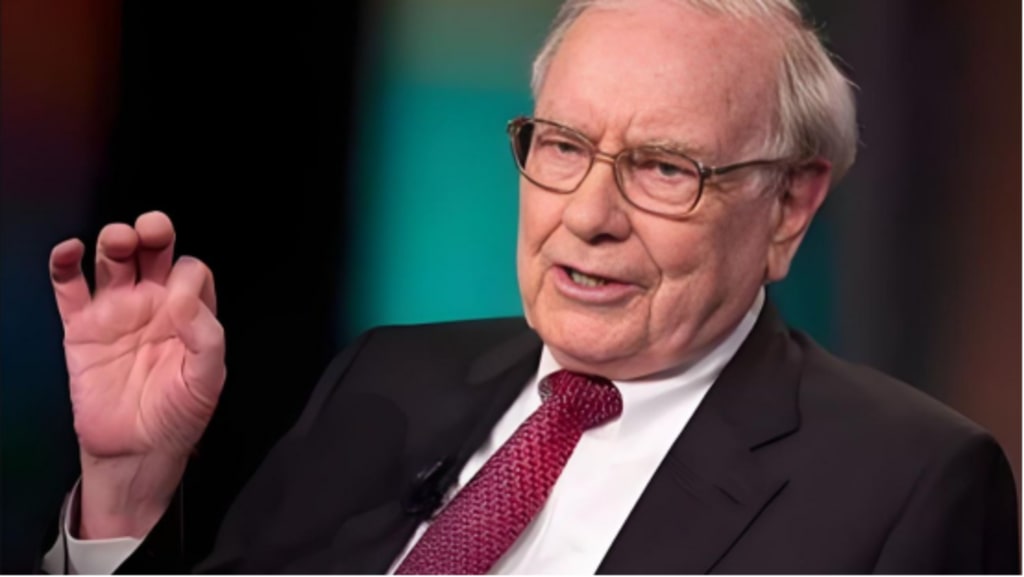
As Q3 2025 draws to a close, the market has obtained the final portfolio report from Warren Buffett during his 60-year tenure as CEO of Berkshire Hathaway — this report carries seismic signaling weight: Berkshire executed three key moves in Q3: making its first purchase of approximately $4.3 billion in Google stock, trimming its largest holding Apple (a 15% reduction from the prior quarter), and boosting its cash reserves to a record high of $381.7 billion.
Amid the global AI investment frenzy and debates over AI bubbles, what is the 95-year-old Buffett planning?
First, Understand Buffett: The “Don’t Invest in What You Don’t Understand” Rule — It Helped Him Dodge Bubbles, But Also Miss Opportunities

Over his 60-year investing career, Buffett’s core principle has been his “circle of competence”: he steadfastly avoids bubbles he cannot grasp.
The most iconic example is the 2000 dot-com bubble — while the world went crazy for the internet, he bought no shares, reasoning, “I don’t know what these companies will look like in 10 years, but I know Coca-Cola will still be selling soda.”This rule helped him evade bubbles, but also caused him to miss early opportunities with Amazon and Google; later, he and Charlie Munger publicly admitted missing Google was a mistake, given that GEICO (Berkshire’s insurance subsidiary) was one of Google’s major advertisers, and they should have understood its value.
The only tech stock in his later years was Apple — but his logic was: “Apple isn’t a tech stock; it’s a consumer goods company with an ecosystem moat.”
Why Google? The $4.3B Buy Is a “Mispriced AI Infrastructure Play”

Amid the AI boom, Buffett didn’t chase NVIDIA — instead, he chose Google, driven by two core logics: “margin of safety + predictable cash flow”:
Undervalued valuation: Market fears that “OpenAI would disrupt Google’s search business” depressed its valuation — Alphabet (Google’s parent company) had a P/E ratio of just 25x, far lower than the 30+x multiples of Microsoft and NVIDIA, perfectly aligning with his “buy a dollar’s worth of assets for 40 cents” margin of safety principle.
Stable business fundamentals: Alphabet’s Q3 2025 revenue topped $100 billion in a single quarter, with its core search and YouTube businesses remaining strong; Google Cloud generated $15.2 billion in revenue, up 34% year-over-year, rapidly capturing market share.
Deep AI moat: The AI race has three layers — computing power, platform, and models — and Google is one of the few companies heavily invested in all three: its Gemini model can compete head-to-head with GPT, and the high computing costs of AI search have raised industry barriers; he avoided NVIDIA because he “dislikes suppliers dependent on a few big clients” — NVIDIA relies heavily on cloud giants like Microsoft and Google, all of which are developing their own AI chips.
Why Trim Apple? From 40% to 23% — Risk Diversification and a Signal of the Times

When Buffett chased Apple in 2016, he was drawn to its “user stickiness + ecosystem moat”; but in 2025, Apple faces dual challenges:
· Regulatory pressure looms: Global regulators are targeting Apple’s 30% App Store commission — the EU’s Digital Markets Act, UK court rulings, and U.S. Department of Justice antitrust lawsuits are all undermining its core profit logic.
· Slow AI progress: Apple has been relatively cautious in the large language model race, even nearing a deal to pay Google $1 billion annually for a custom Gemini model to upgrade Siri.
More critically, this move is about risk diversification: Apple once accounted for over 40% of Berkshire’s portfolio, creating excessive single-position risk; the cut to ~23% is a proactive adjustment to reduce concentration.
$381.7B in Cash: Not Conservatism, But “Offensive Defense”
Berkshire is fundamentally an insurance company, investing with “float” (free, long-term capital), and the $381.7B cash pile is a “dual-purpose offensive-defensive” layout:
Passive interest income: In the current ~5% interest rate environment, this cash generates ~$20 billion in annual interest income, becoming a “new opportunity cost.”
Waiting for market panic: The massive cash reserve is “purchasing power” prepared for potential future market corrections — Buffett’s classic playbook is “be greedy when others are fearful,” and this cash is his ammunition.
Paving the way for succession: At 95, he is set to step down as CEO; buying Google balances “Old Buffett’s value principles” with the new team’s tech vision and the incoming CEO’s preference for infrastructure.
Conclusion: Buffett’s Era Shift — From Consumer Brands to Mobile Internet to AI Infrastructure
Over 60 years, the “era moat” in Buffett’s eyes has evolved:
1980s (consumer brand era): The moat was Coca-Cola’s brand;
2010s (mobile internet era): The moat was Apple’s ecosystem;
2020s (AI era): The moat is AI infrastructure like Google.

His value investing has never rejected technology — instead, it redefines “predictable long-term cash flow”: Google’s 20 years of search data and 34% growth in cloud services make it the “understandable certainty” of the AI era.
As his logic goes: “I never invest in the stock market — I invest in the cash flow of an era”; true long-termism isn’t clinging to a single stock, but upholding a set of principles — he never bets on companies, but on the “profitable river” of the era.
About the Creator
Cher Che
New media writer with 10 years in advertising, exploring how we see and make sense of the world. What we look at matters, but how we look matters more.
What to Expect During an On-Site Accreditation Survey
Introduction An on-site accreditation survey is a critical milestone for healthcare and behavioral health organizations seeking formal recognition of quality and compliance standards. These surveys evaluate whether an organization meets established accreditation requirements related to safety, governance, clinical care, and operational practices. While the process can feel intimidating, understanding what to expect helps reduce anxiety and supports successful outcomes. Proper preparation and awareness of survey activities enable organizations to demonstrate their commitment to quality, compliance, and continuous improvement.
By Abdul Mueed5 days ago in Journal


Comments
There are no comments for this story
Be the first to respond and start the conversation.