
How to Interview and Get the Stories for the Page
Tips from my experience conquering my fear of conducting interviews


One of those flashes of inspiration hit me one day as I was working on my Medium publication, Tea with Mother Nature. I wanted to help people find businesses that nurture nature connections, non-profits that work towards a healthy planet and people that give to nature in their daily lives.
I worked out my first three targets, wonderful small businesses that could use the exposure. I was already supporting the businesses and so it was easier to make the approach. After all three agreed to be interviewed, I suddenly realized that I had never conducted an interview before. I am not good at general conversation and this project mattered! I didn’t want to disappoint these business owners who I admired.
I did it anyway. I did it with a churning stomach and beating heart.
When I googled and searched the internet for interview tips, I didn’t really find anything useful to me so I resolved to write this article if they went well. I think they did.
Here are my tips for conducting an interview that will give you the stories behind the actions of your interviewee.
- Approach
- Create open-ended questions
- Prepare — what can you give them? what stories have they already shared
- Set a date — time to talk
- Listen while you run the conversation
- Take relevant photos
- Get approval
Approach
If you’re not paying them for the interview, your approach needs to appeal to them. I approached by email. I appealed to their love of nature and the marketing potential. After this, I gave them an easy way to say no. Many people advise against this, but in my view interviewing a reluctant interviewee makes the job much harder and less satisfying for everyone.
Result — three times “yes”. All were very clear about time as they are busy people. I adapted to fit their timeline and it all worked well.
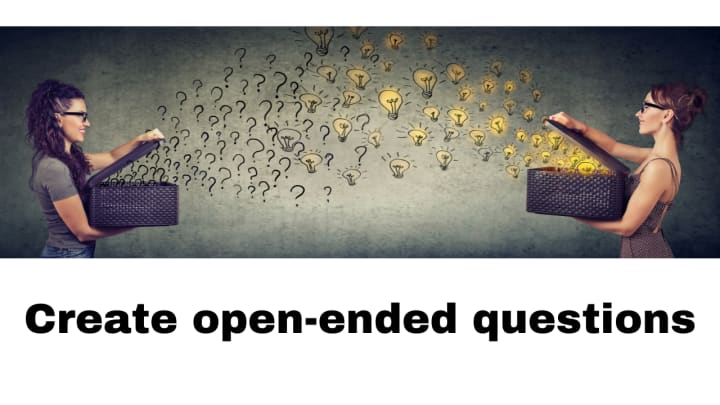
Create Open-ended Questions
A list of yes and no answers gets no one anywhere. Try to create questions that elicit answers that require something story-like.
Think about why you are interviewing them.
What do you think readers want to know?
Mine were all for Tea with Mother Nature so I focused on the aims of the publication: connection with nature, positive solutions and how to get to a point where these things were part of daily life.
My questions are in this article.

Prepare
Think about how you can make the experience worthwhile for all concerned. When I interviewed the owners of Lamington Native Nursery I offered to include their pottery business in the article too.
I also spent a few hours scouring the internet, starting with their social media pages and absorbing as much information as I could. This meant that I could use lines like, “On your website, you say that your children inspired you to start your business, how did that come about?” This helped me lead the conversation when I was talking with Alex from Little Bee’s Secret Garden and also showed her that I was paying attention and doing the legwork.
Long introductions to questions also allow the interviewee to think about their answer and link them back to previous responses. This way they can keep their vision for their business consistent.

Set a date
Find a mutually acceptable date. Go to them if you can. Send an email if you can’t. If you send an email there will be a lot more research required to “fill in the story”.

Listen while you run the conversation
It’s much easier to be fully present in the conversation if you record it. (Always get permission first!)
Listen carefully for:
- opportunities to segue to a prepared question
- moments that they haven’t shared on social media
- stories that make them more interesting
- relational moments
It’s not just manipulating the conversation to get as close to honest truths and spontaneous utterings as you can. It’s about running the conversation so that you build trust and find ways to surprise them and inspire reflection. The conversation has to make them feel heard. They have to get something out of it too. It’s a relationship you’re building, not just a story and if you don’t build the relationship you just don’t get the actual story. You get a list of questions answered, but not the story of the person.
Share your own understanding by responding with your own experiences, but do it only to make sure you’ve understood their point. Sharing your own experience builds the relationship and trust. It also allows them to redirect you if you’ve misunderstood.

Take relevant photos
Photos are important, especially if your interview story will be long. Make sure you get some good photos. Your audience will be more engaged in the story if they can see what you’re writing about.
If your interview is by email, get permission to download photos from social media and websites.
Always ask permission before taking photos. It shows respect and makes the interviewee a part of the process. You want them to be engaged in the process as much as possible.

Get approval
Send them the article. Ask for their feedback. It will help avoid misunderstandings and make them feel that you value them as business owners or individuals. It also avoids changing things after the fact.
So far, this step has created a great relationship with my interviewees. I got lots of positive feedback and polite requests to change misunderstandings. The published interviews were also promoted by the businesses via a “friend link” which means more exposure for my writing! Win-win!
Since Publication
Since publishing the articles, I have been approached by other businesses asking me to interview them. What an honor!
I’ve received positive feedback and writing compliments from people in my community, which is always lovely.
The interviewees have subscribed to my stories.
Final Thoughts
I listened to my intuition on this one and when people told me that I was doing something for the business and I wouldn’t get anything out of it, I smiled and did it my way anyway.
An interview is a collaboration. It’s not a one-way street in any respect. For an interview to flow it needs to be a part of a relationship.
Think of all the famous interviewers on television. What sets apart the best? It’s the fact that their interviewees tell stories as a response to the conversation with the interviewer.
Don’t think of an interview as questions and answers. Think of it as a way to draw out chapters that ultimately form a story.
(This article was original published on Medium.com)
About the Creator
Jane Grows Garden Rooms
Jane lives in Australia. She's trying to create a comfortable home for the birds, the bees and the rest of her family. Contributions to Vocal indulge Jane's lifelong passion for writing, waxing lyrical about things that matter in her world.
Keep reading
More stories from Jane Grows Garden Rooms and writers in Journal and other communities.
When the Journey Climaxes with a Visit to Lamington Native Nursery
Disclaimer: I receive no financial or other material benefit from writing about this business. The views expressed are my own and contain no conflict of interest. Clicking on the links in this article will bring me no financial or other benefit unless explicitly stated.
By Jane Grows Garden Rooms 4 years ago in Interview
Wafi Energy Pakistan Announces Profit of PKR 3.54 Billion, Delivers Strong Growth and Strategic Expansion in 2025
Wafi Energy Pakistan has announced an impressive profit of PKR 3.54 billion for the year 2025, marking a milestone in the company’s growth journey and reinforcing its position as a key player in Pakistan’s energy sector. The results reflect not only strong financial discipline but also the success of the company’s strategic expansion plans amid a challenging economic environment.
By Sajida Sikandar7 days ago in Journal



Comments
There are no comments for this story
Be the first to respond and start the conversation.