
How Small Businesses Can Thrive in a Digital Economy
Smart technology, strong online presence, and digital strategies that drive success

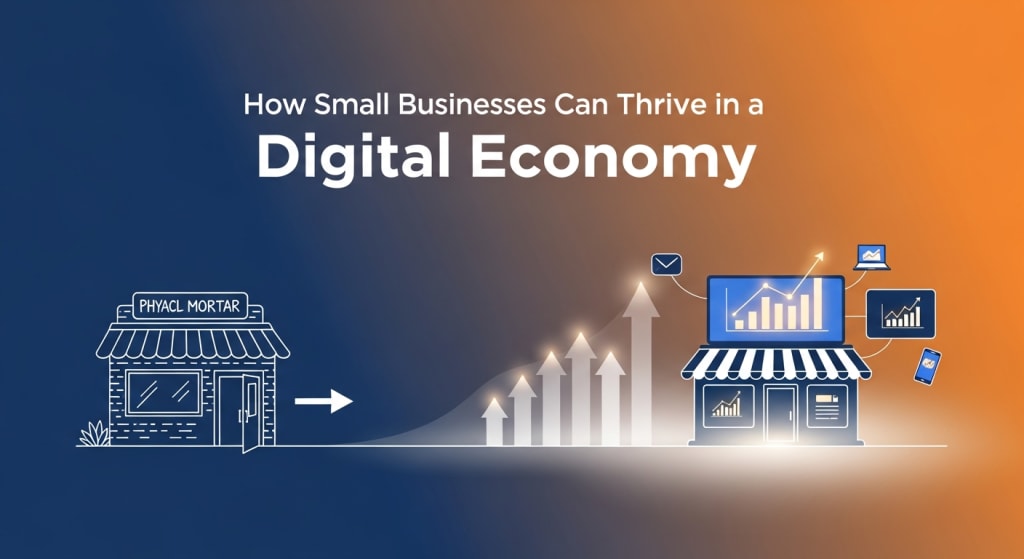
The digital economy has changed how people find, trust, and buy from businesses. Customers now rely on online searches, reviews, social media, and digital payments. For small businesses, this shift can feel overwhelming, but it also opens doors that were not possible before.
With smart planning and steady effort, small businesses can compete with larger companies and build long-term success.
Know Your Online Customers Better
In the digital economy, understanding your customers is more important than ever. People leave digital footprints through searches, clicks, likes, and reviews. This information helps you understand what they want and how they behave.
Start by answering these questions:
- What problems are customers trying to solve?
- What devices do they use most (mobile or desktop)?
- When are they most active online?
Use simple tools like Google Analytics, Facebook or Instagram insights, and online feedback forms. When you understand customer habits, you can create offers, content, and services that feel more personal and useful.
Create a Reliable and Professional Online Presence
Your online presence is often the first impression customers get. A weak or outdated presence can reduce trust, even if your products or services are good.
Focus on:
- A clean, easy-to-read website
- Fast loading speed and mobile support
- Clear business information (location, hours, contact details)
Your website should answer common customer questions without confusion. Adding real photos, customer reviews, and a short story about your business can build credibility.
Strengthen Your Brand Identity Online
Brand identity is not just about logos or colors. It is about how people feel when they see or interact with your business online.
To build a strong digital brand:
- Use the same name, logo, and tone everywhere
- Share your values and mission clearly
- Stay honest and consistent in messaging
A clear identity helps customers remember you and trust your business over time.
Use Social Media as a Relationship Tool
Social media is not just a sales channel. It is a space to build relationships and trust.
Effective ways to use social media:
- Share tips, guides, or short how-to posts
- Show real moments from your business
- Answer questions publicly to help others
Posting regularly keeps your business visible. Even three to four quality posts per week can make a difference when done consistently.
Make Buying and Paying Simple
Customers expect smooth and fast transactions. If the process is slow or confusing, they may leave without buying.
Improve the buying experience by:
- Offering multiple payment options
- Reducing steps in checkout or booking
- Providing clear pricing and policies
Simple systems increase conversions and reduce customer frustration.
Invest in Digital Marketing That Brings Results
Digital marketing allows small businesses to reach the right people at the right time.
Focus on:
- SEO to appear in search results
- Local online ads to reach nearby customers
- Email campaigns to keep customers informed
Instead of spending large amounts, test small campaigns and measure results. This helps you learn what works before scaling up.
Use Customer Reviews to Build Trust
Online reviews influence buying decisions strongly. Many customers trust reviews as much as personal recommendations.
Encourage reviews by:
- Asking satisfied customers politely
- Responding to all reviews, positive or negative
- Showing reviews on your website and social pages
Handling feedback professionally shows that you care about customer experience.
Improve Operations with Digital Tools
Digital tools help small businesses save time and reduce errors.
Useful tools include:
- Inventory management software
- Online appointment scheduling
- Accounting and invoicing tools
These tools allow owners to focus more on growth instead of daily paperwork.
Use Data to Improve and Grow
Data helps remove guesswork from decisions. Even basic data can guide better planning.
Track things like:
- Which products sell the most
- Which marketing channels perform best
- Where customers drop off during purchase
Small changes based on data can lead to steady improvement.
Keep Learning and Stay Flexible
The digital economy evolves quickly. Businesses that learn and adapt stay ahead.
You can stay updated by:
- Learning from free online courses
- Following industry experts
- Testing new platforms carefully
Growth comes from continuous improvement, not perfection.
Final Thoughts
The digital economy gives small businesses powerful tools to grow, reach wider audiences, and build strong customer relationships. Success does not require large budgets or advanced skills—only clear goals, consistent effort, and a willingness to adapt.
By focusing on customers, using digital tools wisely, and improving step by step, small businesses can thrive and grow with confidence in the digital age.
About the Creator
Keep reading
More stories from Muhammad Talha Ahmad and writers in Journal and other communities.
Conflict Resolution Made Easy: Soft Skills for Everyday Life
Conflict is something everyone experiences, whether at home, work, or among friends. But dealing with it doesn’t have to be stressful. By developing soft skills, you can handle disagreements calmly, respectfully, and effectively. This guide will show you how.
By Muhammad Talha Ahmad2 months ago in Journal




Comments
There are no comments for this story
Be the first to respond and start the conversation.