
How Netanyahu Slams Macron for Fuelling ‘Antisemitic Fire’ by Recognising a Palestinian State
Netanyahu Slams Macron for Fuelling ‘Antisemitic Fire’ by Recognising a Palestinian State

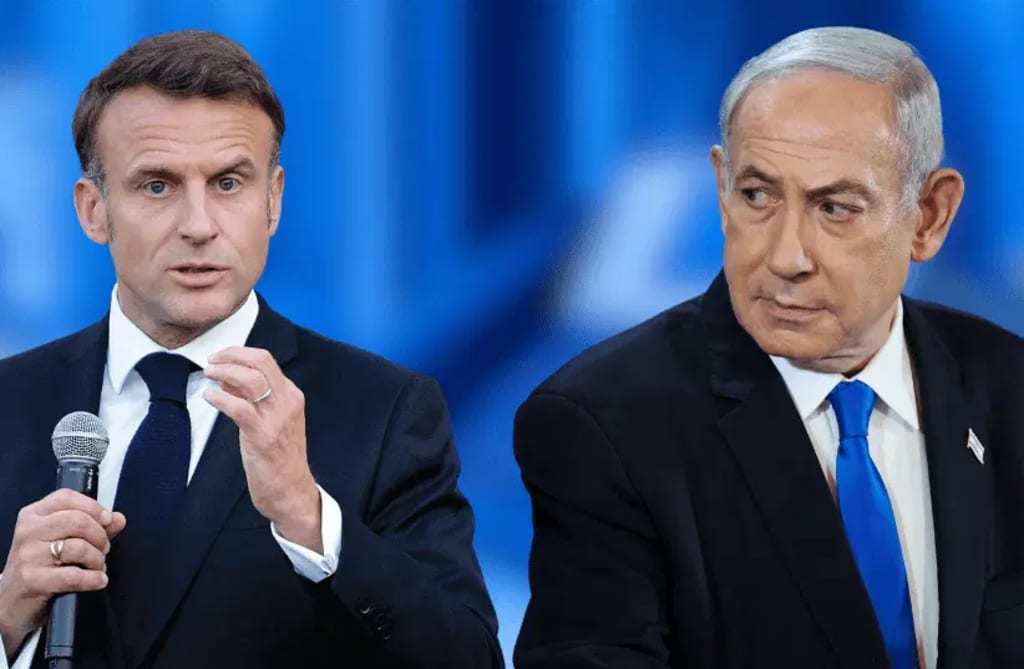
The Israeli-Palestinian conflict has always been one of the most complex, emotionally charged, and geopolitically significant disputes in modern history. But in September 2025, the conflict once again took center stage in international diplomacy when French President Emmanuel Macron announced that France would formally recognize a Palestinian state at the United Nations.
The move was hailed by Palestinian leaders as a long-awaited step towards justice, but it drew swift condemnation from Israel. In a sharply worded letter, Israeli Prime Minister Benjamin Netanyahu accused Macron of fuelling antisemitism, rewarding Hamas, and endangering the lives of Jews in France.
Netanyahu’s criticism not only highlights the fragile balance of Middle Eastern diplomacy but also raises crucial questions:
Does recognising a Palestinian state advance peace, or does it embolden extremism?
How will Israel’s allies, particularly Western nations, navigate the political and moral complexities of the issue?
And, most importantly, what does this mean for the millions of Israelis and Palestinians caught in the middle of a decades-long struggle?
This article dives deep into the controversy, exploring Netanyahu’s fiery response, Macron’s motivations, global reactions, and the potential impact on the Israel-Palestine peace process.
Macron’s Bold Move: Why France Recognized a Palestinian State
President Emmanuel Macron’s decision to formally recognize a Palestinian state during the September UN General Assembly is part of a growing global trend. According to UN data, 145 of the 193 UN member states now recognize or have pledged to recognize Palestinian statehood, including heavyweights like Britain, Canada, and Australia.
For Macron, this was not just about Palestine—it was about France’s global role as a diplomatic powerbroker.
Moral Responsibility: Macron argued that Palestinians have the right to self-determination, just as Israel has the right to security. Recognition, he insisted, was a step toward balancing these rights.
International Alignment: By joining the majority of UN states, France positioned itself in line with global consensus rather than being an outlier.
Domestic Politics: France has a large Muslim population, many of whom sympathize with Palestinians. Macron’s move may also reflect domestic political calculations.
Legacy of Diplomacy: Like Charles de Gaulle and François Mitterrand before him, Macron seeks to leave a mark on international diplomacy. Recognising Palestine is part of that ambition.
However, what Macron saw as diplomacy, Netanyahu branded as appeasement.
Netanyahu’s Furious Response
In his letter to Macron, Netanyahu’s words were not diplomatic niceties—they were sharp, accusatory, and deeply emotional.
“Your call for a Palestinian state pours fuel on this antisemitic fire. It is not diplomacy, it is appeasement. It rewards Hamas terror, hardens Hamas’s refusal to free the hostages, emboldens those who menace French Jews and encourages the Jew-hatred now stalking your streets.”
Netanyahu’s argument rested on three main claims:
Recognition Encourages Hamas
By recognizing Palestine at a time when Hamas continues to control Gaza, Netanyahu argued France is effectively legitimizing a group many countries classify as a terrorist organization.
Antisemitism in France
France already has one of the highest rates of antisemitic incidents in Europe. Netanyahu accused Macron of making matters worse, claiming that the announcement led to a “surge” in antisemitism.
Undermining Peace Efforts
Netanyahu believes recognition rewards Palestinian leadership without requiring them to make concessions or return to negotiations, thereby stalling genuine peace talks.
He urged Macron to act by the Jewish New Year (September 23), giving his criticism a symbolic religious deadline.
Historical Context: Recognition of Palestine
To understand the weight of this dispute, it’s important to look at the history of Palestinian recognition.
1988: The Palestinian Liberation Organization (PLO) declared independence. Over 90 countries quickly recognized Palestine.
2012: The UN General Assembly granted Palestine the status of a “non-member observer state.”
2020–2024: Growing momentum after conflicts in Gaza pushed more countries, including Ireland, Spain, and Norway, to recognize Palestine.
2025: With France, Australia, Britain, and Canada now on board, global recognition has reached a tipping point.
Despite this, Israel and its strongest ally, the United States, continue to reject unilateral recognition, arguing that statehood should only come through direct negotiations.
Global Reactions: A Divided World
Australia’s Fallout
Australian Prime Minister Anthony Albanese confirmed recognition earlier this month. Netanyahu fired back, calling him a “weak politician” who had “betrayed Israel and abandoned Australia’s Jews.” The spat escalated when Israel retaliated by revoking visas of Australian envoys to the Palestinian Authority, leading to a mini diplomatic crisis.
The United States’ Balancing Act
While traditionally siding with Israel, Washington has shown increasing frustration with Netanyahu’s hardline stance. President Donald Trump has not endorsed Macron’s move but urged “real peace talks” instead of symbolic gestures.
Palestinian Authority’s Response
Palestinian leaders hailed France’s recognition as “historic.” Palestinian President Mahmoud Abbas declared it a victory for justice and a “step closer to ending the occupation.”
Arab and Muslim Nations
Countries like Saudi Arabia, Qatar, and Turkey praised Macron’s move, seeing it as a long-overdue correction of Western bias toward Israel.
The Antisemitism Debate
Netanyahu’s central accusation is that Macron’s decision fuels antisemitism. But is this claim fair?
Rising Tensions in France: France has indeed seen a spike in antisemitic attacks since the Gaza war began. Pro-Palestinian rallies sometimes spill over into anti-Jewish rhetoric.
Critics’ Counterargument: Human rights groups argue that equating Palestinian recognition with antisemitism conflates criticism of Israel with hatred of Jews, which are not the same thing.
The Middle Ground: Some analysts suggest both risks are real. Recognition may embolden extremists, but it also pressures Israel to return to negotiations, which could ultimately reduce violence.
Macron’s Challenge: Walking the Tightrope
For Macron, the challenge is immense. He must balance:
France’s historic ties to Israel and its Jewish community.
Its growing Muslim population and moral obligation to Palestinian rights.
Its role as a global mediator in one of the world’s most intractable conflicts.
By recognizing Palestine, Macron has chosen a bold path, but one fraught with diplomatic and domestic consequences.
What’s Next for the Israel-Palestine Conflict?
The recognition debate raises larger questions:
Two-State Solution Revived?
Recognition could breathe new life into the two-state solution, putting pressure on Israel to negotiate.
Greater Isolation of Israel?
If more Western nations recognize Palestine, Israel risks becoming increasingly isolated diplomatically.
Impact on Peace Talks
Paradoxically, unilateral recognition could either push both sides back to the table—or harden their positions even further.
Conclusion
The clash between Benjamin Netanyahu and Emmanuel Macron is not just a diplomatic spat—it’s a microcosm of the larger struggle over how the world approaches the Israel-Palestine conflict.
Netanyahu sees recognition as a dangerous reward for terrorism and a trigger for antisemitism. Macron sees it as a bold diplomatic step toward justice and peace.
With more countries joining the recognition wave, the balance of global opinion is shifting. But whether this shift leads to peaceful resolution or deeper division remains to be seen.
One thing is clear: as the September UN meeting approaches, the eyes of the world will once again turn to New York—and the voices of Israelis, Palestinians, and the international community will grow louder in the pursuit of an answer to the world’s most enduring conflict.
About the Creator
Omasanjuwa Ogharandukun
I'm a passionate writer & blogger crafting inspiring stories from everyday life. Through vivid words and thoughtful insights, I spark conversations and ignite change—one post at a time.
Keep reading
More stories from Omasanjuwa Ogharandukun and writers in Journal and other communities.
Elon Musk’s Baby Mama Ashley St. Clair Reveals She’s Broke, Facing Eviction, and Launching a Podcast
When you hear the name Elon Musk, your mind probably races to Tesla, SpaceX, Mars colonization, or his notorious presence on X (formerly Twitter). But behind the billionaire’s empire of rockets, cars, and tech disruption lies an increasingly messy personal life — one that has just gotten even more dramatic.
By Omasanjuwa Ogharandukun5 months ago in Journal
The Early Church Fathers and Why Their Writings Matter Today
The Early Church Fathers are some of the most important figures in the history of Christianity. Their writings, letters, sermons, and theological reflections helped define the beliefs, practices, and structure of the Church in the centuries following Christ. Understanding who the Church Fathers were and why their works matter today is essential for anyone seeking to understand Catholic teaching, tradition, and the roots of Christian faith.
By Sound and Spirit7 days ago in Journal



Comments
There are no comments for this story
Be the first to respond and start the conversation.