
How Lostprophets Frontman Ian Watkins’ Prison Death Marks the Darkest Chapter in Rock History
The Fall of a Fallen Rockstar

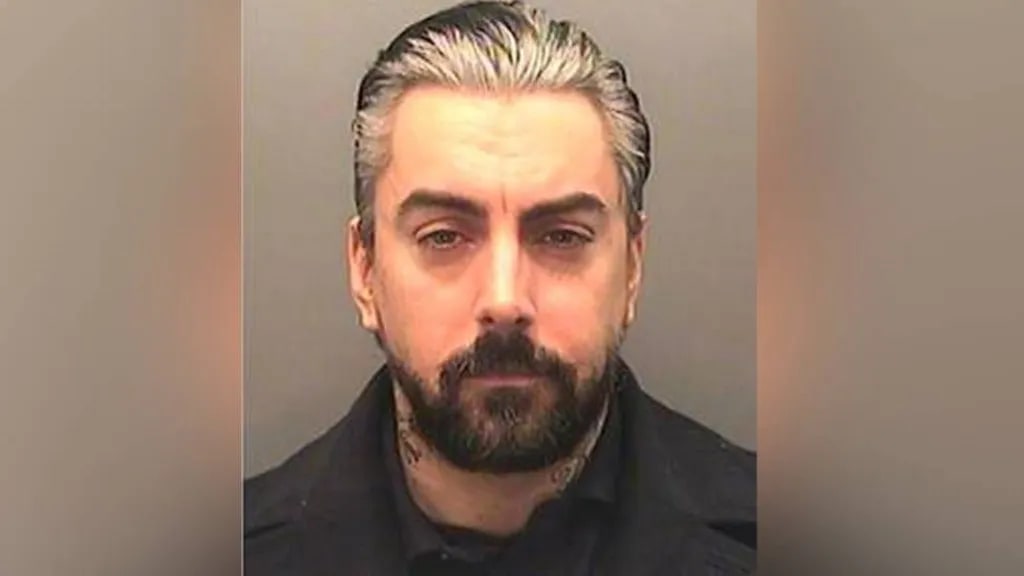
When Fame Turns to Infamy
There’s a strange silence in the air when legends fall — not the silence of awe, but the silence of disbelief.
Ian Watkins wasn’t just another frontman; he was once the screaming pulse of a generation. The tattooed voice that electrified festival stages and made emo kids in oversized jeans feel seen. But today, that same name — Ian Watkins — isn’t whispered in reverence. It’s spat out in disgust.
Because the man who once led Lostprophets to global stardom has died — not in a tragic accident, not from overdose or illness — but in a brutal prison attack that ended one of the most disturbing stories in modern music history.
And as the world reacts, one question lingers louder than the headlines:
How did a man who sang about hope and rebellion become the symbol of horror and betrayal?
The Rise Before the Ruin
Back in the late 1990s and early 2000s, Ian Watkins was the face of Welsh rock.
Born in Pontypridd, South Wales, he co-founded Lostprophets in 1997, a band that would later dominate both UK and US rock charts. With hits like “Last Train Home,” “Rooftops,” and “Where We Belong,” the band sold millions of records, headlined arenas, and became the pride of a generation searching for identity and sound.
Watkins was charismatic, talented, and every bit the rockstar archetype — tattoos, eyeliner, and the dangerous allure that made teenage fans idolize him.
He wasn’t just a singer; he was a symbol.
But behind the mic, behind the flashing lights and roaring crowds, Ian Watkins was living a double life. One that would soon unravel into one of the most grotesque scandals in music history.
The Crimes That Shook the World
In December 2013, the world learned the unimaginable.
Watkins was sentenced to 29 years in prison — with another six years on licence — for a string of child sex offences so vile that even seasoned investigators described them as “beyond comprehension.”
The charges weren’t just about possession of indecent images. They included the attempted rape of a baby, sexual assault of a child under 13, and conspiracy to rape a child. Watkins’ two female accomplices — both mothers of the children he abused — received 14 and 17-year sentences.
During sentencing, Mr. Justice Royce said the case “plunged into new depths of depravity,” adding that Watkins had shown a “complete lack of remorse.”
Even in the long and dark history of celebrity scandals, this one was different. It wasn’t just a fall from grace — it was a freefall into moral oblivion.
HMP Wakefield: The Monster’s Cage
Watkins was locked up at HMP Wakefield, infamously known as “Monster Mansion.”
It houses some of the UK’s most dangerous and reviled criminals — serial killers, rapists, and pedophiles.
For years, he lived under heavy scrutiny. Inmates reportedly despised him. To them, Watkins wasn’t just another offender — he was the paedophile rockstar, a man whose fame had amplified his crimes.
And in August 2023, that hatred spilled into violence. Watkins was attacked with a knife by another inmate. Though seriously injured, he survived.
But this time — October 2025 — he didn’t.
West Yorkshire Police confirmed that on Saturday morning, they were called to an “assault on a prisoner” at HMP Wakefield. By the time officers arrived, Ian Watkins was pronounced dead at the scene.
He was 48 years old.
A Death With No Sympathy
Let’s be honest: there’s very little sympathy in the public reaction.
Unlike other fallen celebrities, Watkins’ death hasn’t been met with tribute posts or memorial concerts. Instead, social media is flooded with comments like “justice finally served” and “good riddance.”
Because Watkins didn’t just break the law — he shattered trust. He weaponized fame, used adoration as a disguise, and exploited innocence in its purest form.
Des Mannion of the NSPCC Wales said it best:
“Watkins used his status and global fame as a means to manipulate people and sexually abuse children. But we must nevertheless remember that this case isn’t about celebrity. It’s about victims. And those victims are children.”
That statement cuts deeper now, in light of his death.
Inside Wakefield: Violence Rising Behind the Walls
Watkins’ murder didn’t happen in isolation.
Less than two weeks before his death, a report from the Chief Inspector of Prisons revealed that violence at Wakefield Prison had “increased markedly.”
The report painted a grim picture:
“Many prisoners told us they felt unsafe, particularly older men convicted of sexual offences who increasingly shared the prison with a growing cohort of younger prisoners.”
That tension — between generations, between crimes, between notions of morality even among criminals — created a pressure cooker environment.
And in that cauldron of resentment, Ian Watkins became a target.
Whether his death was planned revenge, a random act of violence, or a grim statement of prison justice, one fact remains: the system knew the risks.
From Arena Lights to a Cold Prison Cell
It’s almost poetic — in the darkest way possible — how the man who once commanded stadium lights died in the shadow of a concrete wall.
In 2012, just months before his arrest, Watkins had performed at Brixton Academy, basking in applause from thousands.
In those moments, he looked untouchable — a rock god whose energy filled every space he entered.
But power without conscience always rots from within.
And by 2013, the applause had turned into handcuffs.
When he appeared in court, fans wept, disbelieving. How could their idol be capable of such evil? But as evidence surfaced — videos, messages, testimonies — denial turned into horror.
The Psychological Puzzle: How Did He Get Here?
Psychologists have long tried to decode Watkins’ behavior.
Some experts point to narcissistic personality traits — the god complex often found in performers who thrive on adoration and control. Others say his fame insulated him from reality, allowing his darkest fantasies to fester unchecked.
But these are not excuses. They’re warnings.
Because Watkins’ story exposes something uncomfortable about celebrity culture itself — how charisma, charm, and talent can blind both fans and institutions to danger signs hiding in plain sight.
It’s not just about one man’s evil. It’s about a system that worships fame so fiercely that accountability often comes too late.
The Legacy of Lostprophets: A Band Erased
When the truth broke, Lostprophets disbanded immediately.
The remaining members were devastated, their legacy destroyed by one man’s crimes.
Their music — once played on every rock station — vanished overnight. Radio bans. Streaming removals. Concert cancellations.
Fans who once screamed the lyrics to “Last Train Home” could no longer bear to hear it. Because every note was haunted by what Watkins had done.
Yet in recent years, former band members have quietly re-emerged under new projects, trying to reclaim their lives from the ashes of a tragedy that wasn’t theirs to bear.
The Court of Public Opinion: Can Evil Ever Be Forgotten?
Even in death, Ian Watkins divides opinion — not between right and wrong (that line was crossed long ago), but between justice and vengeance.
Some say his brutal death was karma. Others warn that celebrating anyone’s murder — no matter how monstrous — drags us closer to the same darkness we condemn.
It’s a moral paradox that forces us to confront a deeper question:
When evil dies, do we breathe relief… or lose another chance to understand it?
A Mirror to Society
Watkins’ story is not just a headline — it’s a mirror.
It reflects how easily power corrupts when fame shields it, how predators hide in plain sight, and how justice, though delayed, always finds a way.
It also reflects our own consumption habits.
We elevate celebrities too high, forgive too quickly, and often mistake talent for virtue. Watkins exploited that blind faith — and children paid the price.
Final Curtain: The End of the Lost Prophet
There’s no redemption arc here. No bittersweet ending. Just a chilling reminder that even stars can fall into the blackest holes.
Ian Watkins died as he lived in his final decade — despised, isolated, and defined by his crimes.
His death, brutal and bloody, closes one of the darkest chapters in British music history.
But the true victims — the children whose innocence was stolen — deserve to have the final word.
Because this isn’t a story about a rockstar.
It’s a story about what happens when fame becomes a weapon, and the world forgets to look behind the spotlight.
About the Creator
Omasanjuwa Ogharandukun
I'm a passionate writer & blogger crafting inspiring stories from everyday life. Through vivid words and thoughtful insights, I spark conversations and ignite change—one post at a time.
Keep reading
More stories from Omasanjuwa Ogharandukun and writers in Journal and other communities.
Peacemaker Season 2 Cliffhanger: The Secret Setup for Superman’s Next Big Villain
Ladies and gentlemen, comic book fans, and DC Universe enthusiasts, gather around. If you’ve just finished watching Peacemaker Season 2, you know exactly what I’m talking about. That ending—the one that left your heart in your throat, your jaw on the floor, and your imagination running wild—wasn’t just a shocking cliffhanger. Oh no, it was a meticulously crafted setup that could very well shape the future of the DC Universe.
By Omasanjuwa Ogharandukun3 months ago in Journal
Comparing Requirements for Ambulatory Care Facilities
Introduction Ambulatory care facilities (ACFs) provide medical services to patients who do not require overnight hospitalization. These facilities include outpatient clinics, urgent care centers, surgical centers, and specialized treatment sites. While they share a common focus on outpatient care, requirements for operation, staffing, compliance, and safety vary significantly based on facility type and scope of services. Understanding these differences is essential for healthcare administrators, clinical leaders, and investors. Comparing requirements ensures compliance, patient safety, and operational efficiency, while guiding planning, budgeting, and resource allocation.
By Abdul Mueed2 days ago in Journal
Miss Persephone's Manual to a Seemingly Ordinary Life
Miss Persephone was found at the dining table, her blue eyes swollen, her tears arriving and retreating like the tides of the ocean. Earlier that day, her family had visited her in the retirement home where she had lived for eight years. It was her eightieth birthday.
By Imola Tóth3 days ago in Fiction



Comments
There are no comments for this story
Be the first to respond and start the conversation.