
How Likely Could We Burn Money To Stay Warm?
Will it happen

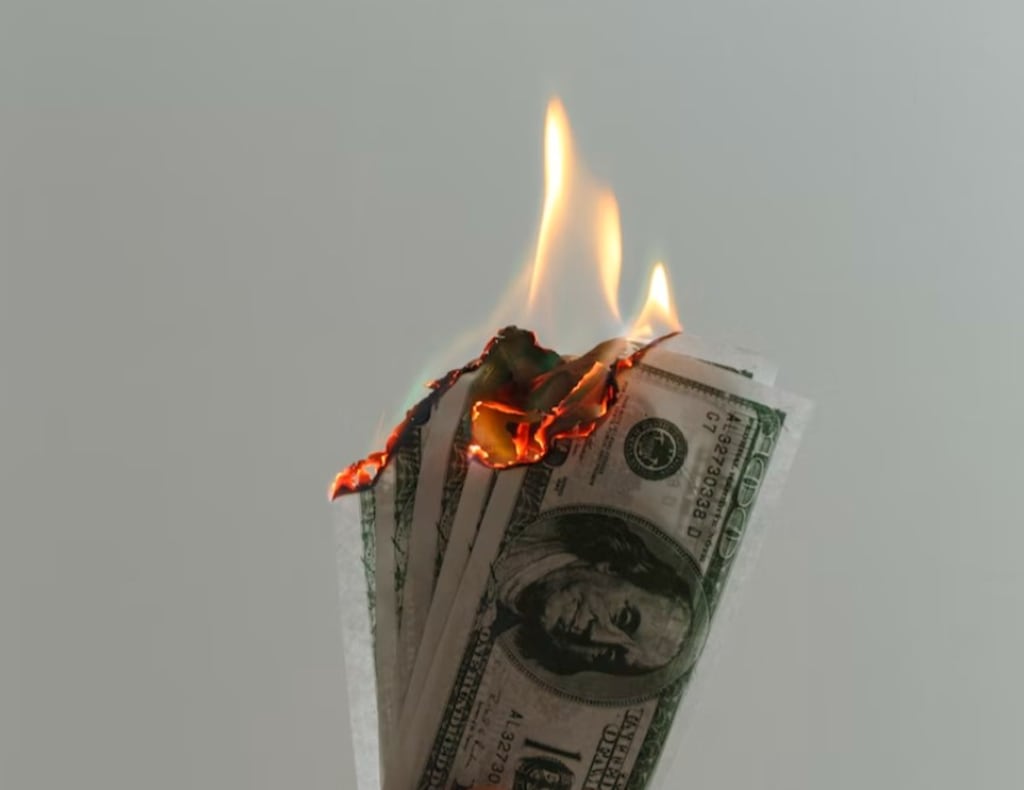
When money's value drops by nearly zero, this is called hyperinflation. During the war, the German government printed an endless amount of money to pay for their soldiers' care, supplies, and ammunition. The German government created paper money that was unbacked by anything and borrowed money to cover the expenditures of World War I. This was the beginning of the hyperinflation that would eventually spiral out of control and was already out of control. The proposal called for gradually repaying the debts by annexing countries with abundant natural resources and mandating that the victorious allies make restitution. This plan’s overarching objective was to meet all financial obligations. When the war was over, more money was available than goods to buy. This led directly and immediately to the occurrence of hyperinflation. Due to the ongoing trend of prices going up, the value of one German mark went down. Under the terms of the Treaty of Versailles, Germany had to pay the Allies a lot of money for debts and war damages. All of these payments have to be made.
Consider that in 1914, one German mark could be purchased for somewhere around 4.2 dollars in the United States. This might be used as a point of comparison to understand the magnitude of inflation. Nine more years later, the odds were now 4.2 trillion to one.
Workers were receiving payment for their services twice a day by 1923. The employees were shocked to learn to stop additional price increases on goods. They were granted time off after each pay period to go shopping. During the height of hyperinflation, a person could spend billions of German marks to buy enough food to last a single day. Wheelbarrows and backpacks were the only ways for people to transfer their financial assets. Thus, they were forced to go shopping. Additionally, many individuals who had been doing well suddenly found they could not eat. Every half hour, the waiters had to go to the top of the tables to announce the new prices for the menu.
This information shouldn’t come as a huge surprise when one realizes that a loaf of bread cost around half a mark in 1918 but more than 200 million marks in 1923.
Banknotes may be used in fireplaces instead of wood. Also, women wore clothing fashioned out of bills, and kids had fun playing with piles of cash instead of traditional playing blocks. Kites were made out of banknotes and flown around.
Employees had to carry wheelbarrows, luggage, and bags to move the money around. According to one version of the event, a busy employee noticed that his luggage had been taken and his paycheck had been emptied and left behind.
Many individuals decided they would not use any money in exchange for products but would instead put their trust in physical assets.
The creation of the new rentenmark, a currency backed by mortgages on industrial and agricultural land, was started by the Danish government before the end of 1923. The exchange rate for the new rentenmark was initially fixed at 4.2 rentenmarks for every U.S. dollar. This eventually brought an end to the nationwide hyperinflationary fever. The German people, who had had years of terrible instability, were so desperate that they believed in the new currency, despite its basis being unstable at best.
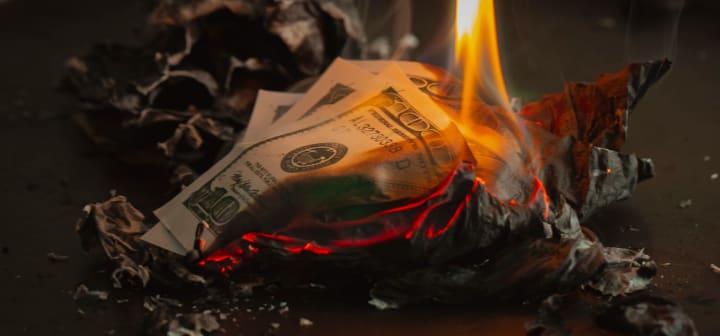
Now that the majority of the global economy is already experiencing an increase in inflation, our question is: how probable is it that we will see hyperinflation once more?
I think we won’t, which is good. Hyperinflation is a rare occurrence in a scenario. When the government issues more money in response to a crisis and the supply falls while the demand rises, hyperinflation may result.
The economist Asher Rogovy claims: “The U.S. central bank does not use the money it prints to pay down debt." Instead, it makes loans at the desired interest rate, and the private sector uses the money more productively. The fact that the money issued is repaid is a key factor in why this monetary strategy doesn’t lead to hyperinflation.”
About the Creator
Dr. Sulaiman Algharbi
Retired after more than 28 years of experience with the Saudi Aramco Company. Has a Ph.D. degree in business administration. Book author. Articles writer. Owner of ten patents.
Instagram: https://www.instagram.com/sulaiman.algharbi/
Keep reading
More stories from Dr. Sulaiman Algharbi and writers in Journal and other communities.
Can Artificial Intelligent Predict Market Recession?
The machine learning algorithms have spotted a possible snag. According to Allianz Global Investors’ chief officer for systematic equities, Michael Heldmann, “a very high degree of recession risk” is indicated by the firm’s statistical algorithms that employ AI and ML to anticipate recessions.
By Dr. Sulaiman Algharbi3 years ago in Journal
The goals I did not achieve
Every writing goal I made for the year is a wash. It has been this way for a while, but I think it's important to be open about my failures and the reality of how life can get in the way. This is especially true considering the several times I have posted on Vocal about my writing goals, how I was changing my approach, and where I was hoping to be for the upcoming year. I will probably do that again in a couple months, but for now, it is time to acknowledge where I am today.
By Kay Husnick20 days ago in Journal
I Started Using Meta AI SEO Without Expectation—And It Changed How I Write Online
For a long time, SEO felt like something I had to tolerate rather than trust. Every platform demanded optimization, yet the rules kept shifting. One update would reward long-form content, another would punish it. Keywords mattered, then intent mattered more. Somewhere in between, the joy of writing started to fade.
By Anthony Rodgersa day ago in Journal




Comments
There are no comments for this story
Be the first to respond and start the conversation.