
How is global security
Infectious germs and its consequences
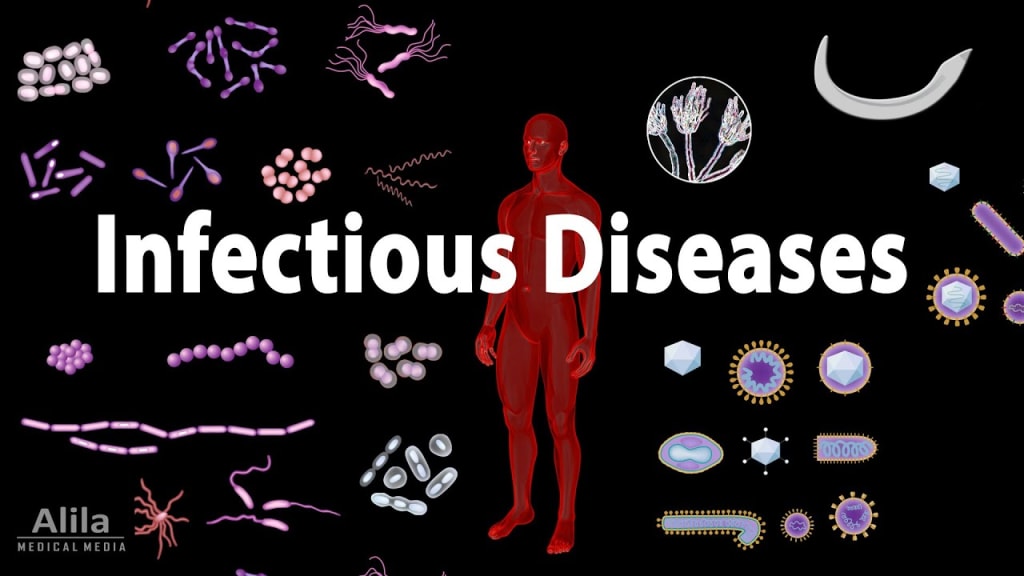
The biggest threat to the countries of the world is infectious disease, how the germs work and how they were created, people never know the pronunciation, and the consequences of this are not known. Although some control bodies and private bodies try to detect new infectious diseases, these germs spread to the population. Preventive measures are never on the right track, so the suffering of the people is extremely fatal, resulting in economic loss and food shortages.Some companies are involved in the creation of infectious diseases, the consequences of which are very serious, the security aspects, the ruling class, the necessary precautions to recover from this, the big employers of the world are working together.People have been adapted to the situation in which the big capitalists and those in the ruling class act like this, so people should be aware of their safety. In some countries, there is a long building system in a wall-like structure. This is not a single improvement for common people to live. From the day it is implemented people will understand what is the manifestation of this. It will take a few hundred years to happen due to changes or changes in people. This tells you that people should be aware and take necessary precautions.This poll is done as an old woman and it can either be an expression of your incapacity or an awareness to be cautious. You can forget it or think about it when you remember. How you accept people's expression and understanding in this situation is your personal real right, so please continue this discussion or any information. I will try to write more if needed otherwise this I will not continue to write
Today’s top global health security risks include:
Emergence and spread of new infectious diseases
Ever-increasing globalization of travel and trade, enabling disease to spread
Rise of drug-resistant, disease-causing pathogens
Potential for accidental release, theft or illicit use of dangerous pathogens
CDC strengthens capabilities in these four core areas to fight top global health security risks:
Surveillance systems to quickly catch outbreaks before they spread
Laboratory networks to accurately diagnose diseases and identify new pathogens
Workforce development of frontline staff to identify, track, and contain outbreaks at their source
Emergency Management systems to coordinate response efforts when crises occur
T-Virus
The t-Virus (also known as the Clay virus ε-strain and the tyrant virus[1]) is a mutagenic virus created by the Umbrella Corporation. It was derived from the Progenitor virus and designed to take advantage of its mutagenic properties for the development of a new form of biological weapon known as "B.O.W." (Bio Organic Weapon), a living creature genetically modified for use as a killing machine.
The earth today is populated by more than seven billion humans (1), and we are affecting every part of the planet, directly or through worldwide pollution and climate changes (2). Anthropogenic environmental changes threaten human health by causing food and water scarcity, increasing the risks for natural disasters and displacements of populations, and increasing the risks of infectious diseases (3), which is the main focus of this review.
Historically, infectious diseases have had civilisation-altering consequences. During the Spanish flu pandemic in 1918–1920, an estimated 50–100 million humans worldwide succumbed to the infection (4). When rinderpest spread to Eastern Africa in the nineteenth century, it caused massive death in livestock and the subsequent death by starvation of almost two-thirds of the East African Massai population (5). The potato blight, a fungal disease, caused the Irish potato famine, reducing the Irish population by 25% either through starvation or migration (6).
Because of improved living conditions and increased access to medications, the proportion of human deaths caused by infectious diseases has trended downwards over the last centuries, giving way to degenerative and lifestyle diseases (7). However, history has previously witnessed spikes in morbidity and mortality, and this reduction may not be lasting. In Thailand, the number of deaths due to infections decreased to one-fifth from 1958 to 1997, after which it started increasing again, mainly due to the emergence of HIV (8). Burden of disease is not equally distributed. Infections, including parasitic diseases, contribute to more than 20% of the global burden of disease (9), but in Africa it is more than 70% (10).
For infectious diseases considered tropical, such as malaria, socio-economic factors may be much more important than climate (11). The effects of disease may also be a vicious circle where the diseases are poverty-promoting, making the poor even poorer, and in turn even more prone to diseases (12). Arboviruses especially have a tendency to affect poor people disproportionally and cause long-lasting sequelae (13), causing a burden for both families and societies. The effects of many diseases may also be directly incapacitating, which cause people lacking health care, to lay sick during the viraemic or parasitaemic phases, rendering them more prone to further vector bites and causing increased infection rates in the vectors.
Infectious diseases cause not only suffering and death, but also severe economic implications, which are not always immediately appreciated. The outbreak of foot-and-mouth disease in the UK in the beginning of the twenty-first century led to the culling of four million animals for the purpose of disease control, and cost the nation more than £3billion, not including losses from decreased tourism (14). Economic losses may in addition be caused by secondary effects. Death of bats in North America, due to the infectious white-nose syndrome, caused by an emerging fungus, and other anthropogenic causes of death, may cause agricultural losses of at least US$3.7 billion per year (15).
To estimate the importance of diseases, different measures can be used, such as morbidity and mortality. To measure both the impact of mortality, disease, and long-term sequelae of human disease, disability adjusted life years (DALY), have been established (16, 17). The definition of one DALY is the loss of one healthy year of human life. In addition to these calculations, costs of illness for the public health sector, and losses to industry, tourism, and the agricultural sector can be estimated, although it may be more difficult to assess the costs of environmental impacts and loss of ecosystem services. To fully evaluate the economic and societal impact of a zoonotic disease, it is important to include all measurements (18). The combined impact of zoonotic diseases on human health, animal health, and livelihoods make them especially costly. The World Bank (19) estimates that direct costs of zoonotic outbreaks during the last century have exceeded US$20 billion, and US$200 billion in indirect costs.
The number of events of emerging infections has been increasing over the last 100 years (20), although confounded by our better ability to detect disease and the upsurge in human emerging disease associated with HIV in the 1980s (20). Emerging infectious diseases (EID) have been reviewed extensively during the last two decades, and it is now generally accepted that most drivers of emerging diseases are ecological, and the majority of these caused by anthropogenic influences. Some of these anthropogenic drivers are the increased travelling and transport of animals and goods; changes in ecosystems; deforestation and reforestation; altered land use; increased irrigation and creation of water dams and reservoirs; and urbanization (21–23).
In spite of the increased attention and all gained knowledge on EID, it may prove difficult to formulate policies on risk reduction. Part of this is due to lacking understanding of causality, trade-offs, and externalities of decisions. This paper aims to review existing literature on how human impacts are associated with disease emergence and transmission. The purpose of this analytic review is to provide a framework for evaluating the risks that anthropogenic ecosystem changes may have on disease transmission and dynamics.
About the Creator
karthik
Karthik is an accomplished content creator and copywriter with a passion for producing high-quality, engaging content that resonates with audiences. He has honed his skills through years of experience in the industry and is known
Flower Bloom 369
FLOWER Bloom 2/25/26 Wednesday By Mariann Carroll Karen had been with Tony for 7 years. Tony started acting strangely after her surgery. He would mow the lawn in the rain and be on his cellphone. He started pushing Karen away. Tony came clean about seeing someone. Karen moved out two months later. Karen moved in with a friend. She felt betrayed.
By Mariann Carroll6 days ago in Fiction




Comments
There are no comments for this story
Be the first to respond and start the conversation.