
How I Control My A1C with Exercise and Nutrition
What decades of living with Type 1 diabetes taught me about consistency, movement, and smarter food choices

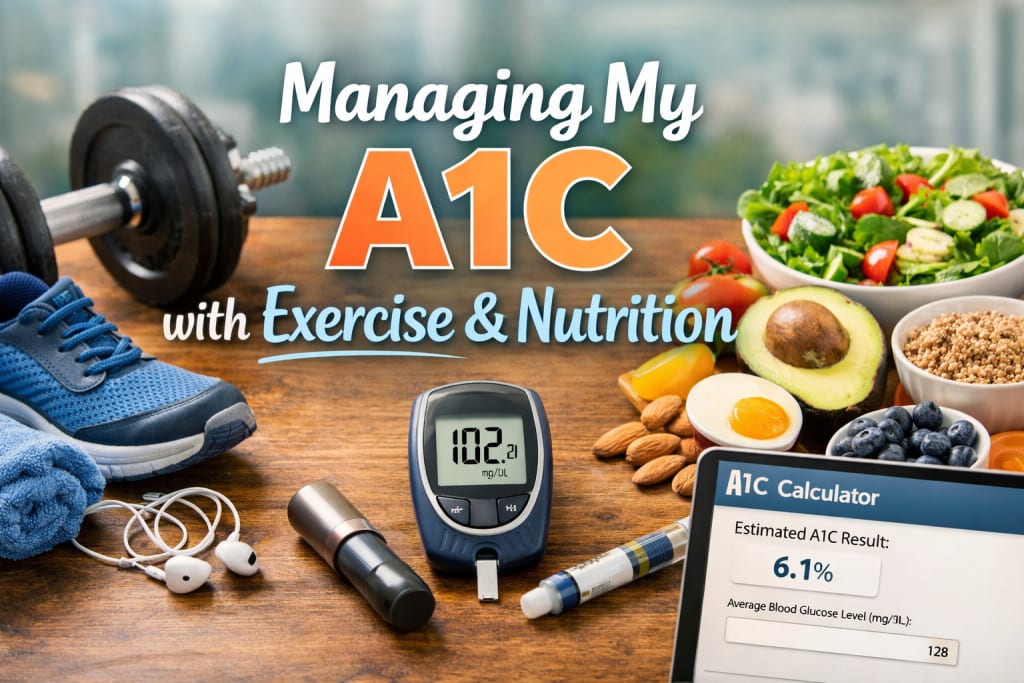
I’ve lived with Type 1 diabetes for over 25 years, and one thing became clear early on: perfect blood sugar control is a myth—but consistent habits can change everything. I spent years reacting to highs and lows before realizing that long-term progress comes from patterns, not single readings.
What finally helped me lower and stabilize my A1C wasn’t a radical diet or extreme workouts. It was a repeatable combination of regular exercise, balanced nutrition, and data-driven feedback that worked with my life instead of against it. Once I focused on sustainability, my A1C followed.
Understanding A1C Changed How I Managed My Diabetes
Early on, I focused heavily on daily blood sugar numbers. Highs felt discouraging, and lows felt dangerous. But once I truly understood what A1C represents—an average of blood glucose over about three months—my mindset shifted.
A1C isn’t about one bad day or one perfect meal. It’s about patterns.
That realization gave me permission to stop obsessing over individual readings and start asking better questions:
- How does my weekly routine affect my average?
- What habits actually move my A1C in the right direction?
Exercise Became My Most Reliable Tool
Exercise didn’t just help my numbers—it helped me feel more in control.
Over time, I noticed that consistent physical activity improved my insulin sensitivity, meaning my body required less insulin to manage the same foods. Research backs this up: exercise helps muscles absorb glucose more efficiently, even without insulin, which can lead to lower average blood sugar levels over time (NIH).
I focus primarily on moderate, repeatable movement—walking, light jogging, cycling, and resistance training. I’m not chasing extreme workouts. Instead, I aim for sustainability.
What mattered most wasn’t intensity—it was frequency. When I moved most days of the week, my glucose patterns became more predictable, and my A1C reflected that consistency.
Of course, exercise with Type 1 diabetes requires planning. I learned how to:
- Adjust insulin before activity
- Monitor glucose trends during workouts
- Prevent post-exercise lows
Organizations like the American Diabetes Association emphasize that structured exercise can significantly improve glucose control in people with Type 1 diabetes when managed properly (ADA).
Nutrition Was About Stability, Not Restriction
For years, I thought better A1C control meant eating less. What actually worked was eating smarter.
I stopped chasing extreme diets and instead focused on:
- Balanced meals with protein, fiber, and healthy fats
- Whole foods over ultra-processed options
- Carbohydrates that digest more slowly
Fiber-rich foods became especially important. Studies show higher dietary fiber intake is associated with improved glycemic control and lower A1C levels (NIH).
This approach helped reduce sharp glucose spikes and made insulin dosing more predictable. It also made eating feel normal again—not like a constant math equation
Tracking Progress Kept Me Accountable
One of the biggest breakthroughs for me was visual feedback.
Instead of waiting months for lab results, I wanted a way to understand how my daily glucose numbers translated into A1C. That’s why I regularly use this trusted A1C Calculator with instant results.
By entering my average blood glucose data, I can see an estimated A1C immediately. This helps me spot trends early and make adjustments before small issues turn into long-term problems.
Seeing the numbers change in real time keeps me motivated—and honest.
What 25+ Years with Type 1 Diabetes Taught Me
After decades of managing Type 1 diabetes, here’s what I know for sure:
- Exercise isn’t optional—it’s one of the most powerful tools we have
- Nutrition works best when it’s sustainable and balanced
- A1C improves through patterns, not perfection
- Data builds confidence when you know how to use it
I still have off days. Stress, travel, illness, and life happen. But because I focus on long-term habits, those setbacks don’t define my health anymore.
If you’re living with diabetes, my experience proves this: you don’t need to overhaul your life overnight. Start with movement you enjoy, foods that support stability, and tools that help you understand your data.
Small choices—repeated consistently—can change your A1C more than you think.
About the Creator
Ken Gri
I've lived with Type 1 diabetes for over 25 years and write about blood sugar management, fitness, and nutrition. Learning from personal experience and data-driven tools, I focus on sustainable long-term A1C control and everyday health.
The goals I did not achieve
Every writing goal I made for the year is a wash. It has been this way for a while, but I think it's important to be open about my failures and the reality of how life can get in the way. This is especially true considering the several times I have posted on Vocal about my writing goals, how I was changing my approach, and where I was hoping to be for the upcoming year. I will probably do that again in a couple months, but for now, it is time to acknowledge where I am today.
By Kay Husnick22 days ago in Journal
The Early Church Fathers and Why Their Writings Matter Today
The Early Church Fathers are some of the most important figures in the history of Christianity. Their writings, letters, sermons, and theological reflections helped define the beliefs, practices, and structure of the Church in the centuries following Christ. Understanding who the Church Fathers were and why their works matter today is essential for anyone seeking to understand Catholic teaching, tradition, and the roots of Christian faith.
By Sound and Spirit4 days ago in Journal




Comments
There are no comments for this story
Be the first to respond and start the conversation.