
How Hard Is the Gokyo Lake Trek?
My Honest Take After the Journey

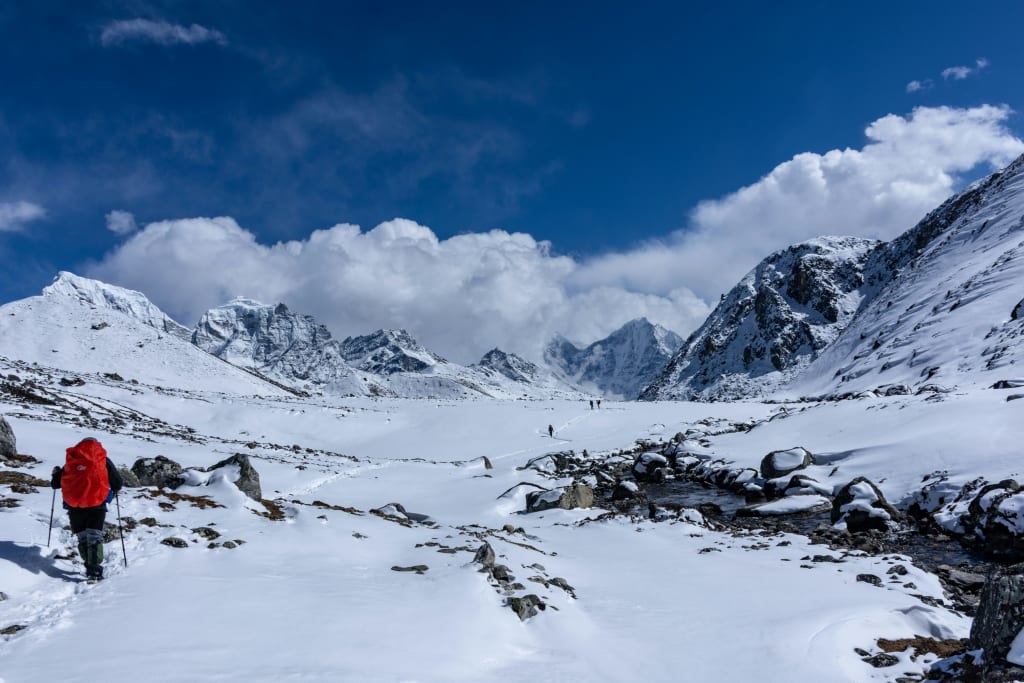
We just got back from the Gokyo Lake trek, and the experience was unforgettable. The trail was quieter than the Everest Base Camp route, the lakes were otherworldly, and the sunrise from Gokyo Ri left us speechless. But before we began, one question stayed on our minds — how hard is the Gokyo Lake trek?
Now that we’ve walked every step, crossed chilly rivers, climbed high passes, and stood in front of icy blue lakes, I can finally answer that question clearly.
A Moderate Trek With Serious Altitude
The Gokyo Lake trek is often described as moderate, but that word can mean different things to different people. You don’t need ropes or climbing gear. There are no vertical cliffs or risky edges. But that doesn’t make it easy.
The real challenge of this trek is altitude.
The trail takes you to Gokyo Ri, a viewpoint standing at 5,360 meters (17,585 feet). Along the way, you pass Gokyo village at 4,790 meters, and spend multiple nights above 4,000 meters. That’s high — and altitude affects everyone differently.
We met strong hikers who felt exhausted by midday and others who had to turn back because of headaches or nausea. That’s why acclimatization is key.
Trek Overview: Distances and Duration
We did the classic Gokyo Lake trek in 12 days, starting and ending at Lukla (2,840m). Here’s what our itinerary roughly looked like:
Day 1: Flight to Lukla, trek to Phakding (2,610m)
Day 2: Trek to Namche Bazaar (3,440m)
Day 3: Acclimatization day in Namche
Day 4: Trek to Dole (4,200m)
Day 5: Trek to Machhermo (4,470m)
Day 6: Acclimatization in Machhermo
Day 7: Trek to Gokyo (4,790m)
Day 8: Climb Gokyo Ri (5,360m) and rest
Day 9–12: Return to Lukla
We covered about 100–110 kilometers total on foot. Each day, we walked between 4 to 7 hours, depending on the altitude and terrain.
Terrain: Not Too Technical, But Still Demanding
The Gokyo trail winds through pine forests, rhododendron paths, yak pastures, and rocky valleys. You cross a few high suspension bridges, stone staircases, and glacier-fed streams. The trail is mostly well-marked, but in places like the Ngozumpa Glacier, you’ll walk across boulders and loose rock. That part can be slippery and confusing, especially in fog or early snow.
We didn’t need any climbing skills or special gear. But good boots, trekking poles, and warm layers made a huge difference.
Gokyo Ri – The Highlight and the Test
One of the toughest parts — and also the most rewarding — was the early morning hike up Gokyo Ri. It starts right from the village and climbs sharply for about 600 meters. The path zigzags up a ridge, and even though it’s not technical, the thin air makes every step feel heavy.
We started at 5 a.m., using headlamps, and reached the top just before sunrise. The view was unreal: Everest (8,848m), Lhotse (8,516m), Makalu (8,481m), and Cho Oyu (8,188m) — all visible in one sweeping panorama. We also saw the entire chain of Gokyo Lakes glowing below us in the golden light.
That single moment was worth every struggle along the way.
Weather: A Big Factor in Trek Difficulty
We went in early November, and it was cold but clear. Daytime temperatures ranged from 5°C to 12°C, while nights dropped to -10°C or lower in Gokyo. The skies stayed bright blue almost every day, which helped with morale and photos.
Weather in this region can shift quickly. In spring (March–May), the trail is warmer and dotted with blooming flowers. In autumn (September–November), visibility is best, but temperatures start to dip. Monsoon (June–August) is not ideal due to clouds, leeches, and slippery trails. Winter (December–February) is quiet and beautiful, but extremely cold and snowy.
Weather doesn’t make or break the trek, but it definitely changes how hard it feels. Cold wind, snow, or fog can turn a simple path into a challenge.
Acclimatization and Health
We added two acclimatization days: one in Namche and one in Machhermo. These extra days made a big difference. They gave our bodies time to adjust and made the higher sections feel much more manageable.
We drank at least 3–4 liters of water daily, avoided alcohol, and walked at a slow, steady pace. That helped us avoid altitude sickness. But it’s always a risk on treks above 4,000m — so having extra days and flexibility in your plan is smart.
Fitness: You Don’t Need to Be a Superhuman
You don’t have to be a marathon runner or mountain goat to do this trek. We met people of all ages and fitness levels. What mattered most was attitude — staying positive, walking at your own rhythm, and not comparing yourself to others.
That said, being active beforehand helps. We did short hikes, carried light packs, and focused on breathing control. Even daily stair climbing at home made a difference.
So, How Hard Is the Gokyo Lake Trek?
The Gokyo Lake trek is moderately hard. It’s not a walk in the park, but it’s not extreme either. The real test is your patience, endurance, and ability to adapt to altitude. The trail itself is kind. It moves at a steady pace, with enough teahouses and resting spots.
And the reward? Lakes so clear they reflect the sky like mirrors, the quiet call of yak bells, and that moment on Gokyo Ri when the tallest mountains in the world glow gold under a rising sun.
It’s not just a trek. It’s an experience that shifts something inside you — and that makes every step worth it.
About the Creator
Keep reading
More stories from Olivia Flores and writers in Journal and other communities.
Ghorepani Poonhill Trek Itinerary – A Short and Beautiful Himalayan Adventure
If you’re looking for a short, scenic, and unforgettable trek in Nepal, the Ghorepani Poonhill Trek itinerary might be exactly what you need. Last month, I set out on this journey with a few close friends, and in just three days, we experienced everything from charming villages and rhododendron forests to some of the best mountain views I’ve ever seen. It was one of those treks that stays with you—not just because of the beauty, but because of how much you experience in such a short time.
By Olivia Flores8 months ago in Journal
Understanding the Saints: Models of Holiness for Today
Saints occupy a central place in Catholic spirituality. They are men and women who lived lives of extraordinary faith, virtue, and dedication to God. Catholics honor saints not as divine beings but as role models and intercessors who demonstrate how ordinary people can respond fully to God’s grace. Understanding why saints matter and how their example can inspire modern believers helps Catholics grow in holiness and live a faith-centered life.
By Sound and Spirit5 days ago in Journal
Wild Card Weekend Recap: What Happens Now?
I think I figured out why I love Wild Card Weekend so much. It's because it's the first playoff anything of the calendar year. The NFL season starts in the fall, and once upon a time, the champion was crowned either on or slightly before New Year's. The evolution of the NFL schedule has resulted in the playoffs starting just into the New Year, and currently, the final week of the season falls on the first weekend of the New Year, with Wild Card Weekend coming a week after that. So yes, chronologically, the NFL's Wild Card Weekend serves as the first playoff anything of the calendar year.
By Clyde E. Dawkins6 days ago in Unbalanced



Comments
There are no comments for this story
Be the first to respond and start the conversation.