
How Governments Are Adopting BIM Standards Worldwide
3D BIM Modeling Services

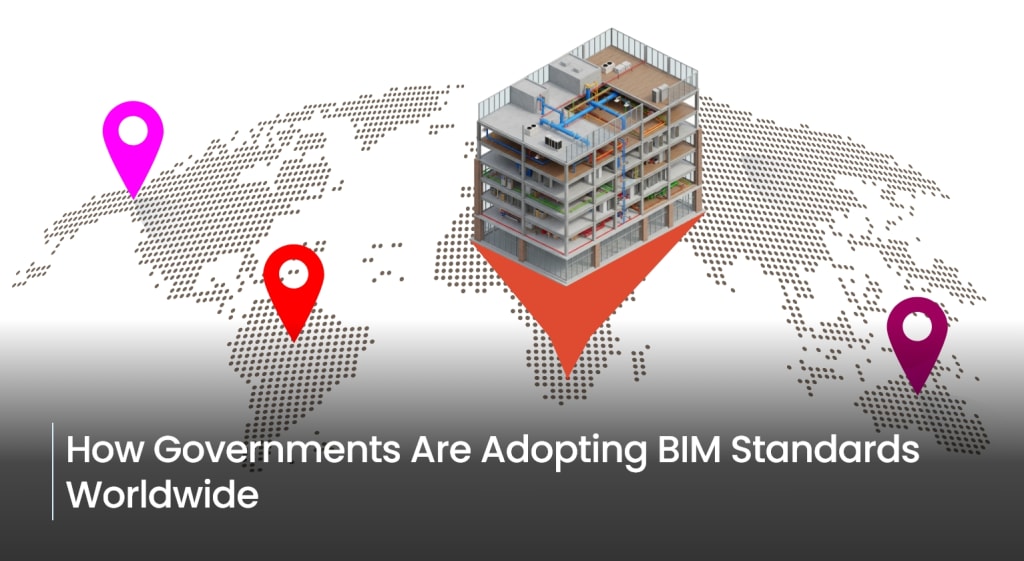
The world of architecture, engineering, and construction has always been an arena of grand ambition, modern designs and intricate challenges. From sprawling urban infrastructure to vital public buildings, government projects represent the pinnacle of this complexity. For decades, these projects have grappled with issues of cost overruns, schedule delays, and communication breakdowns, often leading to public frustration and inefficient use of taxpayer money. However, a rapid revolution is underway, driven by a powerful digital tool: Building Information Modeling.
Governments worldwide are increasingly recognizing 3D BIM modeling services not just as software, but as a comprehensive process and a set of standards that promise to fundamentally transform how public works are conceived, designed, built, and maintained.
The embrace of BIM standards by governmental bodies and associations is not a fleeting trend; it's a strategic imperative. It reflects a deep understanding that the traditional, fragmented approach to project delivery is no longer sustainable in an era demanding greater efficiency, transparency, and value for money. This shift is multifaceted, addressing critical challenges at every stage of a project's lifecycle and offering a compelling vision for the future of public infrastructure.
Key Reasons for BIM Standards Adoption
- From 2D to 3D Clarity
Historically, government projects relied heavily on 2D drawings and specifications. While functional, this approach often led to a disconnect between design intent and on-site reality. Clash detection was a manual, frequently belated process that resulted in costly rework and delays. Furthermore, facility management, once a project was completed, was often an exercise in sifting through reams of paper documents, making efficient maintenance and future renovations a daunting task. 3D BIM modeling services emerged as a solution to these inherent inefficiencies.
By creating a digital, intelligent 3D model of a building or infrastructure project, BIM integrates all relevant data – architectural, structural, MEP (mechanical, electrical, plumbing), cost, schedule, and more – into a single, collaborative platform. This model is not just a geometric representation; it's a rich database where every element carries crucial information, making it a powerful tool for informed decision-making.
- Driving Efficiency and Cost Savings
One of the most compelling reasons for government adoption of BIM standards is the promise of significant efficiency gains and cost savings. Public funds are a precious commodity, and governments are constantly under pressure to demonstrate responsible spending. BIM directly addresses this by:
- Improved Design Coordination and Clash Detection: BIM allows for proactive identification and resolution of design clashes before construction begins. This significantly reduces costly on-site changes and rework, which are notorious for blowing budgets and delaying schedules. Imagine detecting a pipe running through a structural beam in the design phase rather than during construction – the cost difference is astronomical.
- Enhanced Quantity Take-offs and Cost Estimation: The intelligent nature of BIM models enables automated, highly accurate quantity take-offs. This leads to more reliable cost estimates, reduces the risk of budget overruns, and allows more precise financial planning and procurement.
- Optimized Scheduling and Project Management: BIM integrates with scheduling software to create 4D models (3D + time). This allows for visual simulations of the construction sequence, identifying potential bottlenecks and optimizing workflows. Governments can better track project progress, allocate resources efficiently, and anticipate potential delays.
- Reduced Waste and Environmental Impact: By optimizing design and construction processes, BIM helps reduce material waste and lower the carbon footprint. This aligns with government commitments to sustainability and environmental responsibility, which are increasingly a key driver of public policy.
- Enhancing Collaboration and Communication: Government projects often involve a multitude of stakeholders: various government departments, private contractors, subcontractors, consultants, and the public. Traditional communication methods can be fragmented, leading to misunderstandings. BIM, by its very nature, fosters a collaborative environment:
- Centralized Information Hub: The BIM model acts as a single source of truth, accessible to all authorized project participants. This ensures everyone is working with the most up-to-date information, minimizing errors due to outdated drawings or conflicting data. Moreover, COBIE BIM also allows professionals to stay connected on a
- Improved Stakeholder Engagement: The visual nature of BIM models makes complex designs easier for non-technical stakeholders, including government officials and the public, to understand. This facilitates better engagement, clearer communication of project goals, and easier collection of feedback.
- Streamlined Approvals and Permitting: With all project information consolidated and easily verifiable within the BIM model, the approval and permitting processes can be significantly accelerated. This reduces administrative burdens and expedites project initiation.
The Role of BIM Standards and Global Policies
The mere adoption of BIM software is not enough. For governments to fully realize the benefits, implementing BIM standards is paramount. These standards provide a common framework and set of rules that ensure:
Interoperability: Different software platforms used by various project participants can exchange data seamlessly. This prevents vendor lock-in and promotes a truly collaborative ecosystem.
Data Consistency and Quality: Standards define how information is structured, named, and attributed within the BIM model, ensuring that data is reliable, accurate, and easily understandable across all disciplines.
Legal Clarity and Contractual Obligations: BIM standards can be incorporated into project contracts, clearly defining the requirements for BIM deliverables, roles, and responsibilities, thereby reducing disputes and fostering accountability.
Scalability and Replicability: Standardized processes enable the successful application of BIM across a wide range of projects—from small renovations to large-scale infrastructure developments—and the reuse of best practices.
Leading the charge in establishing these standards are organizations such as ISO (International Organization for Standardization) with its ISO 19650 series, and national bodies such as the UK's BIM Framework (formerly Level 2 BIM). These standards cover aspects such as information management, data exchange formats, classification systems, and common data environments.
Global Adoption and the Future Outlook
The global momentum behind government-mandated BIM is undeniable. The UK was an early pioneer, mandating BIM Level 2 for all centrally procured public projects by 2016. Other nations have followed governmental policies, with varying levels of implementation as required:
- European Union: Many EU member states, including Germany, France, and Spain, have either mandated or strongly encouraged the use of BIM for public projects.
- Scandinavia: Countries like Norway, Sweden, and Finland have been at the forefront of BIM adoption, integrating it into their public procurement processes.
- North America: While the US has seen slower federal-level adoption, state and local governments, along with agencies such as the General Services Administration (GSA), are increasingly adopting BIM. Canada has also made significant strides in implementing BIM in its public sector.
- Asia Pacific: Nations like Singapore, Australia, and New Zealand have been proactive in their BIM initiatives, recognizing its potential for infrastructure development.
The future of government projects is inextricably linked with BIM. As technology continues to evolve, we expect to see further integration of BIM with emerging technologies such as artificial intelligence, machine learning, augmented reality, and virtual reality. This will lead to even more intelligent models, predictive analytics for project risks, immersive design reviews, and highly efficient autonomous construction processes.
Last Words
Building Information Modeling is revolutionizing how we plan, design, construct, and manage buildings and infrastructure. It's a process supported by various tools, technologies, and contracts that involves generating and managing digital representations of a place's physical and functional characteristics.
About the Creator
UniquesCADD
UniquesCadd is an architectural & engineering company providing exceptional building design solutions, namely BIM services, architectural services, structural services, scan to bim, 3D rendering, CAD drafting & MEPF solutions
Keep reading
More stories from UniquesCADD and writers in Journal and other communities.
The Role of Point Cloud to Revit in Preserving Historical Buildings
The architecture and construction landscape has adopted a paradigm shift that has offered advanced outcomes. From traditional, time-consuming and ineffective processes to well-organized, accurate and streamlined methodologies, the AEC industry witnessed drastic change. The early days of construction were extremely challenging, complex, time-consuming, and of course labour-intensive. All this impacted the process construction and over budgeted the project as well, due to significant rework. However, the transformative change in the AEC landscape changed the scenario into the most accurate, effective, and efficient one.
By UniquesCADD6 months ago in Journal


Comments
There are no comments for this story
Be the first to respond and start the conversation.