
How Data Mining Services Foster Data-driven Decision-Making Across Industries?
Data mining services play a crucial role in transforming businesses across a spectrum of industries. Take a look at some of its use cases through this blog and learn how to you can leverage data mining insights to transform your business.

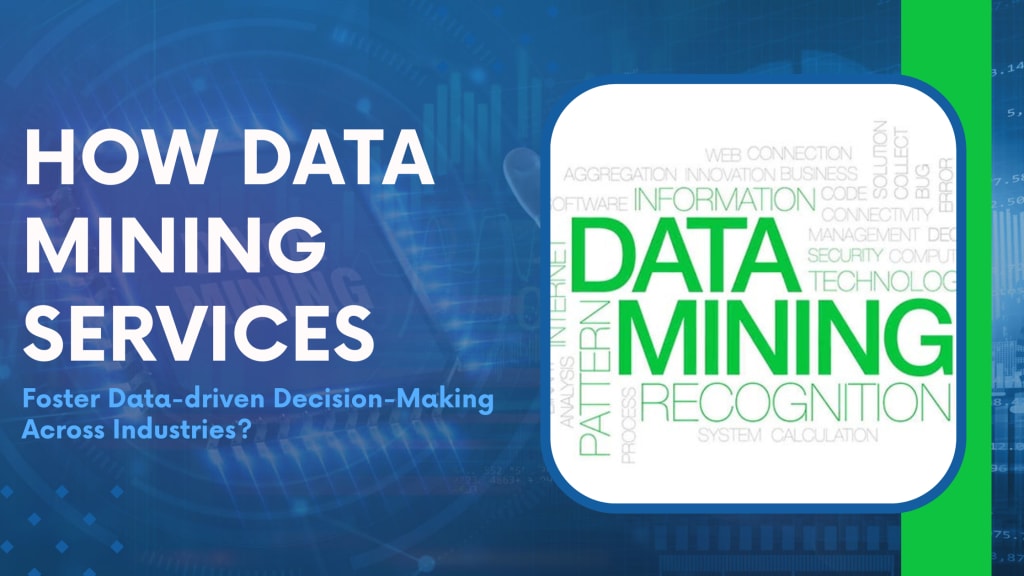
Organizations across every industry are sitting on huge piles of data. However, simply gathering data is not enough. Unlocking its true potential lies in extracting actionable insights and intelligence. This is where the data mining process comes into action, transforming raw data into actionable insights. It plays a crucial role in navigating complex markets and fostering data-driven decision-making across a diverse range of industries.
At the same time, diving into the depths of data and extracting valuable information is an uphill task. Getting an in-house team for data mining adds to operational expenditures significantly while managing it along with core business competencies becomes challenging for a majority of organizations, especially the ones with limited resources. Instead, data mining outsourcing is a smart option to uncover trends, patterns, correlations, and anomalies from immense volumes of data.
Data mining specialists leverage a spectrum of techniques and tools used to extract valuable patterns and trends from vast amounts of data. Their services involve cleaning, preparing, analyzing, and interpreting data to uncover hidden insights that inform strategic choices. In a nutshell, outsourcing data mining tasks enables organizations to leverage the expertise of specialized companies, equipped with advanced technology and diversely skilled professionals, to unlock the full potential of their data assets.
Revolutionizing Industries Through Data-driven Insights
Data mining services are vital for businesses of all sizes and types. The insights retrieved help the stakeholders make informed decisions and maintain a competitive edge in the industry. That said, the impact of data mining transcends specific sectors, permeating various industries and empowering them to achieve significant transformations. Some of these are listed below:
eCommerce and Retail
Personalized Customer Experiences: Data mining helps online retailers understand customer preferences and purchase behavior, enabling them to personalize product recommendations, marketing campaigns, and pricing strategies. They can use the same information to curate content in a way that speaks directly to the customers. This results in increased customer satisfaction, loyalty, and ultimately, sales.
Dynamic Inventory Management: Data mining can be used to analyze historical sales data and forecast trends. These insights enable companies to optimize inventory levels, minimize stockouts, reduce the risks of overstocking, and keep a check on storage costs. This leads to improved operational efficiency and generates greater revenue.
Fraud Detection and Prevention: AI/ML-based data mining algorithms can identify fraudulent transactions in real-time, which might have been missed otherwise. This helps in protecting both customers and businesses from financial losses.
Healthcare
Early Disease Detection: Data mining can analyze patient records to identify patterns and risk factors associated with specific diseases, enabling early diagnosis and intervention. Additionally, data mining can also be used to identify individuals who are at high risk of developing certain diseases so that preventive measures can be implemented in time, improving patient outcomes on the whole and reducing healthcare costs.
Personalized Treatment Plans: By analyzing patient data, doctors can personalize treatment plans based on individual needs and genetic factors. This not only helps in optimizing treatment efficacy, but also minimizes side effects.
Drug Discovery and Development: Data mining helps pharmaceutical companies analyze large genomic and other biological datasets from clinical trials and identify promising drug candidates, accelerating the research and development process.
Education
Personalized Learning: In the education sector, data mining is used to analyze student performance data to tailor the content and teaching methods to individual learning styles and needs. This improves student engagement and academic outcomes.
Early Intervention for Struggling Students: Educational professionals can leverage data mining techniques to identify struggling students early on, allowing for targeted interventions and support, and preventing them from falling behind.
Predicting Student Success: By analyzing student data, educational institutions can predict student success rates and allocate resources effectively to support students at risk of dropping out.
Finance and Insurance
Credit Risk Assessment: Data mining algorithms assess the creditworthiness of loan applicants by analyzing financial data, income history, and repayment behavior. This allows banks to make informed lending decisions and reduce bad debt.
Fraud Detection and Prevention: Similar to eCommerce, financial institutions use data mining models to identify and prevent fraudulent transactions, protecting both customers and the organization from suffering any type of loss.
Personalized Insurance Products: By analyzing customer data, insurance companies can develop personalized insurance plans based on individual risk profiles. This leads to more competitive rates and improved customer satisfaction.
Market Analysis: Data mining helps financial institutions analyze market trends, competitor activity, and customer sentiment to develop profitable investment strategies and optimize product offerings.
Manufacturing and Logistics
Predictive Maintenance: Data mining can analyze sensor data from machinery to predict potential failures before they occur, allowing for preventive maintenance and reducing downtime. This improves operational efficiency and equipment lifespan.
Optimized Supply Chain Management: By analyzing historical data and real-time traffic patterns, data mining optimizes logistics and delivery routes, reducing transportation costs and improving delivery times.
Demand Forecasting: Accurately forecasting demand for products and materials helps manufacturers optimize production schedules and inventory levels, minimizing waste and maximizing efficiency.
Government & Public Sector
Crime Prediction and Prevention: Data mining can analyze crime statistics, social media data, and demographic information to identify areas with high crime rates and predict potential criminal activity. This allows law enforcement agencies to allocate resources more effectively and prevent crime.
Fraudulent Benefit Detection: Data mining algorithms can analyze social welfare program data to identify fraudulent claims, ensuring efficient resource allocation and program integrity.
Read Also: How Data Mining Services Build Data-Driven Solutions to Empower Organizations
These are just a few examples of how data mining services foster data-driven decision-making across various industries and you must not limit yourself to these. As the volume and complexity of data continue to grow, the demand for data mining expertise is expected to rise even further. Collaborating with web data mining companies empowers businesses to extract valuable insights from web data sources like social media, online reviews, and search engine queries. This information is crucial for businesses to understand customer sentiment, identify market trends, and track competitor activities.
By harnessing the power of data, organizations can gain a competitive edge, optimize operations, and deliver greater value to their stakeholders. To conclude, data is the new oil, and mining services are the refineries that transform it into valuable fuel for business growth and success.
About the Creator
Sam Thomas
Tech enthusiast, and consultant having diverse knowledge and experience in various subjects and domains.
Keep reading
More stories from Sam Thomas and writers in Journal and other communities.
Things to be Considered During Data Entry Outsourcing
In today's data-driven world, accurate and efficient data management is vital for businesses of all sizes. Picture this: a bustling medical research lab, racing against time to find a cure for a rare disease. Mountains of patient data - blood tests, scans, treatment records - hold the key, but they're trapped in paper files and handwritten notes. Thus, there arises the need for efficient data entry services.
By Sam Thomas2 years ago in Journal
The goals I did not achieve
Every writing goal I made for the year is a wash. It has been this way for a while, but I think it's important to be open about my failures and the reality of how life can get in the way. This is especially true considering the several times I have posted on Vocal about my writing goals, how I was changing my approach, and where I was hoping to be for the upcoming year. I will probably do that again in a couple months, but for now, it is time to acknowledge where I am today.
By Kay Husnick25 days ago in Journal


Comments
There are no comments for this story
Be the first to respond and start the conversation.