
How Cloud-Based Accounting Software is Transforming Small Business Finance
Best cloud accounting software In Delhi


Introduction
In today’s fast-paced business environment, small businesses need efficient financial management tools to stay competitive. Traditional accounting systems, with their manual processes and reliance on physical storage, often create bottlenecks that slow business growth.
This is where cloud based accounting software steps in, offering real-time access to financial data, automation of routine tasks, and seamless GST invoicing. By leveraging cloud technology, businesses can enhance financial accuracy, save time, and ensure compliance with tax regulations.
This article explores how cloud accounting software is changing the way small businesses handle their finances and why making the switch can be a game-changer.
1. Understanding Cloud-Based Accounting Software
What is Cloud Accounting?
Cloud based accounting software is an online solution that allows businesses to manage their finances anytime, anywhere. Unlike traditional accounting software that requires installation on a local computer, cloud accounting operates through a secure internet connection, storing financial data safely in the cloud.
Key Features:
• Remote Access – Manage finances from any device.
• Automated Bookkeeping – Reduces manual data entry.
• GST-Compliant Invoicing – Ensures accurate tax calculations.
• Secure Data Storage – Prevents loss due to hardware failures.
This flexibility is particularly useful for small businesses that need agility in their operations.
2. The Benefits of Cloud Accounting for Small Businesses
2.1 Anytime, Anywhere Access
Cloud accounting removes the need to be physically present in an office to access financial data. Business owners and accountants can log in from any device, ensuring financial oversight even when working remotely.
2.2 Cost-Effective and Scalable
For startups and small businesses, budget constraints often make expensive accounting software impractical. Cloud-based solutions typically work on a subscription basis, eliminating the need for costly IT infrastructure. Businesses can scale up or down based on their needs, ensuring they only pay for what they use.
2.3 Automation That Saves Time
• Recurring invoices reduce the need for manual billing.
• Bank reconciliation features help match transactions effortlessly.
• Tax calculations are automated, minimizing human error.
2.4 Real-Time Financial Insights
With real-time dashboards and reports, small businesses can monitor cash flow, profit margins, and outstanding invoices instantly. This helps in making informed business decisions without waiting for month-end reports.
2.5 Seamless Integration with Other Business Tools
Most cloud accounting platforms integrate with:
• Payment processors (e.g., Stripe, PayPal)
• E-commerce platforms (e.g. Shopify, Woo Commerce)
• Payroll systems (e.g., Gusto, ADP)
• CRM software (e.g. HubSpot, Salesforce)
This interconnected approach simplifies operations, reducing administrative workload.
3. GST Invoicing Made Easy with Cloud Accounting
Managing GST compliance is one of the most critical aspects of small business accounting. Cloud-based solutions streamline the process by automating GST calculations, filing, and record-keeping.
3.1 Automatic GST Calculation
• Instantly applies the correct GST rate to invoices.
• Reduces tax errors and ensures compliance.
• Helps businesses track input tax credits (ITC) efficiently.
3.2 GST-Compliant Invoicing
• Generates tax-compliant invoices with all necessary details.
• Supports multiple tax rates for different products or services.
• Simplifies tax return filing with pre-filled reports.
3.3 Keeping Audit-Ready Records
Cloud accounting ensures all invoices and tax records are securely stored and easily retrievable. This reduces the stress of audits and helps businesses stay compliant with financial regulations.
4. Security and Compliance in Cloud Accounting
One of the biggest concerns for businesses moving to cloud-based accounting is data security. Leading software providers use advanced encryption and authentication methods to protect sensitive financial information.
4.1 Secure Data Storage
• Uses bank-grade encryption to safeguard data.
• Multi-factor authentication (MFA) prevents unauthorized access.
• Regular automatic backups ensure data is never lost.
4.2 Meeting Regulatory Compliance
• Software updates automatically to stay aligned with changing tax laws.
• Helps businesses adhere to accounting standards and financial reporting regulations.
By choosing a reliable cloud accounting solution, businesses can focus on growth without worrying about security risks.
5. Choosing the Right Cloud-Based Accounting Software
With multiple options available, selecting the right accounting software depends on a business’s specific needs.
5.1 Key Considerations
• Ease of Use – A user-friendly interface makes accounting less intimidating.
• GST Compliance – Automatic tax calculations and invoicing features.
• Automation – Reduces manual workload.
• Scalability – Should grow alongside the business.
• Integration Capabilities – Connects with payment gateways, payroll systems, and e-commerce platforms.
5.2 Popular Cloud Accounting Software Options
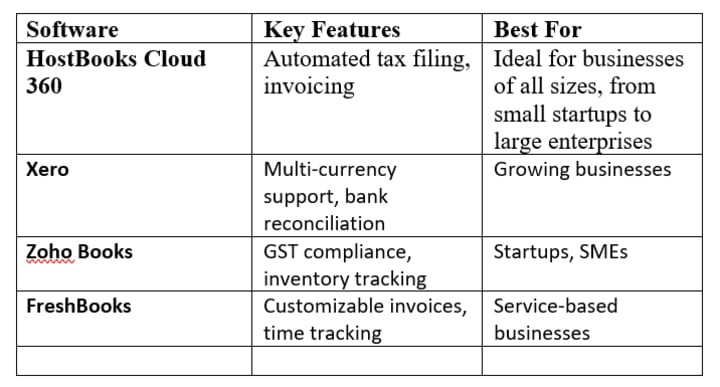
A business should test different platforms through free trials before committing to a paid plan.
6. The Future of Cloud Accounting
The adoption of cloud accounting software is only expected to grow as businesses seek more efficiency, automation, and security in financial management.
6.1 AI & Machine Learning Integration
• AI-powered expense categorization and fraud detection.
• Predictive analytics for better financial forecasting.
6.2 Blockchain Technology for Accounting
• Enhances transaction transparency and security.
• Reduces financial fraud risks.
6.3 Mobile-First Accounting Solutions
• More businesses are shifting to mobile apps for accounting.
• Features like voice-activated financial tracking are emerging.
These advancements will make accounting even more accessible and efficient for small businesses in the future.
Conclusion
Cloud-based accounting software is redefining small business finance by offering automation, real-time data access, and seamless GST compliance. With reduced manual effort, increased accuracy, and improved security, businesses can focus on growth rather than getting bogged down by financial paperwork.
Adopting a cloud accounting solution is no longer a luxury—it’s a necessity for businesses looking to streamline their operations and remain competitive in a digital economy. If you haven’t made the switch yet, now might be the perfect time to explore your options and take your financial management to the next level.
Final Thoughts
If you're considering migrating to cloud-based accounting software, start by identifying your business needs, comparing available solutions, and choosing the one that aligns with your financial goals. The right accounting tool can transform the way you manage your finances and set you up for long-term success.
This version keeps the content engaging, professional, and free from unnecessary repetition or promotional language. Would you like any refinements or additions?
About the Creator
HostbooksIndia
HostBooks, an automated all-in-one accounting & compliance software provides you with a comprehensive platform for GST, E Way Bill, TDS, Accounting & Tax Pay.
Keep reading
More stories from HostbooksIndia and writers in Journal and other communities.
How to Choose the Best Accounting Software for Your Business
Introduction Choosing the right accounting software is crucial for businesses of all sizes. Whether you run a small startup, a growing enterprise, or a well-established company, having the best accounting software can help streamline financial management, ensure compliance with tax regulations, and improve overall efficiency. With various options available in the market, selecting the ideal accounting software that fits your business needs can be overwhelming.
By HostbooksIndia11 months ago in Journal
Building Modern Applications with Cloud-Native Architecture Patterns
Any time cloud-native architecture comes up, the conversation usually gets heavy fast. People start throwing around terms that sound impressive but don’t always mean much in real projects. Most of that confusion doesn’t come from actually building software. It comes from slide decks, vendor demos, and blog posts that try too hard to explain simple ideas.
By Jonathan Byers6 days ago in Journal



Comments
There are no comments for this story
Be the first to respond and start the conversation.