
How Cassette Tapes Were Used as Propaganda in the Middle East During the 1970s
Cassette tape technology is particularly important in the spread of ideologies in the Middle East. Leaders were able to convey their ideas to people through cassettes when they were politically banned or exiled.

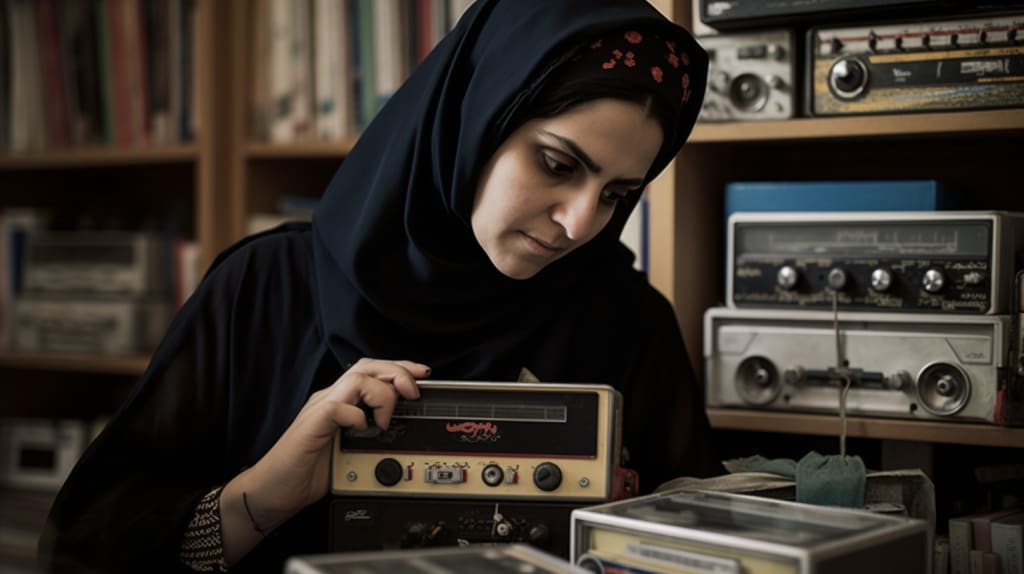
The main reason why cassettes are important in the Middle East is the oral cultural tradition still prevalent in the region. In the Islamic tradition, the Quran is the biggest element of recitation. Muslims who come together for worship listen to one person reciting the Quran. They believe that they are "doing good deeds" by doing this. This has strengthened the tendency of "listening" in the Islamic geography over the centuries. In the movements that developed within the Islamic culture in the following years, reciting the Quran and quoting verses from it in speeches have become an important part of the development of political Islam. In the impact of cassettes in the Middle East, both this listening culture and the leaders' references to Quranic verses have influenced the masses.
Khomeini and the Muslim Brotherhood on cassette
In the Middle East, cassettes have been more effective than writing when leaders cannot directly interact with the public. Leaders with strong oratory skills have also given importance to cassette technology, not just writing. Propagandas made through cassettes were not limited to just speeches. Sometimes, leaders have added expressions and verses that reflect their views into hymns.
The influence of Khomeini
Aytollah Khomeini from the Shia Islamic tradition and the Muslim Brotherhood, who are connected to the Sunni Islamic tradition, have benefited most from cassette technology. Khomeini was exiled to Turkey in 1965. Khomeini was recording his views against Shah Mohammad Reza Pahlavi on cassettes, which his followers were secretly bringing into Iran through Turkey.
Cassettes were the most suitable communication tool of that period. Because there was serious censorship against Khomeini in media such as newspapers and magazines. The only way to bypass this censorship was through cassettes. These cassettes were duplicated as much as the technical facilities of that time allowed and reached millions of people.
Khomeini, who set out with an anti-imperialist claim, was not only sending these cassettes to his own followers but also to socialists and democrats with whom he had formed an alliance at that time. Khomeini's expressions on cassettes had a great impact in Iran. For example, Khomeini instructed his followers not to pay bills. This instruction reached millions of people through cassettes, and the Iranian people were not paying their bills under the influence of this statement.
Records of the Muslim Brotherhood
Just like Khomeini, the Muslim Brotherhood also made serious use of cassette technology. In the 1970s, it was one of the most powerful organizations organized in North Africa and the Middle East. They tried to influence the people by recording their own views reflecting on their propaganda against names such as the Baath regime in Syria, and figures like Gamal Abdel Nasser and Muhammad Anwar el-Sadat in Egypt, through divine and speeches on cassettes.
Members of the Muslim Brotherhood who were exiled to Saudi Arabia during that period established a youth camp. In this camp, cassette recordings were made, and these cassettes were secretly sent to countries where the Muslim Brotherhood was organized.
These cassettes had a serious impact on the people. In the Soviet invasion of Afghanistan in 1980 and the 1987 Palestinian "intifada", Hamas, an organization associated with the Muslim Brotherhood, used the cassettes they recorded to continue resistance and for ideological education.
The "New Media" of the period: Cassette
A similar version of the new media that emerged due to the pressure on the media today was seen in cassette technologies in the 1970s. The cassette was the new media of that period and an important tool for leaders to reach the people. Today's media, which is under pressure and censorship, faced the same problems in the Middle East in the 1970s. Just as people today use social media and blogs to express themselves, cassette technology was also used under pressure in the same way during that period. As can be seen, every period creates its own channels against censorship by creating its own channel against the pressure mechanism.
About the Creator
Ahmet Aslan
Hey there, I'm Ahmet - a passionate storyteller and accomplished journalist! I had a blast honing my writing, reporting, and critical thinking skills at a top-notch Journalism School, and now I'm ready to take on the world!
Keep reading
More stories from Ahmet Aslan and writers in Journal and other communities.
From Ancient Greece to Modern Times: A Global Celebration of Motherhood on Mother's Day
Mother's Day is an annual celebration to honor and appreciate mothers and motherly figures worldwide, and it provides an opportunity to acknowledge the sacrifices and hard work that mothers put in to ensure their children are happy and healthy. Mother's Day has a long and varied history dating back to ancient times, with one of the earliest recorded celebrations being the ancient Greek festival held in honor of the goddess Rhea. In the United States, the modern celebration of Mother's Day began in the early 20th century, and by 1914, it had become a national holiday. Today, Mother's Day is celebrated in countries worldwide, with variations in dates and traditions, but the underlying theme of honoring and celebrating motherhood remains the same.
By Ahmet Aslan3 years ago in Journal
The goals I did not achieve
Every writing goal I made for the year is a wash. It has been this way for a while, but I think it's important to be open about my failures and the reality of how life can get in the way. This is especially true considering the several times I have posted on Vocal about my writing goals, how I was changing my approach, and where I was hoping to be for the upcoming year. I will probably do that again in a couple months, but for now, it is time to acknowledge where I am today.
By Kay Husnick24 days ago in Journal
The Silent Reason You Quit Goals You Care About: Unveiling the Shadow of "Unrealistic Expectations
We all have them – those goals shimmering in the distance, beckoning us with the promise of a better, more fulfilling life. Losing weight, writing a novel, starting a business, mastering a new skill – the possibilities are endless. We start with enthusiasm, fueled by inspiration and a burning desire to achieve our dreams. Yet, all too often, that initial spark flickers and fades. We find ourselves derailed, abandoning our aspirations, and whispering excuses about lack of time, motivation, or talent.
By Wilson Igbasiabout 9 hours ago in Journal
Ludacris and Nelly draw backlash over bookings at MAGA-coded music festival
Ludacris and Nelly headlining a mostly right-wing event is good for them. It’s also great for the genre of hip hop. The two rap veterans have showcased their talents on other stages. Why can’t they perform for mostly MAGA folks and grab that bag?
By Skyler Saunders5 days ago in Beat


Comments (1)
Interesting essay… I like this kind of stories exploring old forgotten technologies affected their time…