
How Can Advancements in 3D Printing Technology be Applied to Root Canal Procedures?
3D Printing Technology
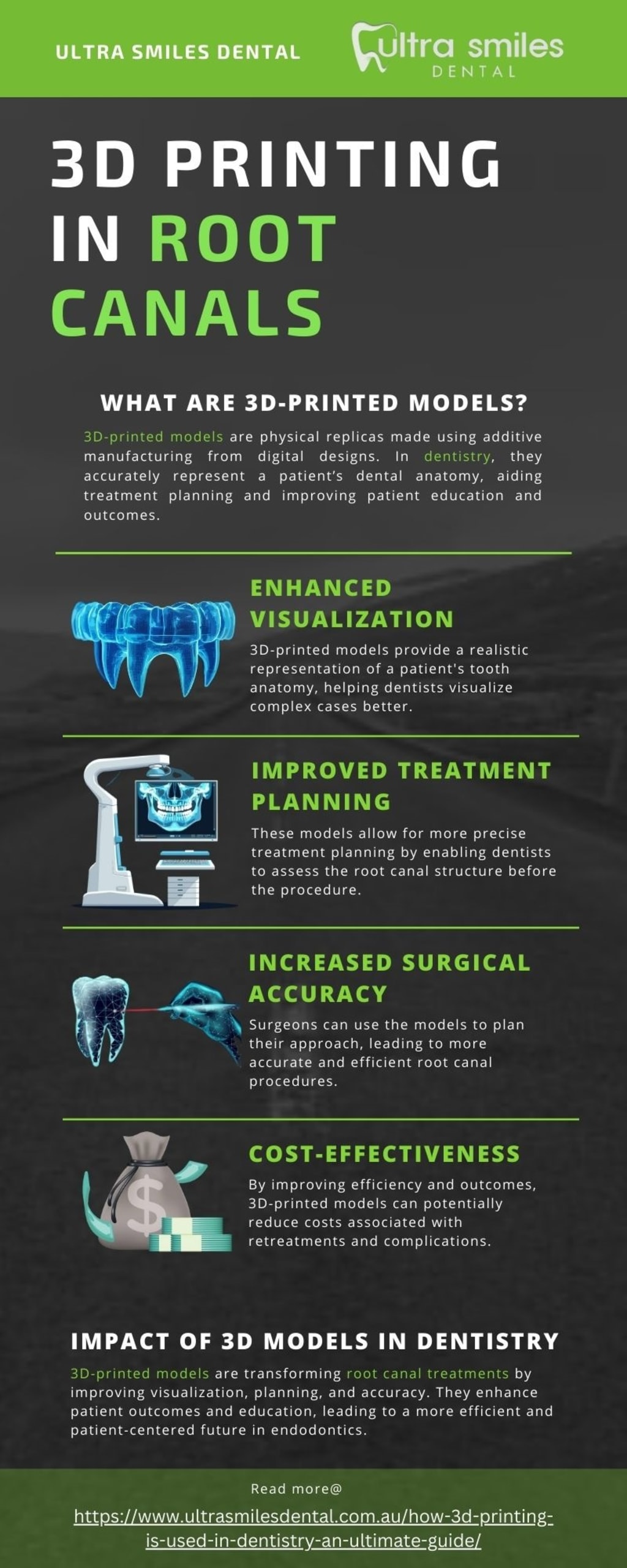
Advancements in 3D printing technology are revolutionizing various fields, including dentistry. One of the most exciting applications is its potential role in improving root canal procedures. Traditionally, root canal treatments have been intricate and time-consuming, requiring precision to ensure success. However, with the integration of 3D printing, dental professionals can create highly accurate models, custom tools, and guides tailored to each patient's anatomy. This technology not only enhances the precision and efficiency of root canal procedures but also reduces recovery time and improves patient outcomes. In this article, we’ll explore how 3D printing is reshaping the future of root canal treatments.
Custom Surgical Guides for Improved Accuracy
Custom surgical guides produced through 3D printing provide a crucial advantage in root canal procedures. These guides are designed to fit the unique anatomy of each patient's tooth, allowing dentists to accurately position their instruments during the treatment. The guides help in determining the exact angle and depth needed to access the root canal system, minimizing the risk of damaging surrounding structures. This precision not only enhances the efficiency of the procedure but also significantly reduces the likelihood of complications, such as perforations or incomplete cleaning of the canal. Overall, custom surgical guides contribute to higher success rates in root canal treatments and improve the confidence of dental professionals in performing complex procedures.
Development of Tailored Instruments
The ability to design and produce custom instruments for root canal procedures through 3D printing is another game-changer. Traditional dental tools may not always fit perfectly into the intricate anatomy of a patient's teeth, leading to inefficiencies during treatment. With 3D printing, dentists can create specialized instruments tailored to the specific shape and size of the root canals they are working with. This customization results in better access and manipulation during the procedure, allowing for more effective cleaning and shaping of the canals. Additionally, these tailored instruments can be designed to enhance ergonomics for the dentist, further improving precision and reducing fatigue during longer procedures.
Enhanced Materials for Root Canal Fillings
Advancements in 3D printing materials are revolutionizing how root canals are filled. Traditional filling materials can sometimes lead to complications, such as leakage or inadequate sealing. However, with 3D printing technology, dentists can use biocompatible materials specifically designed for root canal fillings that offer improved sealing properties and long-term stability. These materials can adapt better to the intricate shapes of the canals, ensuring a more complete fill that minimizes the risk of reinfection. Furthermore, some advanced materials may even have antimicrobial properties, providing an added layer of protection against bacteria that can cause post-treatment complications.
Streamlined Workflow and Reduced Treatment Time
Incorporating 3D printing into root canal procedures significantly streamlines the workflow for dental practices. Traditionally, the process of preparing for a root canal can be time-consuming, requiring multiple appointments for imaging, planning, and treatment. With 3D printing, dental professionals can create models and instruments quickly, often within a single visit. This efficiency reduces the overall treatment time for patients, making the experience less daunting and more convenient. Fewer appointments mean less time away from work or other commitments, ultimately enhancing patient satisfaction and encouraging more individuals to seek necessary dental care.
Improved Patient Comfort and Recovery
Patient comfort is a top priority in dental procedures, and advancements in 3D printing technology contribute significantly to this aspect. By enhancing the accuracy and efficiency of root canal treatments, patients experience less pain and discomfort during the procedure. Additionally, the precise cleaning and filling of root canals minimize post-operative complications, leading to a smoother recovery process. Patients can expect less swelling, reduced discomfort, and a quicker return to their normal activities. Overall, the integration of 3D printing in root canal procedures promotes a more positive experience for patients, alleviating some of the anxiety often associated with dental treatments.
Training and Simulation for Dental Professionals
3D printing technology also plays a vital role in the education and training of dental professionals. By providing realistic, patient-specific models, dental schools can offer hands-on experience in performing root canal procedures without the risks associated with live patients. Students can practice their skills on these 3D-printed models, gaining confidence and proficiency before entering the clinic. Furthermore, experienced dentists can utilize these models for continuing education, allowing them to refine their techniques and stay updated with the latest advancements in endodontics. This approach not only enhances the quality of dental education but also ultimately improves patient care as newly trained professionals enter the workforce.
Future Trends in 3D Printing for Endodontics
The future of 3D printing in endodontics looks promising, with ongoing research and development likely to yield even more innovative applications. One potential trend is the integration of artificial intelligence (AI) with 3D printing technology. AI could assist in analyzing patient data to create even more precise models and treatment plans, further enhancing the accuracy of root canal procedures. Additionally, advancements in bioprinting may enable the development of live tissue for repairing damaged dental structures. As technology continues to evolve, we can expect 3D printing to play an increasingly significant role in improving the efficiency and effectiveness of root canal treatments.
Cost-Effectiveness of 3D Printing in Dentistry
Incorporating 3D printing technology into dental practices can also offer significant cost benefits. While the initial investment in 3D printing equipment may be substantial, the long-term savings are considerable. Reduced chair time, fewer appointments, and less need for multiple instruments lead to lower overhead costs for dental practices. Moreover, the ability to produce custom tools and models in-house eliminates the need to outsource these services, further reducing expenses. For patients, the cost savings from more efficient treatments can lead to lower overall bills, making dental care more accessible. As the technology becomes more widespread, its affordability is likely to improve, allowing even more practices to adopt 3D printing in their procedures.
FAQs
What is 3D printing technology, and how is it used in root canal procedures?
3D printing technology involves creating three-dimensional objects from digital models. In root canal procedures, it is used to produce patient-specific dental models, custom surgical guides, and tailored instruments that enhance the accuracy and efficiency of treatment.
How does 3D printing improve the accuracy of root canal treatments?
3D printing enables dentists to create precise models of a patient's tooth anatomy, which helps in planning the procedure. Custom surgical guides developed through 3D printing allow for exact instrument placement, minimizing the risk of damaging surrounding tissues and improving treatment outcomes.
Are the materials used in 3D printing safe for dental procedures?
Yes, the materials used in 3D printing for dental applications are biocompatible and safe for use in the oral cavity. Advances in material science have led to the development of high-quality resins and polymers specifically designed for dental use, ensuring they are safe and effective for procedures like root canals.
What are the benefits of using 3D-printed models for training dental professionals?
3D-printed models provide a realistic, hands-on experience for dental students and professionals. They allow for practice in a controlled environment, helping learners gain confidence and improve their skills in performing root canal procedures without the risks associated with treating live patients.
Will 3D printing technology make root canal procedures more affordable?
While the initial investment in 3D printing technology can be high, it can lead to cost savings in the long run. More efficient workflows, reduced treatment times, and the ability to produce custom tools in-house can lower overall expenses for dental practices, which may translate to more affordable procedures for patients.
About the Creator
Keep reading
More stories from Peter Mosis and writers in Journal and other communities.
How Can an Emergency Dentist Help with Swelling and Infections?
Swelling and infections in the mouth can be alarming and painful, often signaling a serious underlying dental issue that requires immediate attention. While over-the-counter pain relievers may offer temporary relief, they do not address the root cause of the problem. This is where an emergency dentist comes into play. Whether it's a sudden abscess, gum infection, or facial swelling due to a dental injury, emergency dentists are equipped to provide prompt, effective treatment to alleviate pain and prevent further complications. In this article, we'll explore how an emergency dentist can help manage swelling and infections, ensuring your oral health is swiftly restored.
By Peter Mosisabout a year ago in Journal
The goals I did not achieve
Every writing goal I made for the year is a wash. It has been this way for a while, but I think it's important to be open about my failures and the reality of how life can get in the way. This is especially true considering the several times I have posted on Vocal about my writing goals, how I was changing my approach, and where I was hoping to be for the upcoming year. I will probably do that again in a couple months, but for now, it is time to acknowledge where I am today.
By Kay Husnick23 days ago in Journal
Professional Expectations for Safeguarding PHI
Introduction Protecting patient information is essential. PHI includes sensitive health data. Trust depends on confidentiality. Privacy supports ethical healthcare delivery. Regulations require strict safeguards. Compliance is a professional obligation. Breaches cause serious harm. Financial penalties may follow. Reputational damage can occur. Patients expect protection. Professionals must remain vigilant. Every interaction carries responsibility. Digital records increase exposure risk. Paper records still matter. Strong safeguards reduce vulnerability. Consistent practices protect patients. PHI protection reflects professionalism. Accountability is not optional. Privacy failures damage credibility. Safeguarding PHI supports long-term organizational stability.
By Abdul Mueed2 days ago in Journal




Comments
There are no comments for this story
Be the first to respond and start the conversation.