
How And Why UK’s First Transgender Judge Challenges Supreme Court Ruling on Biological Sex?
UK’s First Transgender Judge Challenges Supreme Court Ruling on Biological Sex

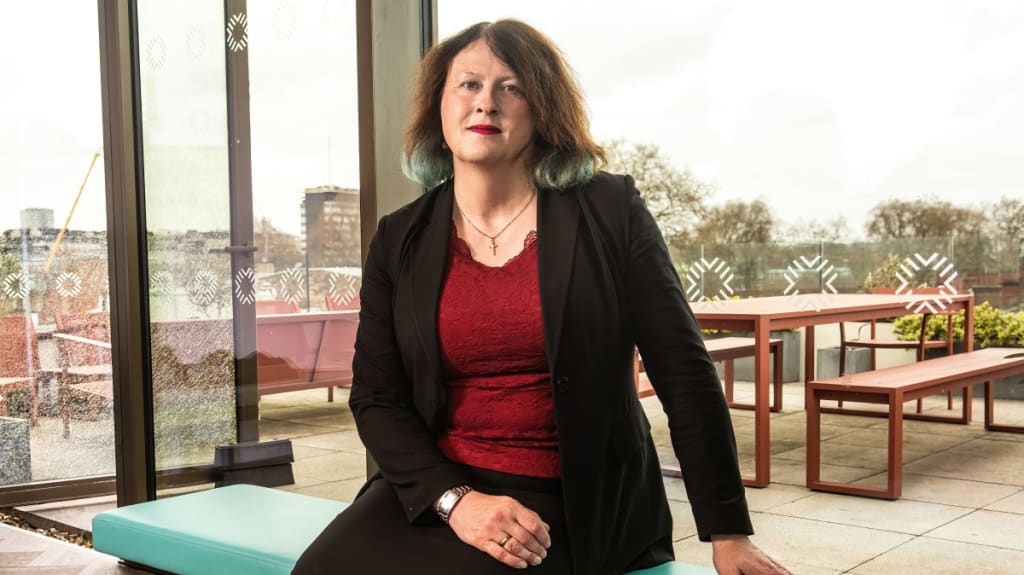
The UK is witnessing a groundbreaking legal battle that could reshape the conversation around transgender rights, equality laws, and the interpretation of biological sex in British law. Victoria McCloud, the UK’s first transgender judge, has taken her case to the European Court of Human Rights (ECHR), challenging the UK Supreme Court’s ruling on the definition of “woman” under the Equality Act 2010.
This legal dispute has triggered nationwide debates, reignited discussions on gender identity versus biological sex, and raised profound questions about the balance between inclusivity, fairness, and legal clarity in the UK justice system.
In this in-depth article, we’ll explore:
Who Victoria McCloud is and why her case matters.
The Supreme Court’s ruling on biological sex and its impact
Why McCloud believes her rights under European law have been breached.
The ongoing legal and political implications for Scotland, the Equality Act, and trans rights across the UK.
The reactions from advocacy groups, gender-critical organizations, and policymakers.
The broader international context of transgender rights in law.
Who Is Victoria McCloud?
Victoria McCloud is a trailblazer in the UK judiciary. She made history as the first openly transgender judge in the country and served with distinction before retiring to become a litigation strategist at W-Legal. Her appointment was widely celebrated as a milestone for inclusivity in British law.
McCloud’s legal expertise and personal experience as a transgender woman place her at the center of a debate that goes beyond technical legalities — touching on human rights, personal identity, and social justice.
By challenging the Supreme Court, McCloud is not only defending her own rights but also raising concerns for thousands of transgender people across the UK who may face barriers to equality in daily life.
The Supreme Court’s Ruling on Biological Sex
In April 2024, the UK Supreme Court ruled that under the Equality Act 2010, the legal definition of “woman” does not automatically include transgender women, even those who hold a Gender Recognition Certificate (GRC).
This ruling effectively meant:
Certain single-sex protections under the Equality Act (e.g., in schools, prisons, or changing facilities) could lawfully exclude transgender women.
Service providers and public bodies had the legal backing to implement blanket restrictions, preventing trans women from accessing spaces aligned with their gender identity.
Trans women with GRCs faced new uncertainties regarding their rights under anti-discrimination laws.
The Equality and Human Rights Commission (EHRC) later issued guidance that reinforced the ruling, sparking backlash from LGBTQ+ groups who saw it as a step backward in equality protections.
Why Victoria McCloud Is Challenging the Ruling
Victoria McCloud has argued that the Supreme Court’s decision violated her rights under Articles 6, 8, and 14 of the European Convention on Human Rights, which protect:
Article 6: The right to a fair trial.
Article 8: The right to respect for private and family life.
Article 14: The right not to be discriminated against.
She claims that:
Her application to join the case during the Supreme Court hearing was rejected without reasoning.
No evidence or testimony from transgender individuals or advocacy groups was heard in the proceedings.
The ruling effectively reversed the legal recognition of trans women, treating them as “two sexes at once,” creating confusion and risk.
McCloud highlighted practical consequences:
Trans women being forced into male-only changing rooms or toilets despite having female anatomy.
Vulnerability to sexual assault and discrimination if required to access services designated for men.
A lack of acknowledgment of the lived experiences of the 8,500+ people in the UK with Gender Recognition Certificates.
The Role of For Women Scotland and Gender-Critical Campaign Groups
The original Supreme Court case was brought by For Women Scotland, a gender-critical group opposing policies they believe undermine women’s rights and safety.
They were joined by other organizations, including:
Sex Matters
LGB Alliance
The Lesbian Project
Scottish Lesbians
These groups argued that redefining “woman” to include transgender women would erode hard-won protections for biological females, particularly in schools, prisons, and healthcare.
The Supreme Court’s acceptance of their interventions — but not McCloud’s , has become a central point of contention in the current ECHR case.
The Scottish Government’s Position
The ruling also has major implications for Scotland, where policies have been more trans-inclusive compared to the rest of the UK.
The Scottish government has been accused of delaying compliance with the Supreme Court ruling, especially regarding schools guidance and prison policies.
Reports suggest that For Women Scotland has now taken further legal action against the government to enforce stricter compliance.
Meanwhile, the Scottish government insists it is waiting for the updated EHRC Code of Practice before implementing changes.
The Broader Legal and Political Implications
This case highlights the ongoing culture war between gender-critical movements and trans rights advocates in the UK. The outcome will likely influence:
Public Services: From hospitals to schools, how policies are written regarding trans inclusion.
Employment Law: Whether transgender workers can be excluded from female-only positions or facilities.
Human Rights Protections: Whether UK law remains aligned with European human rights standards post-Brexit.
Future Legislation: Political parties may be forced to clarify their positions on trans rights in upcoming elections.
Reactions from Advocacy Groups
LGBTQ+ Advocates: Warn that the ruling sets a dangerous precedent that undermines years of progress.
Gender-Critical Groups: Argue it restores clarity and protects women’s rights.
Legal Scholars: Suggest the lack of representation for trans voices in the Supreme Court may be a breach of natural justice.
The European Court of Human Rights Challenge
McCloud’s case at the ECHR will test whether the UK judiciary respected her right to a fair trial and whether the ruling constitutes discrimination under European law.
If successful, the case could:
Force the UK Supreme Court to revisit its decision.
Strengthen protections for trans people under European law.
Complicate the UK’s relationship with the ECHR, especially given political debates about withdrawing from its jurisdiction.
The Global Context: Trans Rights and Legal Battles
This case is not isolated. Similar legal battles are unfolding worldwide:
In the US, state-level bans on gender-affirming care and trans participation in sports have intensified debates.
In Europe, countries like Spain and Germany have passed progressive gender identity laws, while others like Hungary and Poland have tightened restrictions.
The UN has called for governments to uphold transgender rights as fundamental human rights.
The UK’s position will therefore shape its international reputation on equality and human rights.
FAQs: Understanding the Case
1. Who is Victoria McCloud?
Victoria McCloud is the UK’s first transgender judge, now retired and working as a litigation strategist. She is challenging the UK Supreme Court’s ruling on biological sex.
2. What was the Supreme Court ruling about?
The ruling clarified that under the Equality Act 2010, “woman” does not include transgender women with Gender Recognition Certificates.
3. Why is McCloud challenging the ruling?
She argues the ruling violated her right to a fair trial and discriminated against trans people by excluding their voices from the process.
4. What role does the European Court of Human Rights play?
The ECHR will assess whether the UK’s judicial process breached McCloud’s rights under the European Convention on Human Rights.
5. What happens if McCloud wins?
The UK may be forced to revisit its interpretation of the Equality Act, potentially restoring or expanding protections for trans people.
A Defining Moment for Trans Rights in the UK
Victoria McCloud’s legal challenge represents a pivotal moment in UK history — one where questions of identity, fairness, and justice collide in the highest courts of Europe.
Her case underscores the importance of ensuring that marginalized groups are not just subjects of legal rulings but active participants in shaping the law that governs their lives.
As the debate rages on, the UK stands at a crossroads. Will it reaffirm restrictive definitions of sex and gender, or move toward a more inclusive interpretation of equality?
Only time — and the European Court of Human Rights — will tell.
About the Creator
Omasanjuwa Ogharandukun
I'm a passionate writer & blogger crafting inspiring stories from everyday life. Through vivid words and thoughtful insights, I spark conversations and ignite change—one post at a time.
Keep reading
More stories from Omasanjuwa Ogharandukun and writers in Journal and other communities.
How Michigan City Councilman Was Caught on Camera Stuffing Election Drop-Box with Absentee Ballots Days Before Primary (Video)
Election integrity has once again come under scrutiny in Michigan after a Hamtramck City Council member, Abu Musa, was caught on camera allegedly stuffing an election drop-box with absentee ballots just days before his primary re-election victory. The shocking footage, which surfaced ahead of the Aug. 5 primary election, has raised serious concerns about voter fraud, absentee ballot manipulation, and the security of America’s election system.
By Omasanjuwa Ogharandukun5 months ago in Journal
The goals I did not achieve
Every writing goal I made for the year is a wash. It has been this way for a while, but I think it's important to be open about my failures and the reality of how life can get in the way. This is especially true considering the several times I have posted on Vocal about my writing goals, how I was changing my approach, and where I was hoping to be for the upcoming year. I will probably do that again in a couple months, but for now, it is time to acknowledge where I am today.
By Kay Husnick24 days ago in Journal
The Phoenix from the Ashes:
Toxic relationships, in their myriad forms, are insidious vines that can slowly strangle the life out of individuals, leaving them emotionally depleted, psychologically bruised, and often struggling to understand how they ended up entangled in such a destructive web. Whether romantic, familial, or platonic, these relationships are characterized by patterns of manipulation, control, disrespect, and a consistent lack of empathy. Escaping their grasp can be a grueling process, but it's a journey that ultimately leads to profound self-discovery and lasting personal growth. The lessons learned from overcoming toxic relationships are invaluable, shaping our understanding of ourselves, our boundaries, and what we truly deserve in life.
By Wilson Igbasi3 days ago in Journal




Comments
There are no comments for this story
Be the first to respond and start the conversation.